Towa and the Guardians of the Sacred Tree Cares More About Its Village Than Its Combat
Our review of Towa and the Guardians of the Sacred Tree: a roguelite where forging swords and friendships matters more than the fighting itself.
Aymen Sakouhi·Writer · Games Hobbyist//6 min read
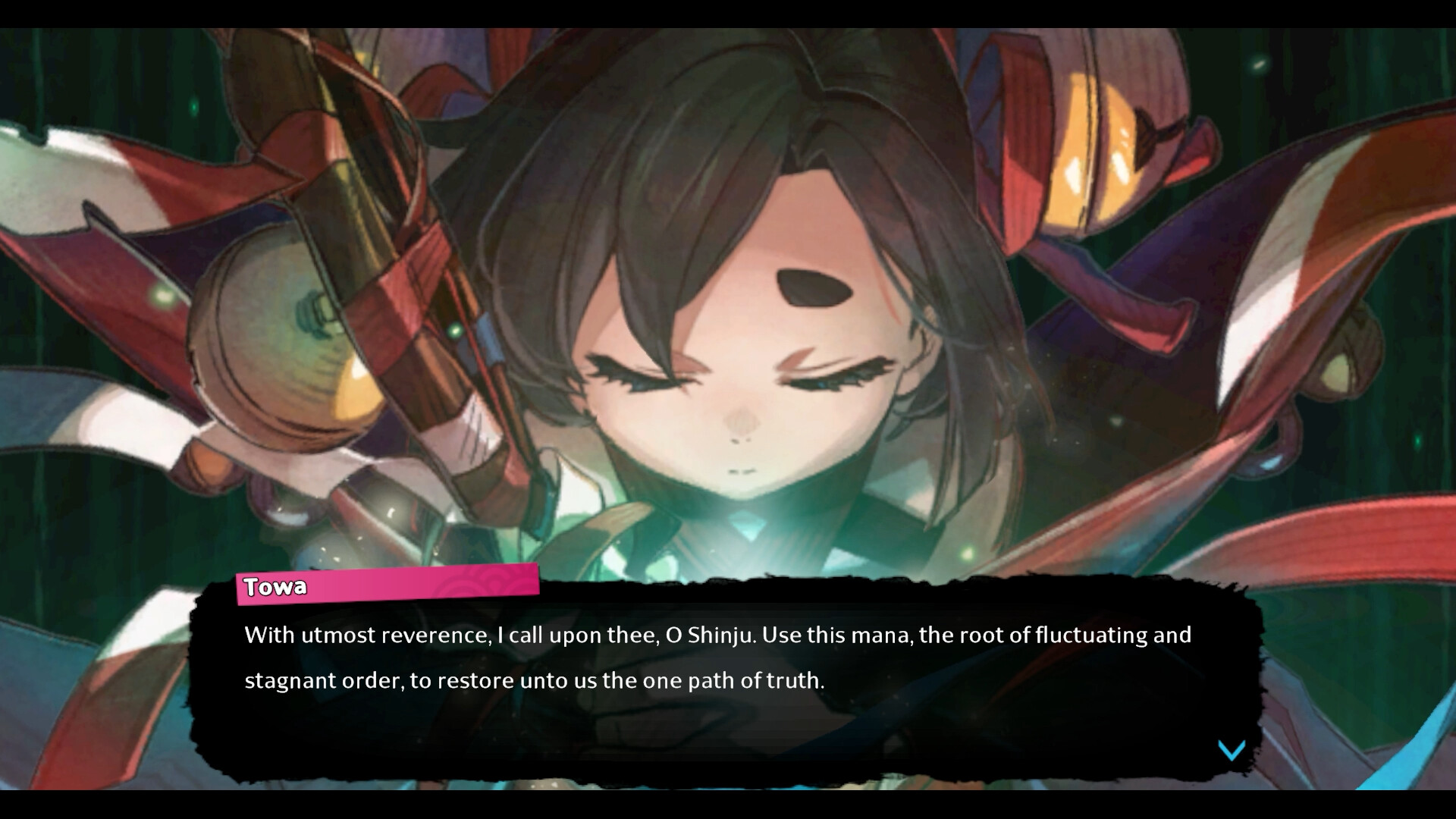
© Bandai Namco Entertainment Inc.. Official media via Steam.
The pitch
OverviewTowa and the Guardians of the Sacred Tree opens with a village under threat and a teenager handed the job of holding the line. Shinju Village sits at the edge of a mystic realm being unmade by Magatsu's forces, and Towa, the character you steer, is tasked with rallying the village's guardians, forging swords strong enough to matter, and keeping the sacred tree at the settlement's heart alive. Developer Brownies inc. and publisher Bandai Namco Entertainment Inc. market it as a roguelite, though that single word undersells how much of the actual design lives outside combat entirely.
The pitch is a dual forge. Towa builds weapons at the workshop and builds relationships in the village square, and the game keeps insisting the two projects are really one. Every guardian recruited to the cause doubles as a combat resource and as a person with a personal stake in whether Shinju survives, and the sword you carry into the next run is designed to feel like an extension of who you have chosen to spend your evenings with, not just another line on a stat sheet.
It launched in September 2025 into a reception that is still very much forming. Steam's community score currently reads Mixed, at 66 percent positive, but that number is drawn from only fifty reviews, a pool small enough that it plays less like a settled verdict and more like a snapshot of the first wave of players still arguing about it. Split screen and online co-op are both supported, and the whole interface is built with a gamepad in hand, DualShock recognition specifically called out, which says plenty about the kind of couch session Brownies inc. had in mind when they built this.
What follows treats the game on those terms: less as a hardcore roguelite that happens to have a village attached, more as a village life game that occasionally sends you into danger between conversations, because that is closer to how it actually plays.
How it plays
PlayThe loop sends Towa out from Shinju Village into the corrupted stretches where Magatsu's forces have taken hold, and back again once a run ends, win or lose. Combat encounters unfold in short, self-contained bursts rather than sprawling levels, and each trip out is meant to fund the next stretch of village life: materials for the forge, standing with a guardian, a step closer to whatever the sacred tree needs to hold together. It is roguelite in structure, runs, resources, a home base to return to, but the emphasis sits closer to a life sim with combat interruptions than a combat game with social scenes bolted on.
The game also supports Steam Achievements, which nudges the whole thing toward the kind of checklist play that fits its village life leanings: a roster of guardians to befriend, a set of blades to forge, milestones that reward sticking around Shinju rather than clearing content as fast as possible. It is a small structural detail, but it reinforces the sense that the developers built this for players who want a reason to linger, not just a reason to push forward.
On the numbers, the fighting itself is the part players have been least excited about. Early write-ups on Steam describe the combat as simple, workable enough to get through a run without demanding much precision or planning. That tracks with what a roguelite built around relationship management tends to prioritize: readable, low-friction fights that clear space for the systems Brownies inc. actually wanted you spending time in. If you came in hoping for the kind of build variety and mechanical depth that defines the genre's best-known names, the encounters here are unlikely to hold your attention on their own.
That design choice cuts both ways. Roguelite veterans who want each run to demand a fresh read on the battlefield, a new build, a harder decision under pressure, are going to find the encounters here comparatively thin, more a rhythm to settle into than a puzzle to solve. Players who came in for Shinju Village itself, for the guardians and the slow accumulation of trust, are more likely to find the combat exactly as demanding as it needs to be: present, but never the point.
The forging half of the title is doing more work than it first appears. Swords are not just gear tiers, they are tied to specific guardians and the relationships Towa builds with them, so upgrading your kit and deepening a friendship are frequently the same action performed twice. It is a smart bit of systems design on paper: it gives the social sim half of the game a reason to matter mechanically instead of sitting off to the side as flavor text, and it gives the combat half a reason to exist beyond padding out the runtime.
Multiplayer is built in from the ground up rather than patched on. Shared and split screen co-op sit alongside online co-op, and the whole interface leans on gamepad input, with DualShock support called out specifically, which suggests Brownies inc. designed this first as something to hand a second controller to rather than a solo mouse-and-keyboard experience.
Where the game runs into trouble is the back half. At least one early player account singles out the ending as overwrought and drawn out for a payoff that never quite arrives, a pacing complaint that is easy to believe given how much of the design is invested in slow relationship payoffs rather than escalating combat stakes. A story-forward roguelite lives or dies on its closing stretch, and on the evidence available so far, this one stumbles there.
Art & atmosphere
CraftShinju Village and the mystic realm around it lean into a warm, storybook take on fantasy rather than anything grim or gritty, fitting a story about a teenager rallying guardians to protect a sacred tree. The corrupted zones Towa fights through are framed as an encroaching wrongness pressed up against a village worth protecting, and that contrast, a cozy home base against a spreading threat, does a lot of the game's tonal heavy lifting without needing elaborate lore to sell it.
Full controller support with dedicated DualShock recognition points at a production that cared about how the game feels in the hand as much as how it reads on screen, and the couch co-op options reinforce a design built for sitting next to someone rather than a solitary hunched-over-mouse session.
Beyond that, there is not yet enough independent coverage, screenshots and a pair of trailers aside, of the game's animation quality or its score to weigh in with real confidence. Playcritik would rather flag that gap plainly than dress up a guess as an observation.
A Mixed, still-thin community reception (66 percent from just fifty reviews) matches a game whose combat is simple and whose ending stumbles, even though its relationship-driven forging loop and strong co-op options earn real credit.
Pros & cons
The ledgerIn its favour
- Forging swords is tied directly to the guardians you befriend
- Village life and relationship building carry genuine warmth
- Full local and online co-op, including split screen
- Built around gamepad play with dedicated DualShock support
- A cozy fantasy premise that trusts a slower pace
- Approachable combat that never gates story progress behind difficulty
Against it
- Combat reads as simple and shallow on its own
- Early feedback flags the ending as overwrought and unresolved
- Community score still resting on a small pool of fifty reviews
- Windows only, no listed console or Mac support
- Limited third-party coverage to weigh presentation claims against
Screens
Official media© Bandai Namco Entertainment Inc.. Official media via Steam.
The player verdict
Real reviews · Steam- Recommended
“It's pretty good although the ending is super overwrought and drawn out for no payoff. Gameplay is simple but tolerable enough, what you're really here for is the characters and the town.”
0 found helpfulvia Steam
Verdict
The callTowa and the Guardians of the Sacred Tree is a more interesting game than its roguelite label suggests, mostly because it does not seem to care that much about being a great roguelite. The forge-and-friendship loop, where gearing up and getting close to your guardians are functionally the same task, is a genuinely appealing idea, and the couch and online co-op options make it an easy pick for two people looking for something gentler than the genre's usual difficulty spike.
It is not the game to reach for if combat crunch is what you are after. The fighting is simple by design, and the small but real complaint about an overwrought, unresolved ending is the kind of thing that should worry anyone hoping the story lands as well as the relationship systems that lead up to it.
At 17.99 euros it is a reasonable ask for what it delivers, provided you know which game you are buying. Right now the Steam community sits at Mixed, and with only fifty reviews logged that verdict is still being written by whoever plays it next. Recommend it to players chasing a cozy, relationship-driven roguelite with someone to share a couch with, not to anyone shopping for a mechanically deep action game.
Single-player is fully supported too, and playing it alone is not a lesser experience so much as a quieter one: without a second person laughing at a botched fight or arguing over which guardian to visit next, the pacing rests more heavily on how much you personally care about Shinju Village's cast, which is exactly the kind of bet a game like this asks you to place early and either buys into or does not.
Sources
Original review by Aymen Sakouhi from the licensed facts above. Score: 6.4/10.