Red Dead Redemption 2: The Western That Dares You to Slow Down
Our Red Dead Redemption 2 review: Rockstar's slow-burn western is a staggering frontier simulation built on deliberate, divisive friction.
Aymen Sakouhi·Writer · Games Hobbyist//5 min read
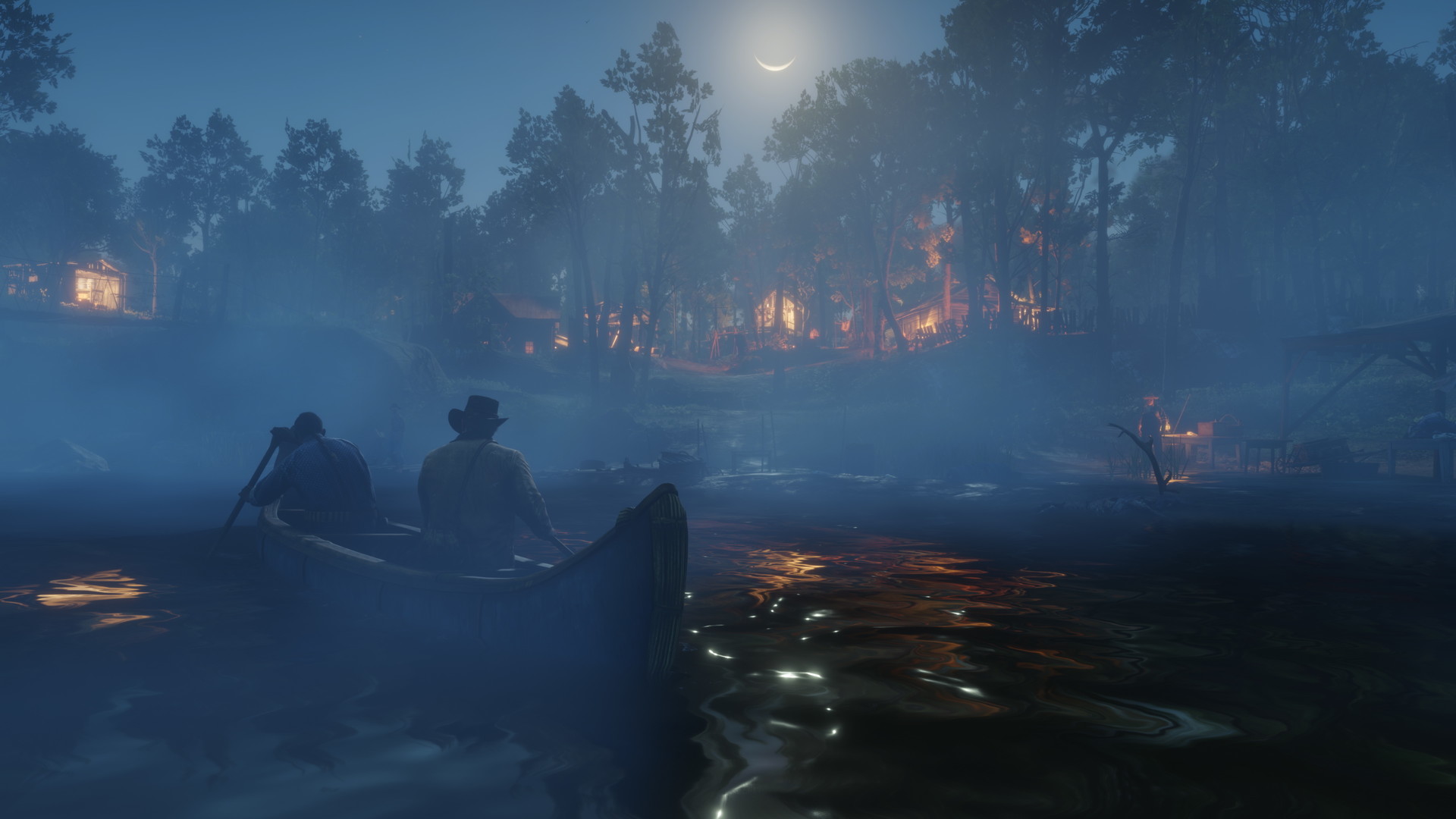
© Rockstar Games. Official media via Steam.
The pitch
OverviewMost blockbusters are terrified of your boredom and design every single second to outrun it. Red Dead Redemption 2 is not, and that refusal is the whole argument. It will make you walk your horse into camp at a trudge, brush it down, stand and listen to a drunk companion ramble by the fire, and watch Arthur cook a can of beans in something close to real time, all of it entirely on purpose. This is a game convinced that pace is a feeling worth engineering rather than an obstacle to be optimized away.
You ride as Arthur Morgan, senior enforcer for the Van der Linde gang, a fractured outlaw family backed into the closing margins of the American frontier as Pinkertons, bounty hunters, and the modern world tighten the noose around them. It is a prequel to the 2010 original, a sprawling open-world western, and, down in its bones, a slow tragedy about men who have outlived the only life they ever learned how to live.
Rockstar's ambition here is less an action game than a nineteenth-century novel you happen to be holding a controller for, a character study wearing a cowboy sandbox as a costume. The tension between those two identities, the prestige drama it desperately wants to be and the systemic playground it also very much is, defines the entire experience, sometimes gloriously and sometimes at open cross purposes.
It stands as the most expensive and most obsessively detailed mood piece the medium has yet produced, a technical and artistic flex that few studios could even attempt and fewer still would have the nerve to pace this deliberately slowly. Whether that patience reads to you as total immersion or as sheer friction is the argument the whole game keeps quietly starting with you.
How it plays
PlayEverything about the controls is weighty and deliberate. Arthur moves with momentum and heft, animations commit fully to their follow-through before the next one is allowed to begin, and even looting a corpse is a slow, tactile little ritual of crouching and rifling through pockets. It is the most convincing character-in-a-world Rockstar has ever animated, and it is also, undeniably, the direct source of the game's most common complaint: the inputs can feel sticky, laggy, and unresponsive at precisely the moments you most want to move fast.
The frontier itself is a simulation of near-obsessive detail. Weather systems roll in and remake the light, wildlife behaves with startling specificity, your beard grows and your coat cakes with mud you can either scrub off or wear as a look. There is a whole ecosystem of animals to study, hunt, and skin, an honor system that quietly reshapes how the world treats you, and a survival layer of weight, cores, and cooking that hovers somewhere between welcome texture and outright busywork depending entirely on your patience for it.
The camp is the beating heart of the thing, a living hub you can fund and feed, where the gang eats, argues, sings, and slowly comes apart at the seams. Donate to the tithing box and it visibly upgrades; ignore it and morale quietly rots. Companions have daily routines, ambient conversations, and their own side activities, and it is here, far more than in any scripted cutscene, that the gang earns the emotional weight the ending eventually cashes in all at once.
Gunfights lean on Dead Eye, the returning slow-motion targeting system, and land with real impact, the guns loud and heavy, the wounds gruesomely specific. The period arsenal is satisfying to own and maintain, right down to manually cleaning your revolver. But the shootouts themselves rarely stray far from a familiar cover-and-clear rhythm, and for all the surrounding world's freedom, the moment-to-moment combat is easily the most conventional thing on offer.
Systems ripple outward in ways that quietly reward attention. An honor meter tracks your conduct and rewrites how towns greet you, unlocking discounts, story flavor, and outfits, and coloring Arthur's own arc toward the end; a wanted and bounty system means witnesses, bandanas, and dead lawmen carry consequences that trail you across state lines. And once the credits roll there is Red Dead Online, a separate persistent multiplayer frontier that launched rough, showed occasional flashes of promise, and was eventually left to quietly wither, worth a curious look but plainly never where Rockstar's heart truly was. The campaign is enormous and oddly, bravely shaped: six long chapters followed by a contemplative two-part epilogue that most studios would have cut for time and that turns out to be the emotional keystone of the whole thing. It runs a good sixty hours on a direct line and well past that once you let the world distract you, which it will, constantly, and which is very much the entire point of the exercise.
Mission design is the sharpest point of friction, and it is a real and recurring one. For all the open world's celebrated freedom, the story missions are strikingly rigid, tightly scripted set pieces that expect you to follow a precise route and rhythm, and stepping outside the invisible lines, riding the wrong way, drawing on the wrong person a beat too early, frequently means an instant failure and a checkpoint reload. Between that linearity and a famously languid opening act up in the snow, the game repeatedly tests whether you have truly bought into its tempo, because if you have not, the patience it demands curdles alarmingly fast into tedium.
Art & atmosphere
CraftRockstar built the frontier as a moving landscape painting, and the reference points are plainly old-master western canvases: Bierstadt light pouring gold over the mountains, Remington silhouettes at dusk, mist pooling in the Lemoyne bayou at first light. The naturalism is obsessive to the point of showing off, mud that layers and dries in stages, breath fogging visibly in the cold, a horse's muscles shifting and steaming under wet hide, the way a town's architecture shifts under you as you ride from frontier outpost toward the encroaching modern south.
Woody Jackson's score mostly hangs back, all mournful slide guitar and low, patient strings, then picks its moments with a sniper's discipline, the first swell of vocals as a mission crests is engineered to wreck you, and it very reliably does. Sound design carries the rest, the distinct report of each firearm, the ambient wash of insects, wind, and far-off coyotes, the creak of a saddle under weight, and a voice cast, Roger Clark's Arthur foremost among them, turning in genuinely career-defining work.
Animation is the connective miracle that fuses all of it together, every action weighted and fully committed, so the world feels less designed than physically, stubbornly present. It is less a game map than a diorama you can almost smell, and it is entirely, self-consciously aware of exactly how beautiful it is, which is both the whole point and, just occasionally, the problem.
A staggeringly detailed, deeply moving western whose deliberate friction, heavy controls and rigid missions, genuinely divides how much you can love it.
Pros & cons
The ledgerIn its favour
- Arthur Morgan is Rockstar's finest and most human protagonist
- A frontier simulation of absurd, obsessive, world-building detail
- Dead Eye and weighty, tactile gunplay make each shootout feel considered
- The camp works as a living hub that gives the doomed gang real texture
- Animation and sound design fuse into a place that feels physically present
Against it
- Controls are deliberately heavy and frequently feel unresponsive
- Story missions are rigidly scripted, stray from the plan and you fail out
- A famously slow first act tests patience long before the game opens up
- The core shootouts rarely evolve past conventional cover-and-clear
Screens
Official media© Rockstar Games. Official media via Steam.
The player verdict
Real reviews · Steam- Recommended
“There are some games you play, and then they end. There are others where the credits roll, and they remain as a fond memory. But very few games stay with you long after they are over. For me, “Red Dead Redemption 2” was never just a game.…”
870 found helpfulvia Steam - Recommended
“---{ Graphics }--- ☐ You forget what reality is ☑ Beautiful ☐ Good ☐ Decent ☐ Bad ☐ Don‘t look too long at it ☐ MS-DOS ---{ Gameplay }--- ☐ Very good ☑ Good ☐ It's just gameplay ☐ Mehh ☐ Watch paint dry instead ☐ Just don't ---{ Audio }---…”
412 found helpfulvia Steam - Recommended
“This game changed my perspective on life i cant explain how much I loved this game the look, the feel the whole aspect of the game made me change for the better i cried for days after the ending it was cinema.”
138 found helpfulvia Steam - Not recommended
“First of all, the game is amazing. The story is one of the best ive seen in a while and the gameplay is just *chefs kiss*, but this game just HAS to implement their ♥♥♥♥♥♥ ASS LAUNCHER. ♥♥♥♥ 3rd party launchers. LET ME PLAY THE DAMN GAME…”
114 found helpfulvia Steam
Verdict
The callRed Dead Redemption 2 is a bet that a big-budget game can be slow, heavy, and demanding of your full attention without once apologizing for any of it, and for players willing to meet it squarely on those terms the payoff is enormous. Arthur's arc is genuinely, unexpectedly moving, the world is a marvel of texture, and very few games have ever made a place feel this physically, tangibly real.
The deliberate friction is also a genuine barrier, and pretending otherwise would be dishonest reviewing. The heavy controls and straitjacketed missions will lose some players well before the story earns its considerable weight, and no amount of thematic justification fully excuses being failed out of a mission for the crime of approaching it slightly wrong.
Approach it as a novel with reins rather than a shooter with chores, budget it the unhurried time it frankly demands, and it becomes one of the most affecting experiences the medium has to offer. Come to it looking for a snappy open-world action game and you will instead spend forty hours fighting the very quality that makes it great.
Sources
Original review by Aymen Sakouhi from the licensed facts above. Score: 8.6/10.