Tormentum II Returns to Its Nightmare With More Canvas and the Same Cold Heart
OhNoo Studio's dark-fantasy point-and-click is gorgeous and unsettling, if you still have patience for old-school puzzle logic. Our verdict: 7.4/10.
Aymen Sakouhi·Writer · Games Hobbyist//5 min read
© OhNoo Studio. Official media via Steam.
The pitch
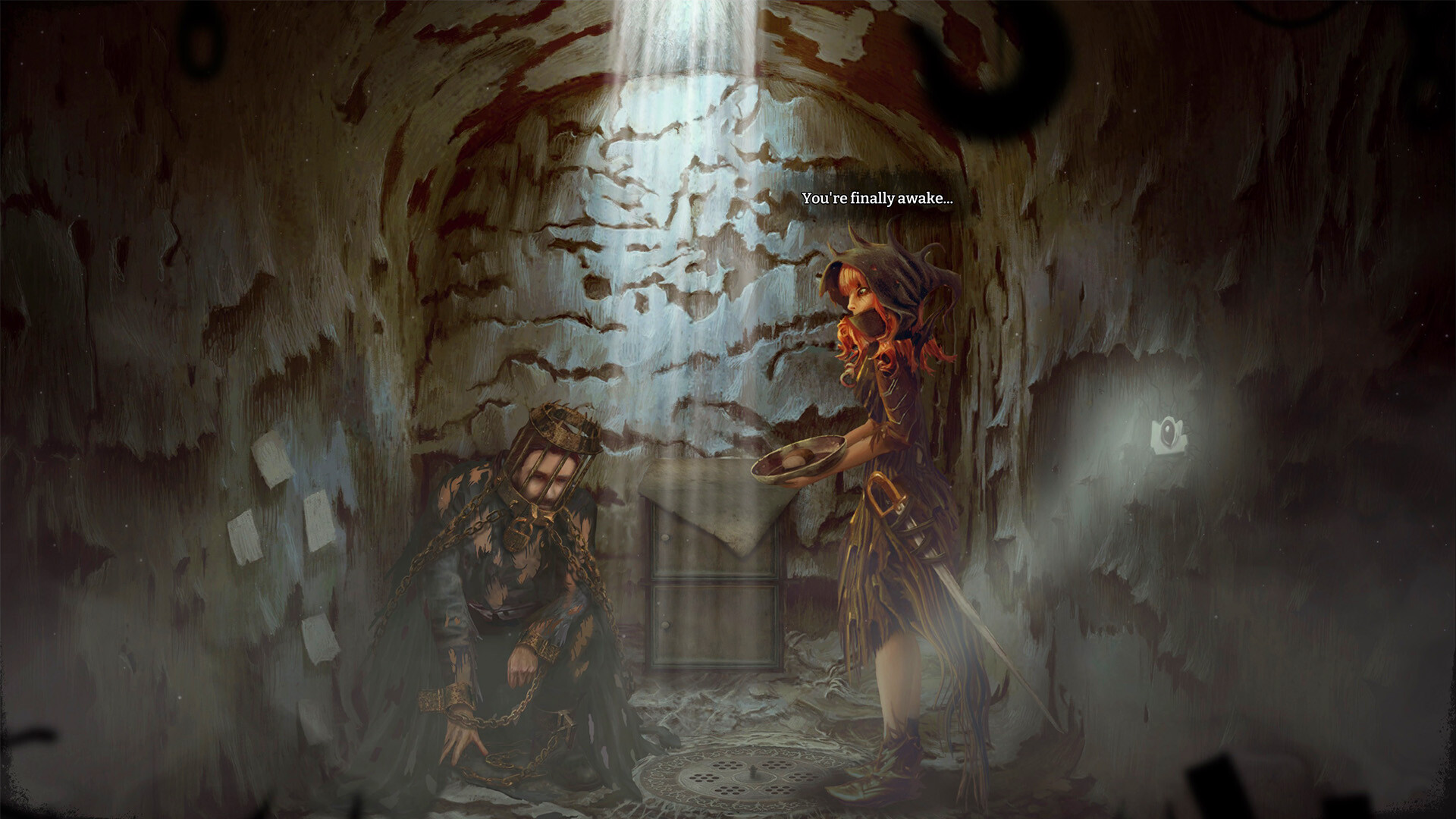
OverviewSome games do not want to comfort you, and Tormentum II is proudly one of them. It is a hand-drawn dark-fantasy point-and-click adventure from Poland's OhNoo Studio, a follow-up to their cult 2015 debut Tormentum: Dark Sorrow, and it opens by dropping you inside a nightmare world of your own making. That premise, waking into a place you somehow authored and now have to survive, sets the tone for everything that follows: guilt, dread, and puzzles pried out of a landscape that looks like it was dreamed up by someone who has not slept well in years.
The studio wears its influences openly, and they are unmistakable. This is a world built in the long shadow of H.R. Giger's biomechanical horror and Zdzislaw Beksinski's decaying, boneyard surrealism, rendered as static painted scenes you click through one grim tableau at a time. If the first game was a compact tour of that aesthetic, the sequel is a full expedition, reportedly some three times larger in hand-painted content, spread across islands you explore, ponder, and slowly unravel.
What has not changed is the shape of the thing. This is a deliberately old-fashioned adventure: no combat, no reflexes, just observation, inventory logic, and a steady drip of morally ambiguous choices that fork toward more than one ending. The original earned a small, devoted following on exactly those terms, and the sequel is clearly built for the same people rather than reaching for a broader crowd. That focus is both its strength and, depending on your patience for the genre, its ceiling.
A note on this review: at the time of writing Tormentum II has only just launched, and the wider critical and player verdict is still forming. What follows leans on the game's evident craft and design intentions and the pedigree behind it, rather than a settled consensus that does not yet exist.
How it plays
PlayStructurally this is point-and-click adventure in its most classic form. You move between fixed, painted screens, examine everything, collect objects, and combine or deploy them to open the next door in a world that guards its secrets jealously. There is no fail state to speak of and no clock, which suits the meditative, oppressive mood; the pressure here is atmospheric and moral, not mechanical. The sequel is a substantially bigger box to poke around in, with well over a hundred locations threaded across several islands, so the sense of a genuine journey through a sick and beautiful place is real.
The puzzles come in the familiar two flavors of the genre: inventory riddles that ask you to notice how one strange object relates to another, and self-contained logic puzzles woven into the environment. When adventures like this work, it is because the solution feels discovered rather than brute-forced, and the world's internal logic rewards paying close attention. When they do not, it is the age-old friction of the form, a step that only makes sense in hindsight, or a bit of pixel-hunting that sends you clicking every corner of the screen. Which side Tormentum II lands on will vary scene to scene and player to player, and it is the single biggest variable in how much you enjoy it.
The more interesting layer is the choices. As in the first game, you are repeatedly asked to make decisions with no clean answer, small cruelties or mercies that the game remembers and that steer you toward one of multiple endings. It is a light branching system rather than a sprawling RPG web, but it gives the bleakness a point: the world is asking what kind of person you are willing to be inside it. That the story is described as not entirely linear suggests a second run may show you roads you deliberately did not take, which is a real incentive for the right player.
Length lands in the comfortable single-session-or-two range for the genre, roughly eight to twelve hours depending on how badly you get stuck and how much you sit with the art. That is a healthy runtime for a hand-crafted adventure and long enough for the atmosphere to fully sink its hooks, without overstaying the way some modern adventures do. The accessibility options are a welcome, quietly modern touch, with adjustable text size, custom volume controls, a mouse-only option, and no timed inputs, so the experience bends to how you want to play a slow game slowly.
The honest caveat is that this is a narrow pleasure by design. If you do not already enjoy sitting with a static screen and thinking, there is nothing here engineered to win you over, no action beat to break the tension, no hand-holding to smooth the rougher puzzle logic. It is an adventure game that assumes you came looking for exactly this, which is admirable and limiting in the same breath.
Art & atmosphere
CraftArt direction is the whole reason this series exists, and it remains its most obvious triumph. Every scene is a hand-painted still, dense with biomechanical growths, cathedral-like ruins, and organic-industrial architecture that seems to have grown rather than been built. The Giger and Beksinski lineage is not a marketing line; it is stamped into every rusted spire and every knot of bone and metal, and the sequel's expanded canvas means far more of these tableaux to linger inside. As a piece of pure visual craft, it is genuinely striking, the kind of game where you stop advancing simply to study the background.
The restraint is part of the power. Because the world is static and quiet, individual details carry weight: a distant silhouette, a smear of decay, a door that looks like a mouth. It is horror by accumulation and implication rather than jump scare, and it trusts you to feel the wrongness of a place rather than being told to. That patience is rare, and it is where the game's atmosphere earns its keep.
Sound completes the spell. The soundtrack ranges widely across genres, reportedly reaching as far as metal, and it is doing real mood work, swelling the sense of unease in a world that is otherwise eerily still. Between the painted decay and the score, Tormentum II conjures a specific, committed feeling of beautiful damnation that very few games even attempt, let alone sustain.
A gorgeous, atmospheric, and admirably uncompromising point-and-click sequel, held back only by the genre's old puzzle frictions and a deliberately narrow appeal.
Pros & cons
The ledgerIn its favour
- Gorgeous, hand-painted scenes steeped in Giger and Beksinski-style dread
- Roughly three times the visual content of the original, spread across many islands
- Morally ambiguous choices that steer toward more than one ending
- A committed, patient atmosphere that trusts you to sit in the discomfort
- Thoughtful accessibility options, from text size to a mouse-only mode
- A healthy eight-to-twelve-hour runtime that never outstays its welcome
Against it
- Classic adventure puzzle logic can tip from clever into frustrating
- No combat or action means it is a narrow, deliberately slow experience
- Little here will convert players who dislike the point-and-click form
- Branching is light rather than a deep, systemic web of consequence
- Launch reception is still thin, so its lasting reputation is unproven
Screens
Official media© OhNoo Studio. Official media via Steam.
The player verdict
Real reviews · Steam- Recommended
“After eight years Tormentum is BACK! A masterfully hand-crafted horror adventure, heavily inspired by Giger and Beksinki works. Now all you just have to do is to buy it....Listen, read and FEAST your eyes with EVERYTHING you are about to…”
5 found helpfulvia Steam - Recommended
“Fantastic 2D surreal adventure, extremely dark plot and excellent art influenced by Giger and Beksinski, a masterpiece, 10/10.”
2 found helpfulvia Steam
Verdict
The callTormentum II is a bigger, more confident version of exactly what it was always going to be: a beautiful, oppressive, hand-drawn adventure for people who still love clicking their way slowly through a nightmare. OhNoo Studio has expanded its cursed world without diluting it, and the result is one of the more distinctive-looking games you can play right now, anchored by a moral throughline that gives the bleakness a purpose.
It is also, by design, a game with a clear audience and firm walls around it. The old-school puzzle friction is here, the pace is unhurried to the point of stillness, and there is no concession to players who want a modern adventure's momentum. Whether that reads as purity or as limitation depends entirely on what you want from the genre, and it is worth being honest with yourself about that before buying.
If you loved Dark Sorrow, or if the words Giger, Beksinski, and point-and-click make you lean in rather than back away, this is an easy recommendation and a clear step up in scale. If you have never had the patience for this kind of adventure, Tormentum II is unlikely to be the game that changes your mind, and it is not really trying to be. It knows exactly what it is, and it commits.
Sources
Original review by Aymen Sakouhi from the licensed facts above. Score: 7.4/10.