Project P.I.T.T. feeds rubber ducks to a bottomless pit and somehow it works
Verdict: 7.8/10. A physics automation sandbox wrapped in PSX-era corporate dread. Weird, funny, and moreish, from a solo dev's sharp debut.
Aymen Sakouhi·Writer · Games Hobbyist//4 min read
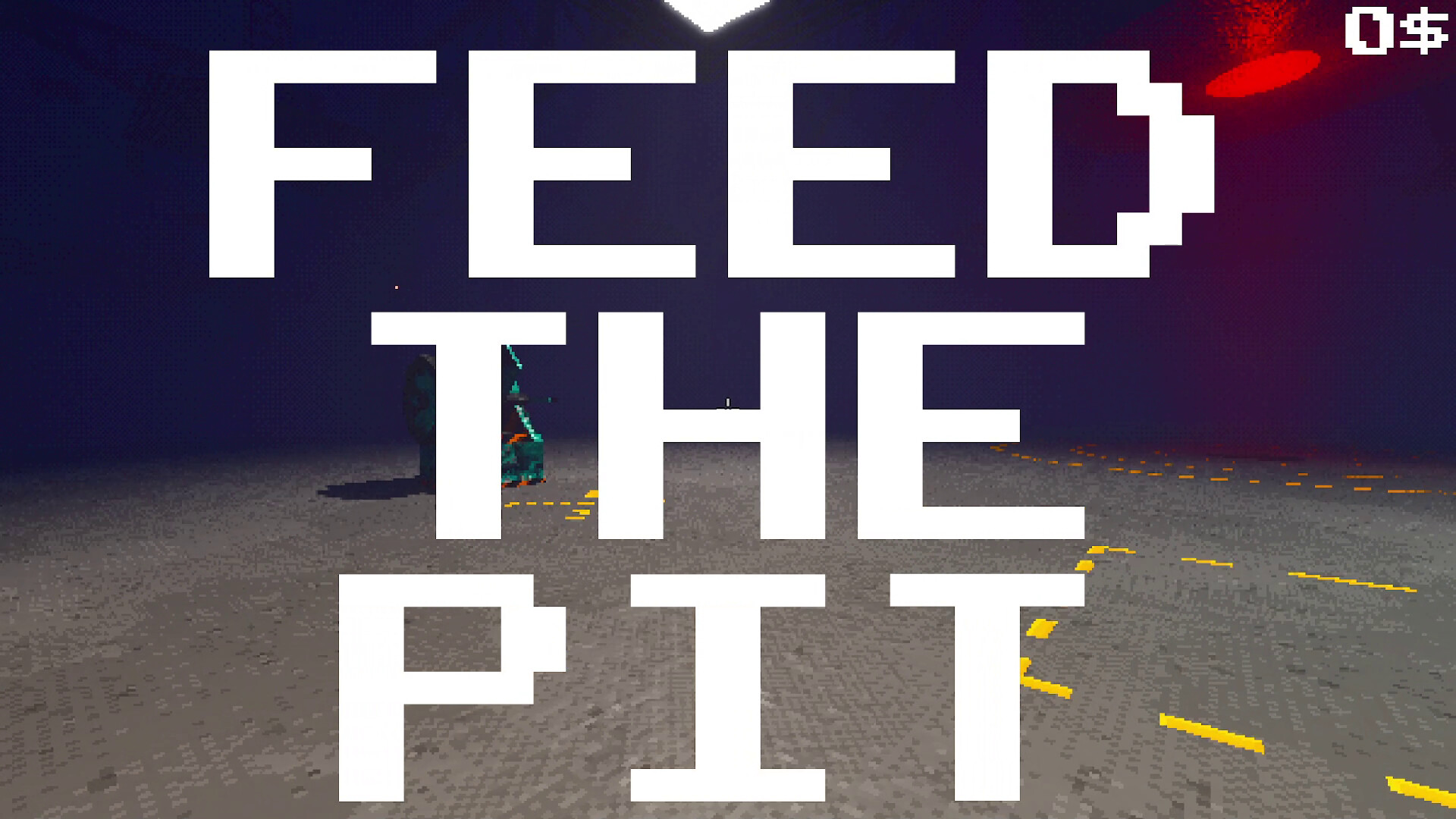
© Pretty Soon. Official media via Steam.
The pitch
OverviewProject P.I.T.T. begins with a job so pointless it loops back around to profound: manufacture rubber ducks, generate money, and feed the products into a mysterious bottomless pit called the Maw. That is the whole corporate assignment. There is no explanation you will trust and no boss you will like, only the quota, the pit, and the growing sense that the pit wants more. It is one of the most memorable opening premises in recent memory, and it is the work of a single French developer, Froke, making his first commercial game.
What follows is an incremental physics automation sandbox with a brutalist, PSX-inspired soul. You build production lines, hit escalating corporate targets, chain increasingly absurd combos, and unlock stranger tools to keep up with a demand that never stops growing. It is part factory-builder, part physics toy, part dark comedy, and the tags reach for psychological horror, though the horror here is atmospheric and satirical rather than a thing that jumps at you. Think oppressive workplace dread played for uneasy laughs.
The game arrived on Steam having already earned more than ten million YouTube views and tens of thousands of wishlists off the strength of its concept alone, and it launched to a Very Positive reception. That kind of pre-release momentum can flatter a thin game, but Project P.I.T.T. is not thin. It is a sharp, confident, genuinely distinctive debut that turns a joke premise into a compulsive loop, and it is easy to see why the internet latched on.
How it plays
PlayAt its core this is an automation game, and it scratches the same itch as the genre's best: the deep satisfaction of turning a manual chore into a self-running machine. You start by making rubber ducks by hand, feeding the Maw one product at a time, and quickly begin building contraptions to do it for you. The physics are the twist. Where most factory games are clean and grid-locked, Project P.I.T.T. is loose, tactile, and slightly unhinged, so your production lines are physical constructions that can wobble, jam, and spectacularly fail in ways a tidier automation game would never allow.
The progression loop is the classic incremental hook, and it is tuned well. Hit a corporate target, unlock a new tool or product, use it to reach the next target, and watch your operation sprawl into something bigger and weirder than you intended. There is a constant, moreish pull of the next unlock, and because the systems are physics-driven, optimizing them is an act of creative engineering rather than menu math. Chaining a colossal combo into the Maw is the payoff the whole game builds toward, and it stays satisfying because you built the machine that did it.
The brutalist corporate framing is not just set dressing; it shapes how the game feels to play. The relentless quotas, the indifferent Maw, the sense of laboring for a system that only ever wants more, all of it gives the mechanical loop a satirical weight that a neutral factory game lacks. You are automating your own absurd exploitation, and the game knows it, and that self-awareness is a lot of the charm.
As a solo-developed debut, it does show its scale. This is a focused, idea-forward game rather than a sprawling one, and players who want the enormous, deeply branching complexity of a genre giant will find its systems comparatively contained. There is some roughness and repetition that comes with a first commercial project, and the concept, brilliant as it is, carries a lot of the weight. But within its scope the execution is confident, and the loop earns the time it asks for.
Art & atmosphere
CraftThe look is the hook, and it is superb. Project P.I.T.T. commits fully to a brutalist, PSX-era aesthetic, all low-poly geometry, grimy concrete, and the specific queasy nostalgia of late-90s 3D. It is a deliberate, striking choice that instantly separates the game from the clean, colorful sheen of most automation titles, and it does enormous work in selling the tone. This is a world that looks like a forgotten corporate training simulation, and that is exactly right.
The aesthetic and the theme reinforce each other constantly. The oppressive concrete architecture, the anonymous corporate blankness, the bottomless Maw at the center of it all, they turn what could have been a dry systems game into an atmosphere you can feel. The dark comedy lands harder because the world commits to its own dread so completely, and the PSX filter gives even the silliest rubber-duck contraption a faintly sinister edge.
For a first commercial game from one person, the coherence of the vision is genuinely impressive. Every choice, the palette, the geometry, the sound of the pit, pulls in the same direction. It is not a technical showcase and does not want to be. It is a strong, singular artistic identity executed with real discipline, and it is the clearest sign that Froke is a developer worth watching.
A distinctive solo-dev automation sandbox that turns a brilliant absurd premise into a compulsive physics loop, elevated by a striking brutalist PSX aesthetic and genuine corporate satire, held back mainly by contained scope and the roughness of a first commercial project. Very Positive on Steam. A 7.8 reflects a confident, memorable debut that over-delivers on its concept within honest limits.
Pros & cons
The ledgerIn its favour
- A brilliant, instantly memorable premise: automate rubber ducks, feed the Maw
- Satisfying physics-driven automation that rewards creative engineering
- A striking brutalist, PSX-inspired aesthetic that sells the whole tone
- Sharp corporate satire that gives the mechanical loop real thematic weight
- A confident, distinctive debut punching well above a solo-dev budget
Against it
- Contained in scope next to the automation genre's giants
- Some roughness and repetition typical of a first commercial project
- Leans heavily on its concept to carry longer sessions
- Physics-based lines can jam or misbehave in frustrating ways
Screens
Official media© Pretty Soon. Official media via Steam.
The player verdict
Real reviews · Steam- Not recommended
“This is not a dark humor incremental game—this is a personal dungeon built by the developer specifically to torture players. I spent a solid five hours setting up automated production lines for every single product. When I reached the…”
42 found helpfulvia Steam - Recommended
“My job is to feed rubber ducks to a giant hole. Somehow this still has better working conditions than my actual job.”
30 found helpfulvia Steam - Not recommended
“Was having fun then it progressed and just destroyed everything I built so that was a waste of time. It a part of the game so yeah it just drops debris from the sky and breaks everything you worked hard building so i wouldn't recommend it”
13 found helpfulvia Steam - Recommended
“had a fast bug fix, impressive how fast the dev fixed it, Wild that I gotta wait till 2029 for it to be available on PlayStation, Because, this is such a fun game. Cant wait to see if there's is more in store, I am still working on getting…”
11 found helpfulvia Steam
Verdict
The callProject P.I.T.T. is the kind of game that reminds you what a single person with a strong idea can do. It takes an absurd premise, automating rubber ducks to feed a bottomless corporate pit, and builds it into a compulsive physics automation loop wrapped in one of the most distinctive aesthetics of the year. The brutalist PSX dread, the satirical edge, and the moreish pull of the next unlock combine into something that is far more than its joke, and the ten million pre-launch views were clearly onto something real.
Its limits are the honest limits of a solo debut. This is a focused game, not a genre-swallowing epic, and next to the enormous automation heavyweights its systems are contained and occasionally rough, with the concept doing a lot of the heavy lifting over a long session. If you want the sprawling complexity of the biggest factory games, this is not that.
But taken as what it is, a sharp, weird, confident first game with a singular vision, Project P.I.T.T. is a real success and a genuine recommendation, especially at its modest price. It is funny, it is strange, it is unexpectedly satisfying to optimize, and it announces Froke as a developer with ideas worth following. Feed the Maw. It is more fun than it has any right to be.
Sources
Original review by Aymen Sakouhi from the licensed facts above. Score: 7.8/10.