Split Fiction Is Hazelight at the Top of Its Game, and the Co-op Genre's
Hazelight's genre-hopping two-player adventure is a firehose of invention and the best co-op game in years. Our verdict: 9.2/10.
Aymen Sakouhi·Writer · Games Hobbyist//5 min read
© Electronic Arts. Official media via Steam.
The pitch
OverviewHazelight has spent a decade quietly building the best co-op studio in the industry, from A Way Out through the Game of the Year winner It Takes Two, and Split Fiction is the sound of that expertise reaching escape velocity. This is a two-player-only adventure so overflowing with ideas that it borders on excessive, a game that seems physically incapable of doing the same thing twice, and it is the most complete realization yet of director Josef Fares's singular vision for what shared play can be.
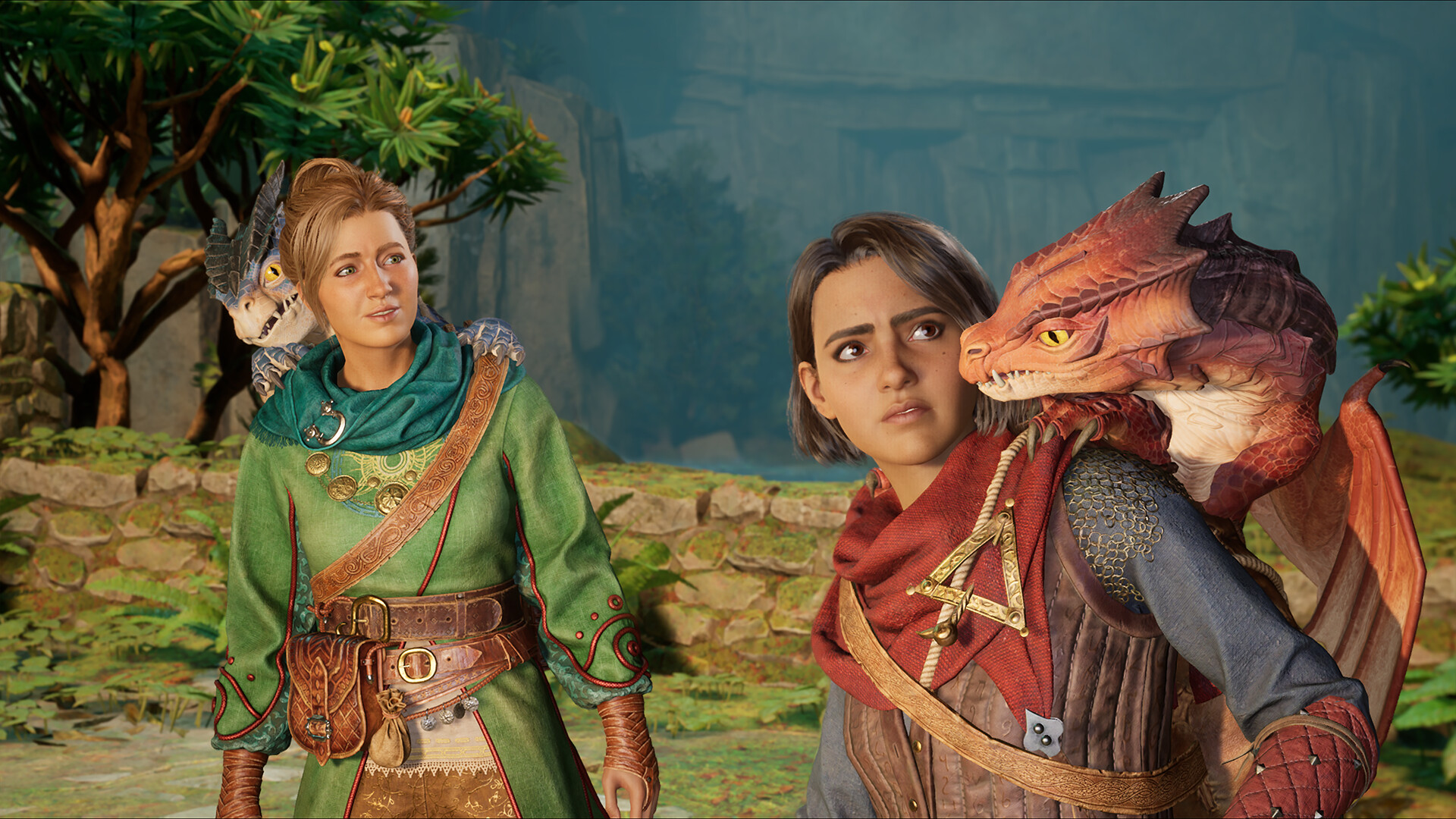
The premise is a machine for variety. Mio and Zoe are two writers, one a sci-fi author and one a fantasy novelist, trapped inside a device that pulls them through their own stories, hurling the pair between neon cyberpunk cities and dragon-filled fantasy realms and dozens of stranger places in between. It is a setup that gives Hazelight license to build whatever it wants, and the studio takes that license and runs until it is out of breath.
The reception has been extraordinary, and earned. Split Fiction became the first Electronic Arts game in over a decade to clear a 90 on Metacritic, sitting in the low 90s across platforms, with individual outlets handing out perfect scores. Steam players have matched the critics almost exactly, settling around a 94 percent positive rating, a rare consensus that a game is not just good but something close to a landmark for its genre.
What makes it special is not any single mechanic but the relentlessness of the invention. Split Fiction is built on the idea that a co-op game should never let you settle, should always be introducing the next impossible thing for two people to figure out together, and it delivers on that promise more consistently than anything the genre has produced. It is a firehose, and it never lets up.
How it plays
PlaySplit Fiction is designed from the ground up for two players, mandatory co-op with no single-player option, and every mechanic is built around the friction and delight of coordinating with another person. You and your partner each control one of the writers, and the game is a near-constant stream of asymmetric abilities, shared puzzles, and cooperative platforming that force genuine communication. The defining trait is that it almost never reuses an idea, so the moment you master one gimmick, the game whisks it away and hands you a new one.
That structure is the whole point. Where most games find a loop and refine it, Split Fiction treats its own systems as disposable, introducing a mechanic, mining it for one brilliant sequence, and discarding it before it can grow stale. One stretch might have you transforming into different animals, the next has you gravity-shifting across a fractured cyberpunk skyline, the next puts you in control of dueling dragons. The variety is not garnish; it is the design philosophy, and it keeps both players perpetually on their toes.
The two story worlds, Mio's cold science fiction and Zoe's warmer fantasy, give the game two distinct mechanical flavors to draw from, and Hazelight cross-pollinates them constantly. Layered on top are the side stories, optional detours that are often the most inventive, unhinged content in the whole package, little pockets where the designers clearly let themselves go wild with a single wild idea. Finding and clearing them is one of the game's great pleasures.
Crucially, the difficulty is tuned for shared fun rather than punishment. Split Fiction wants both players to feel clever, so its puzzles are readable and its platforming forgiving enough that a mismatched pair can still thrive, but it is not toothless, and its best set pieces demand real coordination and timing. The result is a game that works whether you are playing with a hardcore partner or dragging a less experienced friend through it.
It is also generous about access. The Friend's Pass model means only one person needs to own the game to play the whole thing together, online or in local split-screen, and cross-platform support lets you team up across different systems. That is co-op design thinking extended all the way to how you buy and launch the thing, and it removes almost every barrier to actually getting two people into it.
Art & atmosphere
CraftBecause Split Fiction hops between entire genres of fiction, its art direction is really a dozen art directions stitched into one relentless whole, and the craft on display is remarkable for its range. Mio's science fiction worlds are all neon, chrome, and cold precision, while Zoe's fantasy realms glow with warmth, color, and storybook softness, and the game delights in slamming the two aesthetics together and watching the sparks.
The sheer visual variety is the point. Because the game refuses to stay in one place, it is constantly reinventing its own look, and Hazelight sells each new world with enough specificity that none of them feel like a reskin. One moment is a rain-slicked cyberpunk sprawl, the next a sun-dappled fantasy vista, and the confidence with which the studio pivots between them is a large part of the game's wow factor.
Underneath the spectacle is a real emotional throughline. The relationship between Mio and Zoe, two very different writers learning to inhabit each other's imaginations, gives the game a heart that its firehose of set pieces could easily have drowned out. The presentation, the performances, the music, all bend toward selling that bond, so the invention never feels weightless. Split Fiction is dazzling to look at, but it is the sincerity underneath the spectacle that makes it stick.
A relentlessly inventive, purpose-built co-op adventure that reaches escape velocity and stands as the best two-player game in years, limited only by its strict reliance on a partner.
Pros & cons
The ledgerIn its favour
- A relentless firehose of ideas that almost never repeats itself
- Purpose-built co-op design that makes two-player coordination sing
- Wildly inventive side stories that are the creative high points
- Two distinct genre worlds with their own mechanical flavors
- Difficulty tuned for shared fun without becoming toothless
- Friend's Pass and cross-play remove nearly every barrier to entry
Against it
- Strictly two-player, with no solo option at all
- The constant novelty means few mechanics get room to deepen
- Its quality depends on having a reliable co-op partner
- The sheer pace can feel exhausting in long sessions
Screens
Official media© Electronic Arts. Official media via Steam.
The player verdict
Real reviews · Steam- Recommended
“At the time of writing this review, I have 323 hours in Split Fiction, all of them played with my daughter. We absolutely love this game and are currently on our third or fourth playthrough, which says a lot about how much replay value it…”
55 found helpfulvia Steam - Recommended
“It is a lot of fun, and I love the fact that only one person needs to own the game for a friend to play along with you. 10/10 for game play, graphics, story, everything.. don't think, just buy it, and play with a friend! <3”
9 found helpfulvia Steam - Recommended
“One of the best coop games I've played. It's very innovative and imaginative, recommended to everyone looking for 2 man coop. I'd also like to thank the studio for amazing option to invite a 2nd player(cross platform too!) to play that…”
5 found helpfulvia Steam - Not recommended
“"Let's make a Cool game" (bit of an emotional, partly unfiltered critique, but it's kinda late and I got kinda frustrated playing this) I played Split Fiction with my partner, both of us avid gamers and readers alike. A game about two…”
5 found helpfulvia Steam
Verdict
The callSplit Fiction is Hazelight doing what only Hazelight seems able to do, and doing it better than ever. By building an entire game around the idea that co-op should never stop surprising you, the studio has made a two-player adventure of almost absurd generosity, one that spends brilliant mechanics as fast as it can invent them and somehow never runs dry. It is the clearest argument yet that this studio is operating in a category of its own.
Its limitations are the honest flip side of its ambitions. The strictly two-player design means you need a partner to see any of it, the breakneck variety leaves few systems room to deepen, and the sheer relentlessness can tire you out across a long sitting. None of these are failures so much as the natural cost of a game this committed to never standing still.
But as an experience to share with another person, Split Fiction is close to peerless, the best co-op game in years and a high-water mark for the genre by nearly every measure. If you have someone to play it with, this is essential, one of those rare games that is genuinely better because it is impossible to enjoy alone. Grab a friend, hand them the Friend's Pass, and settle in for one of the most inventive rides in modern gaming.
Sources
Original review by Aymen Sakouhi from the licensed facts above. Score: 9.2/10.