Hell is Us Dares You to Play Without a Map, and Mostly Earns It
Rogue Factor strips out the minimap and quest markers to make you actually explore. Bold, atmospheric, a little stiff. Our verdict: 7.6/10.
Aymen Sakouhi·Writer · Games Hobbyist//4 min read
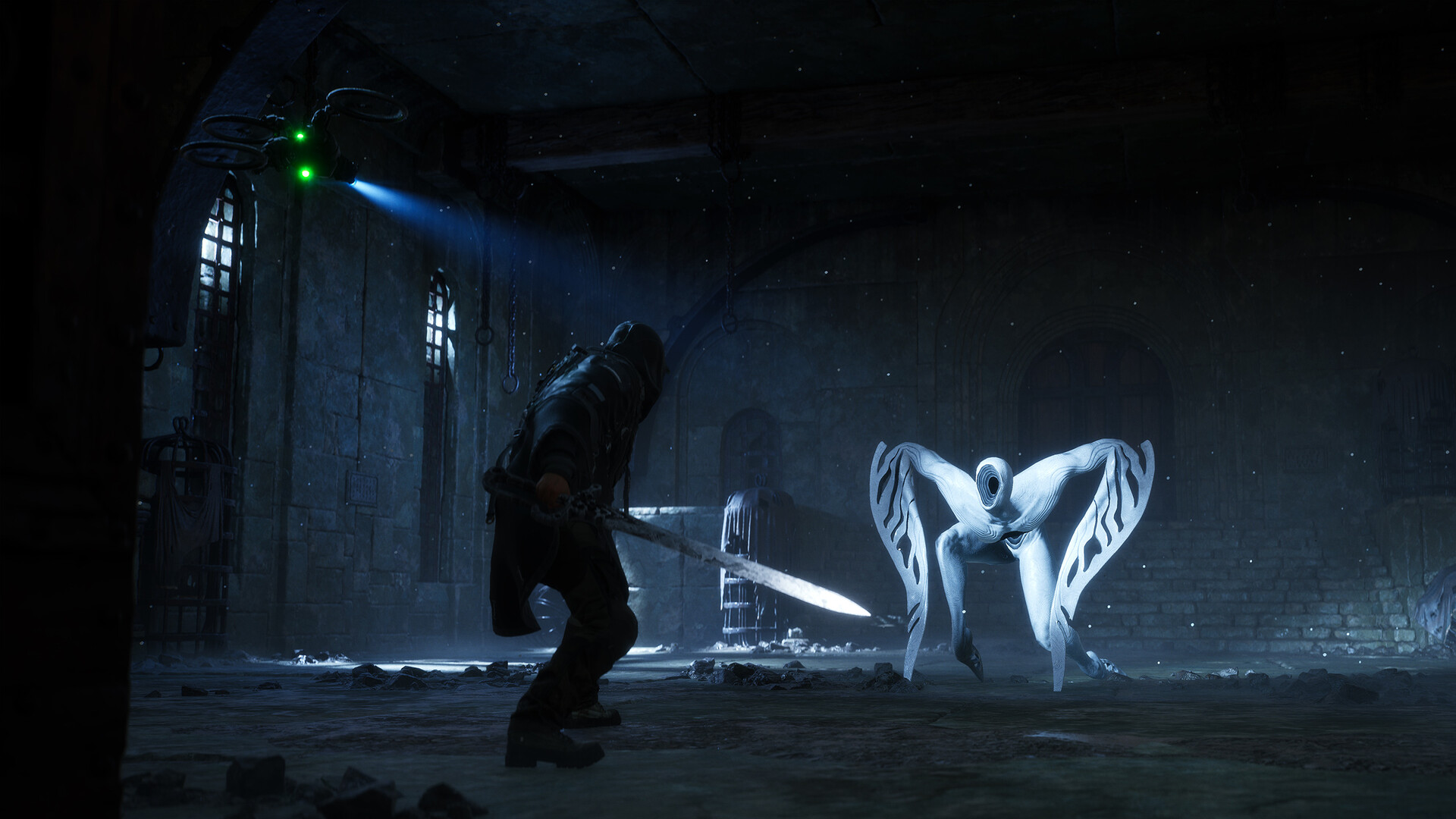
© Nacon. Official media via Steam.
The pitch
OverviewHell is Us opens with an act of subtraction. There is no minimap, no quest marker, no glowing waypoint pulling you toward the next objective. Rogue Factor's third-person action-adventure trusts you to navigate its war-torn country by paying attention, to conversations, to landmarks, to notes and offhand directions, and that single design decision colors everything else about it. It is the rare modern game that asks you to be present rather than led.
You play Remi, a man returning to the sealed-off nation of Hadea to find his parents, arriving into a country tearing itself apart through civil conflict while a stranger, supernatural calamity spreads underneath the human violence. The game's own framing is blunt about its theme: if war is the closest thing to hell on earth, it is because humankind supplies the worst of the demons. This is a story about people first and monsters second.
Critics have responded warmly to the ambition. Aggregate scores landed in the low 80s, with a broad consensus that Hadea is a genuinely striking place to be lost in and that the no-handholding approach, while divisive, is the point rather than an oversight. Several outlets flagged it as one of 2025's more interesting swings, a mid-budget game with real conviction about the kind of experience it wants to be.
It is not a soulslike, despite a superficial resemblance in its combat, and that mislabeling has tripped up some expectations. Hell is Us is closer to an exploration-driven mystery, one that hands you a country and a set of questions and largely leaves you to connect them yourself. When that clicks, it is quietly thrilling. When it does not, the friction is real.
How it plays
PlayThe headline mechanic is the absence of mechanics you have come to expect. Progression in Hell is Us runs on observation and inference: you listen to what characters tell you, read the environment, remember a name or a route, and find your own way there. There is no quest log holding your hand, and the game expects you to take mental or literal notes. For players tired of following a diamond on a compass, it is liberating; for those who want to make steady progress in short sessions, it can be genuinely confusing, and a few of its puzzle chains ask more patience than they reward.
Combat is deliberate and melee-focused, built around reading enemies and managing space rather than twitch reflexes. It is competent and occasionally tense, but it is also the game's least distinctive element. The bestiary is thin and uninspired, so while the act of fighting is fine, the variety of what you fight runs dry, and encounters start to feel like obstacles between the exploration beats rather than highlights in their own right. Movement, too, is a sticking point: Remi controls with a certain stiffness that never quite disappears, and traversal lacks the fluidity that would make backtracking through Hadea feel effortless.
Where the game comes alive is in the actual investigating. Piecing together where to go and why, from fragments of dialogue and environmental detail, produces the specific satisfaction that guided open worlds have largely trained out of the genre. The play areas are varied enough to keep the sense of discovery fresh, and the deliberate pace suits a game that wants you to look closely rather than sprint past.
Progression, however, is one of the more common complaints. The systems governing how Remi grows and how you unlock new capabilities can be confusing, and the game's refusal to over-explain, so effective for navigation, occasionally works against it here, leaving you unsure whether you have missed something or simply have not reached it yet. Accessibility options are present and welcome, including alternatives for color and the ability to play without strict timed inputs, which softens some of that friction.
The overall loop, explore, investigate, fight when you must, works best for players willing to meet it halfway. This is a game that rewards attention and punishes autopilot, and its highs come from the country itself rather than from any single system firing perfectly.
Art & atmosphere
CraftAtmosphere is Hell is Us's greatest asset, and it is not close. Hadea is realized with a grim, specific artistry: a country visibly coming apart, where the ordinary devastation of civil war and the uncanny wrongness of the supernatural calamity bleed into the same landscape. The art direction understands that horror works best when it is grounded, and it keeps the human ruin front and center so the stranger elements land harder.
The technical craft backs up the vision. Reviewers repeatedly singled out the game's execution and its high-quality soundtrack, which does a great deal to sustain the mood between story beats and combat encounters. The audio design leans into unease without cheap jolts, and the music gives the whole journey a somber, elegiac weight that matches the game's blunt thesis about human cruelty.
The variety in the environments matters aesthetically as much as mechanically. Because you are meant to navigate by looking, the world has to be worth looking at, and for the most part it is: distinct areas with their own character keep the eye engaged and the sense of place strong. It is the rare game where turning off the guidance systems reveals a world clearly built to be studied rather than skimmed.
A brave, atmospheric exploration mystery whose striking world and no-handholding design outweigh a thin bestiary, stiff movement, and murky progression.
Pros & cons
The ledgerIn its favour
- A bold no-minimap, no-marker design that makes exploration feel real
- Hadea is a striking, grimly specific place to get lost in
- Excellent atmosphere and a high-quality, mood-setting soundtrack
- Strong technical execution and varied, distinct play areas
- A human-first story with real thematic conviction
- Thoughtful accessibility options, including untimed input play
Against it
- A thin, uninspired bestiary makes combat repetitive
- Remi's movement is stiff and traversal lacks fluidity
- Progression systems can be confusing and under-explained
- Some puzzle chains ask more patience than they reward
- The no-handholding approach will frustrate players who want steady pace
Screens
Official media© Nacon. Official media via Steam.
The player verdict
Real reviews · Steam- Recommended
“Just 100%'d the game, was absolutely obsessed with the world building, it was the sole reason I kept playing. The combat just sort of exists, it's passable, it's got an interesting Nioh ki pulse mechanic, but the scaling is completely off,…”
38 found helpfulvia Steam - Not recommended
“This is one of, if not, the best atmospheric games that I've played. Every single lore was meticulously intertwined. The puzzle was amazing. The graphics live up to it. The main story and sub-stories portray how bad war is for all normal…”
25 found helpfulvia Steam - Recommended
“Starting off with the negative. - The combat is the weakest part of the game, bar none. It's not bad enough to ruin the experience, but it's also never particularly exciting. Considering how heavily story-focused the rest of the experience…”
10 found helpfulvia Steam - Not recommended
“I was really enjoying the game save the fact that I can't jump at all. I just have a thing with games that won't let me jump, moving on from that. I was fine with it until I got stuck between two rock textures trying to turn around... you…”
6 found helpfulvia Steam
Verdict
The callHell is Us is a game with the courage of its convictions, and that alone makes it worth your attention in a year of guided, marker-strewn open worlds. By stripping away the modern navigation crutches, Rogue Factor rebuilds the simple pleasure of finding your own way, and it wraps that experiment in one of 2025's most atmospheric settings, a war-scarred country that is genuinely haunting to explore.
The execution does not match the ambition at every turn. The combat is serviceable but forgettable, dragged down by a thin enemy roster, the movement never loses its stiffness, and the deliberately opaque progression can leave you unsure whether you are stuck or just early. These are real flaws, and they will matter more to some players than others, particularly anyone who bounces off games that refuse to explain themselves.
But for players who miss exploration that trusts them, who want a mid-budget game with a clear artistic point of view, and who value atmosphere and mystery over mechanical polish, Hell is Us is an easy recommendation and a rewarding one. Go in expecting an investigation rather than a soulslike, be willing to pay attention, and Hadea will give back more than most bigger, louder games manage to.
Sources
Original review by Aymen Sakouhi from the licensed facts above. Score: 7.6/10.