Civilization VII Reinvented the Formula and Split Its Players Down the Middle
Our verdict: 7.0/10. Civilization VII's Ages system is a genuine rethink, undercut by a threadbare launch UI and aggressive DLC that split players evenly.
Aymen Sakouhi·Writer · Games Hobbyist//5 min read
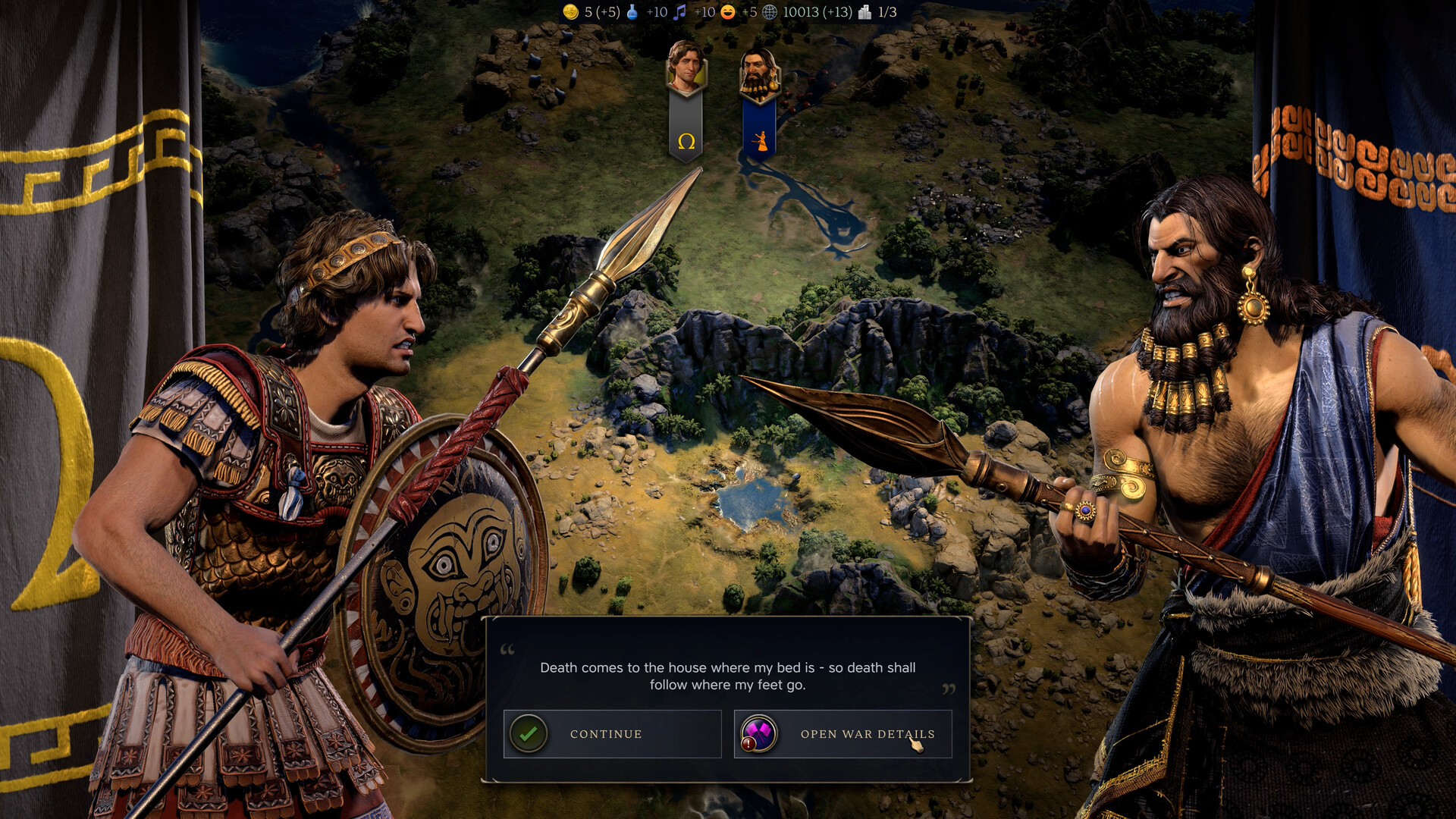
© 2K. Official media via Steam.
The pitch
OverviewFew strategy series carry the weight that Civilization does, and few sequels have divided their own audience as cleanly as Civilization VII. Developed by Firaxis Games and published by 2K, it launched in February 2025 with the boldest structural rethink the franchise has attempted in years, and the reception landed almost perfectly in half. Critics settled at a mild consensus, with an aggregate around 79, while the Steam community sits at Mixed and is split down the middle: of more than 38,000 reviews, the positive and negative counts are within a few dozen of each other. That is about as literal a fifty-fifty verdict as a major release ever produces.
That split is the story. Civilization VII is not a game that failed quietly or succeeded cleanly. It is a game that made a genuine creative bet, divided into Ages where your civilization transforms as history moves rather than persisting as one unbroken nation, and asked a famously conservative player base to accept a formula they had refined over decades. For some players that bet pays off into the most dynamic Civ in years. For others it breaks the exact long-game continuity that made the series theirs. Both reactions run through the reviews in almost equal measure.
This verdict reflects the game as it stands now, after more than a year of patches and paid content. Some of the launch complaints have been addressed. The deepest ones, about the design bet itself and about how the game was sold, have not gone away.
How it plays
PlayThe headline change is the Age system, and everything else orbits it. Rather than steering a single civilization from antiquity to the space race, you progress through distinct Ages and transition your people into a new civilization at each threshold, carrying leaders and some progress forward while the nation itself changes shape. In its best moments this is genuinely invigorating. The early game has a focus and a pace the series sometimes lacked, each Age resets the board enough to keep a long session from calcifying, and the decoupling of leaders from civilizations opens combinations that reward experimentation. When it clicks, it is the most alive a game of Civ has felt in a long time.
The cost of that design is continuity, and this is where the divide opens. The great quiet pleasure of older Civ games was shepherding one people across all of history, watching a city you founded in 4000 BC still standing in the modern era. Civilization VII deliberately interrupts that arc, and for a large part of the audience the Age transitions feel less like evolution than like being made to start over two extra times inside one match. There is no reconciling those positions through balance patches, because it is not a balance problem. It is a question of what players wanted the game to be, and the series chose to be something new.
What is not a matter of taste is the state the game shipped in. At launch Civilization VII was widely described as unfinished, with a user interface that lacked basic information and conveniences long-time players considered standard, and the community reviews are blunt about feeling that a full-priced strategy game arrived in a beta state. Firaxis has steadily improved the UI and the systems since, and the game today is meaningfully more complete than it was in February 2025. The reputation for a threadbare launch, though, hardened early and still colors how the game is discussed.
The other recurring grievance is monetization. A loud share of reviews object to the pace and pricing of downloadable content, arguing that leaders, civilizations, and systems that felt like they belonged in the base game have been parceled out at a cost that reads as aggressive even by the series' expansion-heavy standards. Whether that bothers you is partly a matter of how you buy games, but the resentment is real and widespread, and it feeds directly into the negative half of that fifty-fifty split.
Art & atmosphere
CraftPresentation is one of the areas where Civilization VII is least contested. The map is handsome and readable, the Ages are visually distinct enough that a glance tells you where you are in a match, and the leader presentations carry the series' usual personality and production polish. Firaxis has long understood that a strategy game lives or dies on legibility, and at its best the interface communicates a dense amount of information without drowning you, now that the post-launch work has filled in much of what was missing. The audio and the civilization themes do the quiet, effective job of making each culture feel distinct. The art was rarely the thing players argued about, which in a game this divisive is worth noting on its own: the disagreements here are about structure and value, not craft.
A genuinely bold Age-based reinvention with a sharper early game, undercut by broken continuity for series veterans, a threadbare launch UI, and aggressive DLC that split the community almost exactly in half.
Pros & cons
The ledgerIn its favour
- The Age system is a genuine reinvention that keeps long matches from stalling
- Decoupling leaders from civilizations opens rewarding new strategic combinations
- A sharper, better-paced early game than the series often manages
- Handsome, legible presentation that has improved steadily since launch
- Meaningfully more complete now than the state it shipped in
Against it
- The Age transitions break the single-nation continuity that defined the series for many
- A widely criticized, threadbare launch UI that first impressions never fully shook
- Aggressive DLC pricing that a large share of players read as a money grab
- A community split almost exactly in half, reflecting a divide patches cannot close
Screens
Official media© 2K. Official media via Steam.
The player verdict
Real reviews · Steam- Not recommended
“The game suffers from corporate greed. It was released in a beta state essentially at launch, missing basic features such as a finished UI. While continued updates add to the playability of the game, DLC is priced too aggressively for the…”
318 found helpfulvia Steam - Not recommended
“Disgusting money grab. Ive been a life long civ fan and this will 100% be my last time purchasing their games. Over 2 years since release and its an unfinished game... then they have the audacity to release the rest of the game in almost…”
241 found helpfulvia Steam - Not recommended
“I feel like I got scammed, and I played this on a free weekend. I tried writing an actual review, but I stopped after realizing that I couldn't properly articulate what I don't like about this game without writing an essay. This isn't a…”
131 found helpfulvia Steam - Not recommended
“Horrible game. totally reinvented game. I played this five times and just went back to Civ Vi.”
84 found helpfulvia Steam
Verdict
The callCivilization VII is the rarest kind of sequel: one that took a real creative risk with a formula it could have safely coasted on, and paid for it with an audience split straight down the middle. The Age system is not a gimmick. It is a sincere attempt to solve the way long Civ games sag in their back half, and for the players it suits, it is the freshest the series has felt in a decade. That is the game the warmer reviews are describing, and they are not wrong.
The other half of the split is just as grounded. Interrupting the single-civilization arc broke something load-bearing for longtime players, and no patch can restore a thing the design chose to remove. On top of that, the game asked full price for a launch build that was visibly unfinished, and then layered on a content model that a lot of people found grasping. Those are not small complaints, and they explain the Mixed badge completely.
At 7.0, Civilization VII is a good, ambitious strategy game that is genuinely better now than at release, wrapped around a design bet you will either embrace or reject. If the idea of a civilization that transforms across Ages excites you, this may be your favorite entry in the series. If what you loved was guiding one people across all of history, your disappointment is real and you are far from alone. It is a bold game, and boldness this divisive earns both the praise and the criticism it gets.
Sources
Original review by Aymen Sakouhi from the licensed facts above. Score: 7.0/10.