Resonance: A Plague Tale Legacy Trades the Rats for a Blade, and Mostly Gets Away With It
Verdict: 8.0/10. Asobo swaps the rats for swordplay in a cinematic Plague Tale prequel: Sophia, a cursed Greek island, a slow start but a stirring story.
Aymen Sakouhi·Writer · Games Hobbyist//6 min read
© Focus Entertainment. Official media via Steam.
The pitch
OverviewFor two games, A Plague Tale meant one thing above all else: rats. Oceans of them, a living tide of teeth and shadow that you held back with fire because you could not fight it. Resonance: A Plague Tale Legacy is the moment Asobo Studio decides that is no longer the point. This is a prequel, set in 1334, roughly fifteen years before the events of Requiem, and it hands the series over to a new lead, a new setting, and a combat system that would have been unthinkable for the frightened children of the first two games. The rats have not vanished entirely, but they are no longer the reason you are afraid.
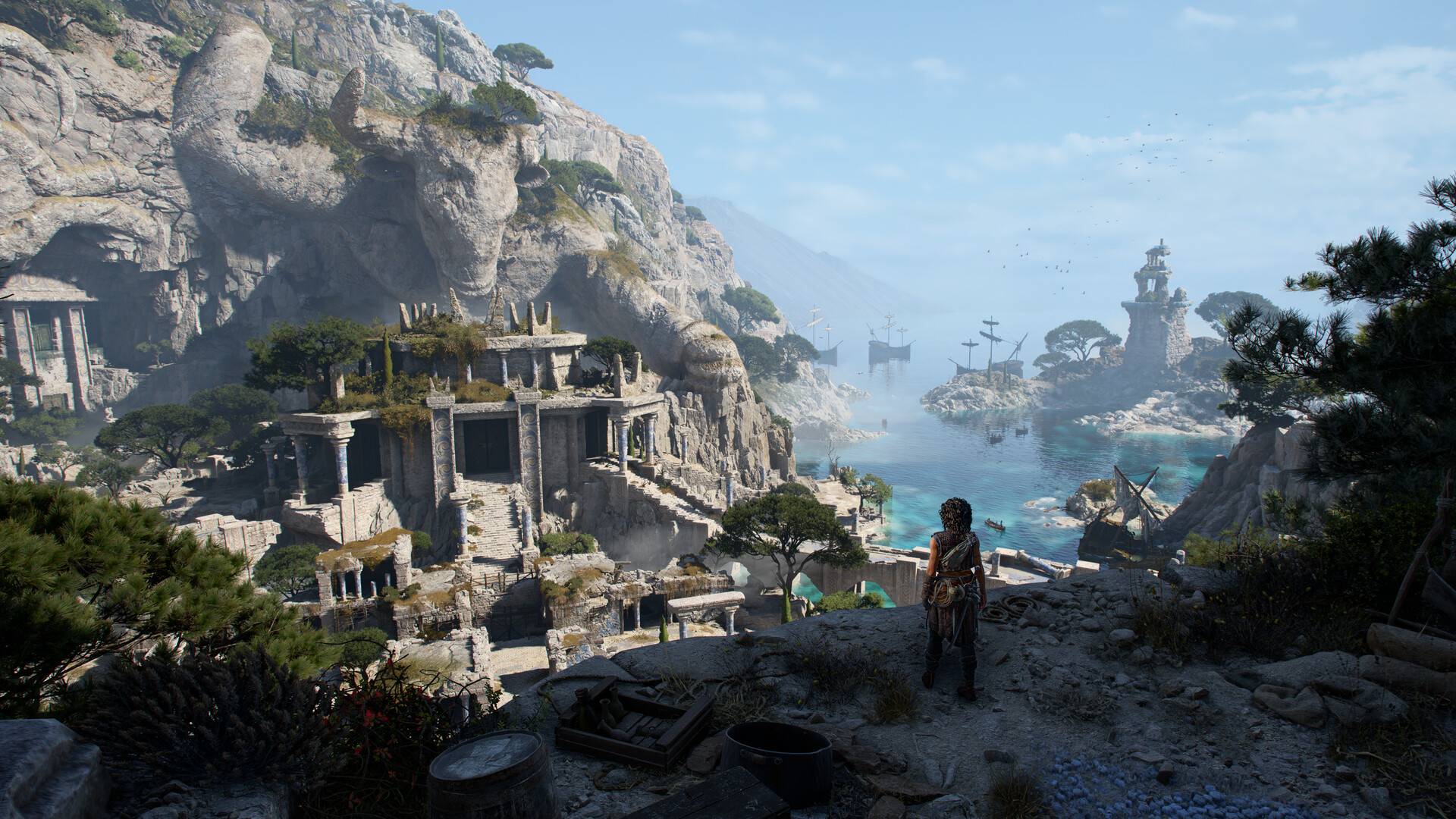
You play as Sophia, the sharp-tongued smuggler and plunderer who stole scenes in Requiem, and this is her origin. The story pulls her away from medieval Europe and back to the island where she grew up, a version of Crete the game frames as the Minotaur's Island, all sun-bleached ruins, ancient trials, and secrets tangled up in the same cursed bloodline that has haunted the series from the start. It is a deliberate widening of the world, trading grey French plague-towns for Mediterranean myth, and it lets Asobo tell a story that stands entirely on its own. You do not need to have touched the earlier games to follow it.
What you get in return for that reinvention is a polished, cinematic action-adventure that wears its influences on its sleeve. Critics have reached, again and again, for Uncharted, God of War, and Tomb Raider to describe it, and those are fair reference points: this is a third-person prestige adventure with swordfights, climbing, puzzles, and set pieces, built to look expensive on a PlayStation 5, an Xbox Series console, or a PC, with a day-one Game Pass release smoothing the entry. It landed on August 27, 2026 at fifty dollars, and it is the third mainline entry in a series that has, quietly, become one of the more reliable narrative studios in the business.
The question hanging over all of it is whether a Plague Tale that plays like everything else keeps the identity that made the first two memorable. The answer, across a slow-burning campaign, is a qualified yes. Resonance is a very good version of a very familiar thing, elevated by strong characters and a genuinely affecting story, and held back by a hesitant opening, some repetition, and the technical rough edges that come with an ambitious mid-budget studio reaching for a blockbuster silhouette.
How it plays
PlayThe headline change is combat, and it is a real one. Where earlier Plague Tale protagonists threw rocks and lit torches to survive, Sophia carries a blade and knows how to use it. Asobo has openly cited Ghost of Tsushima, Sekiro, and Sifu as touchstones, and you feel all three in the parrying, the timing windows, and the brutal finishing moves. The cleverest wrinkle is a health system that rewards aggression: defeating enemies restores health you have lost, so retreating and turtling is punished and pressing the fight is the way back to safety. It gives even routine skirmishes a push-forward rhythm that suits a character defined by nerve rather than fear.
Traversal has opened up to match. Sophia moves with a freedom the series has never allowed before, climbing and leaping across the island's ruins and reaching high ground with a grappling hook, so the levels can go vertical in a way the claustrophobic corridors of Innocence and Requiem never did. It is a small mechanical addition with a large effect on the feel of the game, turning exploration from a nervous crawl into something closer to an expedition. The island wants to be climbed, and the game gives you the tools to do it.
Puzzles remain a core pillar, and here the series' fascination with light gets a new instrument. Sophia carries a stolen Minoan sphere that manipulates light, and much of the island's problem-solving is built around bending, redirecting, and channelling it through ancient mechanisms. It is a satisfying central gimmick, tied neatly to both the setting's mythology and the series' long love of light as a tool and a threat, and the best of these sequences have the unhurried, tactile pleasure of a good Tomb Raider tomb.
Structurally, the game leans on a dual timeline. Sophia's medieval present is threaded through with the ancient Minoan past, and events centuries old echo forward to shape what she faces now. It is an ambitious framing that gives the writing room to build its mystery in layers, and it is where Resonance feels most confident in its own identity rather than borrowed from its influences. When the two timelines rhyme, the story lands with real weight.
Stealth, the old spine of the series, has been deliberately dialled back. It is present, but it is quieter and largely backloaded to the final third, where a relentless stalking creature reintroduces the old dread and forces you to hide and evade rather than fight. The rats, too, are here, but as texture rather than the central survival mechanic, which is exactly the trade the whole game is built around. Fans hoping for another rat-swarm survival puzzle box should know that is not what this is, and Push Square's review said it plainly by calling it a solid story game without the rats.
The honest weaknesses of the loop are the familiar ones for this kind of prestige adventure. The opening is slow, taking its time to hand you the tools that make it sing, and the combat that feels fresh in the first hours can start to repeat itself across a long campaign, since the enemy variety and encounter design do not always keep pace with how good it feels to fight. It is a well-built system that could have used a little more to do with itself.
Art & atmosphere
CraftPresentation is where Resonance spends its blockbuster ambitions, and for the most part they pay off. The move from the muted greys of plague-era France to a sun-drenched Mediterranean island is a smart one, giving Asobo warm stone, deep shadow, and shafts of hard light to build around, and the studio's long expertise with lighting and atmosphere carries directly into the new palette. The Minotaur's Island is a genuinely evocative place, and the light-based puzzles double as a showcase for the thing the engine does best.
The character work is the other half of the craft, and it is the stronger half. Sophia is a vivid lead, and the voice performances and writing around her are consistently praised as the game's high point, carrying an emotional, often tragic story past its more derivative stretches. This is a studio that has always understood that its set pieces matter less than the people caught inside them, and Resonance keeps that priority intact even as it borrows a genre it did not previously play in.
The caveat is technical, and it is worth stating plainly. Performance is the recurring blemish across coverage, with frame-rate problems called out sharply in some reviews, and it is the clearest sign of a mid-budget team reaching for a triple-A silhouette without quite the resources to lock everything down. It does not sink the experience, but it is the seam that shows, and how much it bothers you will depend on your platform and your tolerance for the occasional stutter in a game this cinematic.
A confident, cinematic reinvention of the series with satisfying combat, clever light puzzles, and a strong Sophia-led story that stands on its own, held back by a slow start, repetition over a long campaign, recurring performance issues, and design that borrows openly from bigger prestige adventures.
Pros & cons
The ledgerIn its favour
- A satisfying new combat system, with a health-on-kill loop that rewards aggression
- Sophia is a strong lead, and the writing and voice work are the game's high point
- An emotional, often tragic story that stands entirely on its own for newcomers
- The Minotaur's Island setting is evocative, with clever light-based puzzles
- Open traversal and a grappling hook give the series a welcome sense of freedom
- Cinematic production values in the vein of Uncharted, God of War, and Tomb Raider
Against it
- A slow opening that takes too long to hand you the tools that make it sing
- Combat can grow repetitive over a long campaign as enemy variety thins out
- Frame-rate and performance issues are a recurring blemish across platforms
- The design borrows heavily and openly from bigger prestige adventures
- Longtime fans hoping for the rat-survival identity will not find it here
Screens
Official media© Focus Entertainment. Official media via Steam.
The player verdict
Real reviews · Steam- Recommended
“Resonance is basically a 7/10 title. The gameplay loop here resembles Echoes of the End the most. From the general plot to the locations to the gameplay flow to the combat, there are plenty of similarities between both titles. It’s just…”
218 found helpfulvia Steam - Recommended
“Resonance is a rather bold third entry. Before getting into comparisons and complaints, I should say this: it manages to positively differentiate itself from the previous entries while still preserving the identity of the series. Although…”
63 found helpfulvia Steam - Recommended
“The game is great so far and I'm enjoying it. The game's performance is excellent, which is unusual these days when games are released. Thanks to the developers.”
49 found helpfulvia Steam - Not recommended
“The combat in this game is the only good thing. The exploration and story are mediocre at best and the writing is TERRIBLE. The game tries to pull at your heartstrings before you can even care about the characters and the banter between…”
32 found helpfulvia Steam
Verdict
The callResonance: A Plague Tale Legacy is the sound of a studio deciding to grow up in public. It takes a series built on a single unforgettable mechanic, the rats, and sets it almost entirely aside in favour of swordplay, climbing, and cinematic scope, and the remarkable thing is how well the gamble holds. The combat is genuinely good, the light-sphere puzzles tie neatly into a strong sense of place, and the story, carried by a vivid Sophia and excellent performances, is affecting enough to justify the whole reinvention. As a standalone entry it works cleanly for newcomers, and as a prequel it deepens what came before.
What keeps it from the top tier is that its ambition outruns its polish in a few places that matter. The opening is slow, the fine combat system starts to repeat itself before the credits, and the performance issues are a real and recurring distraction on a game selling itself on spectacle. These are the honest costs of a mid-budget studio reaching for a blockbuster shape, and they are visible without being fatal.
At 8.0, Resonance is a very good action-adventure and a confident new direction for one of the industry's more dependable narrative studios. It is not the genre-defining swing that Uncharted or God of War were, and it does not pretend to be, but it is a rich, moving, handsomely made adventure that earns its place. If you came for the rats you may leave a little cold; if you came for a story worth finishing, Sophia's origin is an easy one to recommend.
Sources
Original review by Aymen Sakouhi from the licensed facts above. Score: 8.0/10.