Hollow Knight: Silksong Makes You Earn Every Inch of Its Haunted Kingdom
Our Hollow Knight: Silksong review: Team Cherry's sequel is faster, harder, and more demanding than Hollow Knight, and almost worth the seven-year wait.
Aymen Sakouhi·Writer · Games Hobbyist//5 min read
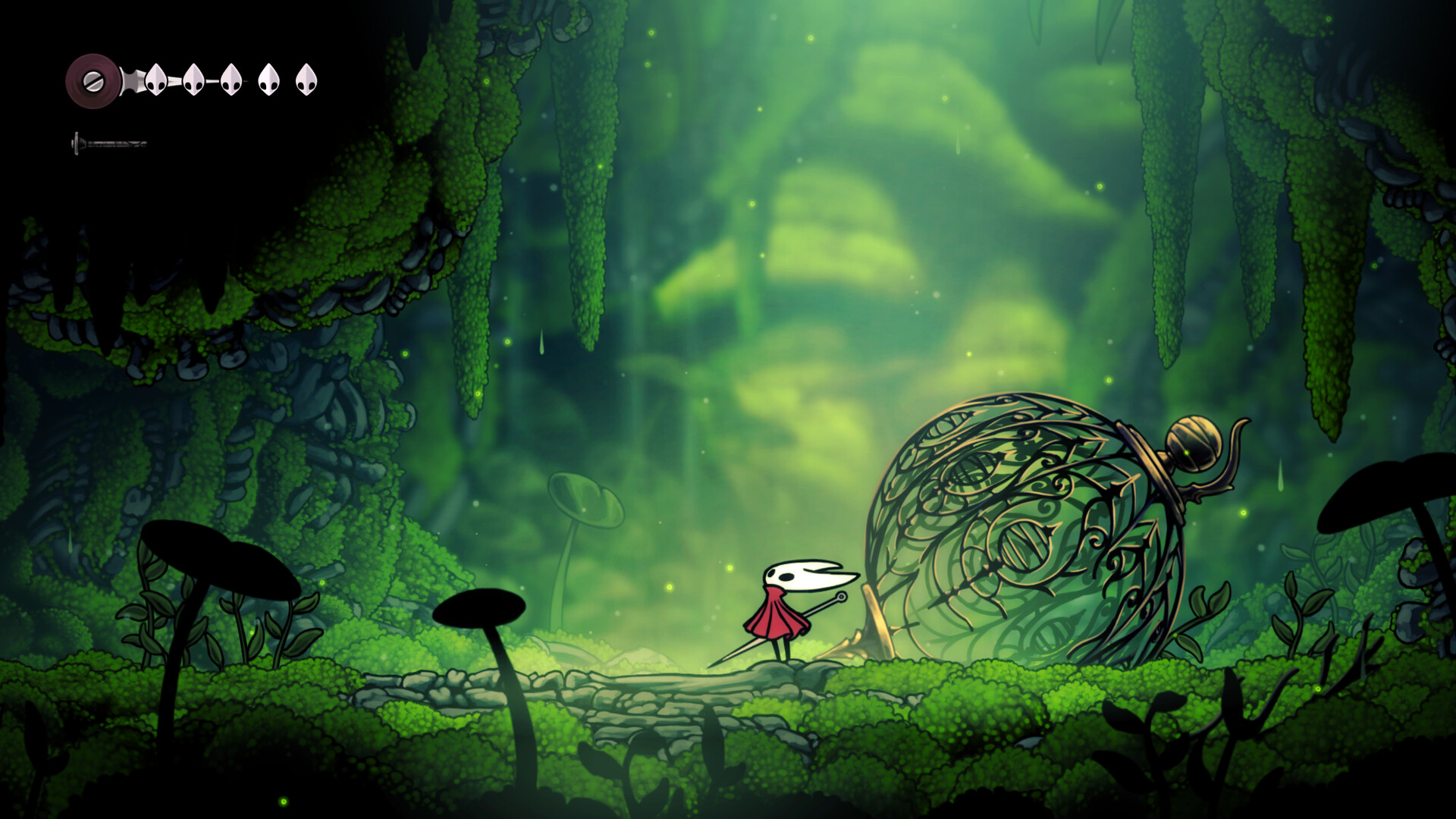
© Team Cherry. Official media via Steam.
The pitch
OverviewFor seven years Hollow Knight: Silksong existed mostly as a rumor, a fixture of every showcase wishlist and every disappointed forum thread. Now it is finally here, and the first thing it does is knock the wind out of you. This is not the melancholy, methodical descent of the first game. You play Hornet, and Hornet does not trudge. She sprints, she vaults, she snaps a needle through the air with a speed that makes the original's Knight feel like a patient uncle by comparison.
Team Cherry has built a sequel that respects your history with the series by immediately refusing to coast on it. The opening hours are humbling even for veterans, precisely because everything you internalized about spacing, healing, and rhythm has been quietly rewritten. Hornet's Silk gauge fills as she attacks and spends on healing or on flashier silk arts, a small change that reshapes every fight around aggression rather than caution.
The setting is a new kingdom, one ruled, as the title promises, by silk and song, and you ascend rather than descend, climbing toward a peak instead of sinking toward a heart of rot. It is a smart inversion. Where Hallownest was a tomb you excavated, this land feels alive and hostile in a more immediate way, full of things that want you gone and are equipped to make it happen.
What has not changed is the essential Team Cherry contract: a vast, wordless world that trusts you to get lost in it, a map you draw through effort and unease, and a sense that every locked door and unreachable ledge is a promise the game fully intends to keep. Silksong is bigger, faster, and considerably meaner than its predecessor, and for long stretches it is every bit as brilliant.
How it plays
PlayHornet's moveset is the whole reengine. She is quicker off the mark and more mobile in the air, with a run, a nimble aerial float, and a grappling hook that turns traversal into something closer to momentum management than careful hopping. Combat leans hard into that speed. You are meant to stay on top of enemies, weaving needle strikes and silk arts, and the game punishes the timid far more sharply than Hollow Knight ever did.
That punishment is the defining topic of Silksong's reception, and it is real. Enemies hit harder, ordinary encounters carry more threat, and the boss fights lean into long runbacks, the stretches of hard platforming and awkward enemy placement you must clear again every time a boss puts you down. A single fight can cost you ten minutes of tense re-approach before you even land another attempt. For some players that friction is invigorating. For others it curdles into resentment, and both reactions are fair.
The diagonal pogo, bouncing off enemies and hazards at an angle to cross gaps, is a recurring flashpoint. It is central to several challenges and genuinely fiddly to execute under pressure, and it is the clearest example of Silksong asking for a level of precision the first game mostly reserved for its optional endgame. The learning curve is not gentle, and the game is largely unapologetic about it.
When the systems click, though, the movement is sublime. Chaining a dash into a grapple into a downward strike and out again, all while a boss telegraphs its next sweep, produces the kind of flow state metroidvanias promise and rarely deliver at this tempo. The kingdom is enormous and densely interconnected, layered with hidden routes, tools, and upgrades that reward the compulsion to poke at every wall, and the moment-to-moment traversal is a joy once Hornet's vocabulary becomes second nature.
Structurally it is a true Team Cherry world: minimal hand-holding, a map you piece together through exploration and the occasional purchase, and progression gated by abilities you unlock in an order the game only loosely enforces. Quests and NPCs give the sprawl more shape than Hallownest offered, and there is a staggering volume of content here, easily rivaling and often exceeding the original in scale.
The cost of that ambition is friction. The difficulty and the long runbacks mean that dead ends and failed boss attempts eat real time, and the sheer size can leave you unsure whether you are stuck by design or simply underpowered for the region you have wandered into. Silksong asks for patience and rewards it, but it asks a great deal, and it will lose some players in the asking.
Art & atmosphere
CraftTeam Cherry's hand-drawn craft was never in doubt, and Silksong is a visual step up in scale and variety. The new kingdom spans lush, overgrown heights, decaying industrial depths, and quiet ruined chapels, each rendered with the same painstaking detail and eerie stillness that made Hallownest feel like a place with a history you were intruding upon. The animation, especially Hornet's, is fluid and expressive in a way that sells her speed before you even press a button.
Christopher Larkin's score returns to do quiet, devastating work. The music understands restraint, holding back to let ambient dread settle and then swelling precisely when a boss arena snaps shut or a vista opens beneath you. Sound design carries an unusual amount of the game's information, the click and hiss of enemies telegraphing attacks you learn to read by ear, and the whole audio landscape reinforces the sense of a beautiful place that would very much like to kill you.
The atmosphere is the throughline that ties the difficulty to the wonder. Every hostile screen is also a gorgeous one, every brutal runback threads through environments you would happily stop and stare at if they were not actively trying to end you. That tension, between the beauty of the world and the cruelty of surviving it, is exactly what the first game did so well, and Silksong sharpens it to a finer, crueler point.
A gorgeous, enormous, and superbly designed metroidvania whose faster combat and reinvented movement are near-peerless, docked for punishing runbacks and a difficulty spike that will alienate some.
Pros & cons
The ledgerIn its favour
- Hornet's faster, more mobile moveset makes traversal and combat genuinely thrilling
- The Silk gauge reshapes fights around aggression, giving combat a new identity
- An enormous, densely interconnected kingdom rewards obsessive exploration
- Hand-drawn art and Christopher Larkin's score are consistently stunning
- Quests and NPCs give the world more structure than Hallownest offered
- Movement reaches a sublime flow state once Hornet's tools click into place
Against it
- Long boss runbacks turn single fights into ten-minute tests of patience
- The steep difficulty and increased enemy damage will lose some players early
- The diagonal pogo is central yet genuinely fiddly to execute under pressure
- The scale can blur the line between stuck by design and underpowered
- It is markedly less forgiving than Hollow Knight, with little apology for it
Screens
Official media© Team Cherry. Official media via Steam.
The player verdict
Real reviews · Steam- Not recommended
“I really wanted to like Silksong, but I rarely felt challenged in a satisfying way. Most of the time, I was just frustrated. Regular enemies feel way too tanky. Fighting them doesn’t feel difficult or interesting, it just feels tiring, so…”
99 found helpfulvia Steam - Recommended
“A worthy sequel to Hollow Knight, it's everything I hoped for. It doesn't quite reach the heights of its predecessor, which would be an unfair requirement anyways. How do you follow up on a game that redefined a genre? Silksong is the…”
17 found helpfulvia Steam - Not recommended
“I'm obsessive, and bad at 2d platformers, and that is a terrible mix for this game. I was going to skip it; however, I'd been waiting for this game a long time, have a lot of fondness for Hollow Knight, and after listening to "Jacob…”
16 found helpfulvia Steam
Verdict
The callHollow Knight: Silksong was never going to satisfy seven years of accumulated expectation cleanly, and it does not try to. Instead it delivers something more interesting than a victory lap: a sequel that reinvents its own movement, doubles down on difficulty, and trusts you to rise to it. When it works, it is one of the finest metroidvanias ever made, a gorgeous, enormous, endlessly inventive world that moves with a speed and grace the genre rarely achieves.
The caveat is real and worth stating plainly. This is a hard game, harder than its beloved predecessor, and its long runbacks and demanding execution will frustrate a meaningful slice of the audience that adored Hollow Knight for its atmosphere as much as its challenge. Reviews landing slightly below the original are not wrong; the friction is a genuine cost, not just a badge of honor.
But for anyone who wanted more Hollow Knight and meant it, who wanted the world bigger and the fights sharper and the stakes higher, Silksong is a triumph that mostly earns its punishing edges. Come in expecting to be humbled, give it the patience it demands, and it will hand you one of the most rewarding worlds in modern gaming. Just do not expect it to go easy on you, because it never once does.
Sources
Original review by Aymen Sakouhi from the licensed facts above. Score: 9.0/10.