Ghost of Yotei Is Sucker Punch at the Peak of Its Craft, and Just Shy of Its Nerve
Verdict: 8.8/10. Ghost of Yotei is Sucker Punch's most beautiful, most confident samurai game yet, held just short of greatness by a familiar open world.
Aymen Sakouhi·Writer · Games Hobbyist//5 min read
© Sony Interactive Entertainment. Media via IGDB.
The pitch
OverviewGhost of Yotei arrives with an unusual burden: it follows one of the most beloved samurai games of its generation, and it has to justify doing so without the safety of being a surprise. Sucker Punch's answer is not reinvention but refinement, a game that takes everything Ghost of Tsushima did well and sharpens it to a mirror finish. The result is the studio's finest work, and the argument it makes for itself is almost entirely about craft.
Developed by Sucker Punch Productions and published by Sony Interactive Entertainment, Ghost of Yotei launched exclusively on PlayStation 5 on October 2, 2025. It is set roughly three hundred years after Tsushima, in the wild lands surrounding Mount Yotei in Ezo, the region known today as Hokkaido, an untamed frontier of sprawling grasslands, snowbound tundra, and sudden violence that sits outside the reach of central rule. The change of era and place lets the studio start fresh with new characters and a new tone while keeping the combat language players already love.
Critically it landed near the top of the year. It settled around an 87 on aggregate, several points above Tsushima's launch score, with a top-critic average higher still and at least one perfect ten calling it a leap over its predecessor in nearly every respect. The praise clusters around two things above all: the art direction and the score, both of which reviewers repeatedly called among the finest in the medium.
What keeps this from being an unqualified masterpiece is the same thing that made Tsushima merely very good rather than revolutionary: the bones of its open world. Yotei is a stunning, streamlined, deeply confident game that plays it safe in exactly the places where a bolder studio might have taken a risk. It is a triumph of execution that stops just short of being a triumph of ambition.
How it plays
PlayThe combat remains the anchor, and it is sharper than ever. The stance-and-parry duelling of Tsushima returns, refined so that reading an opponent and answering with a precise deflection or a decisive strike feels cleaner and more responsive than before. Standoffs, the tense one-hit face-offs that open an encounter, still deliver their jolt of risk, and the balance between the honorable samurai and the shadowy Ghost tools, stealth, distraction, and assassination, gives most fights more than one honest solution. It is a system that was already good and has been buffed rather than rebuilt.
The structure is where Yotei both improves and reveals its limits. Sucker Punch has made accepting and tracking objectives more dynamic and less menu-bound, so the world feels more like a place you move through on instinct and less like a checklist, and the frontier setting supports that with genuinely open, exploratory spaces. The revenge-driven narrative gives the map a spine: you are hunting specific targets across the region, and that pursuit organizes the wandering into something with momentum and purpose rather than pure sightseeing.
And yet, under the polish, the open-world design is the most familiar thing here. The rhythm of clearing camps, following environmental cues to points of interest, and topping up an ever-growing map will feel deeply recognizable to anyone who has played a large Sony open world in the last decade. Sucker Punch streamlines this loop more elegantly than most, but it does not fundamentally challenge it, and the sense that you are playing a beautifully iterated version of a familiar template rather than something new is the game's central tension.
That said, the moment-to-moment feel is superb. Traversal across the frontier is fluid, the difficulty gives you room to lean into either combat style, and the quality-of-life touches, the way missions surface, the readability of the world, the pacing of upgrades, are all handled with the confidence of a studio that has done this before and learned from it. There is an enormous amount to do, and very little of it feels like padding in the crude sense, even when the underlying activities are conventional.
The honest summary is that Yotei is a masterclass in refinement wrapped around a structure that no longer surprises. If you loved the loop in Tsushima, this is that loop at its most graceful. If you were hoping the sequel would reimagine what an open-world samurai game could be, it consciously chooses not to.
Art & atmosphere
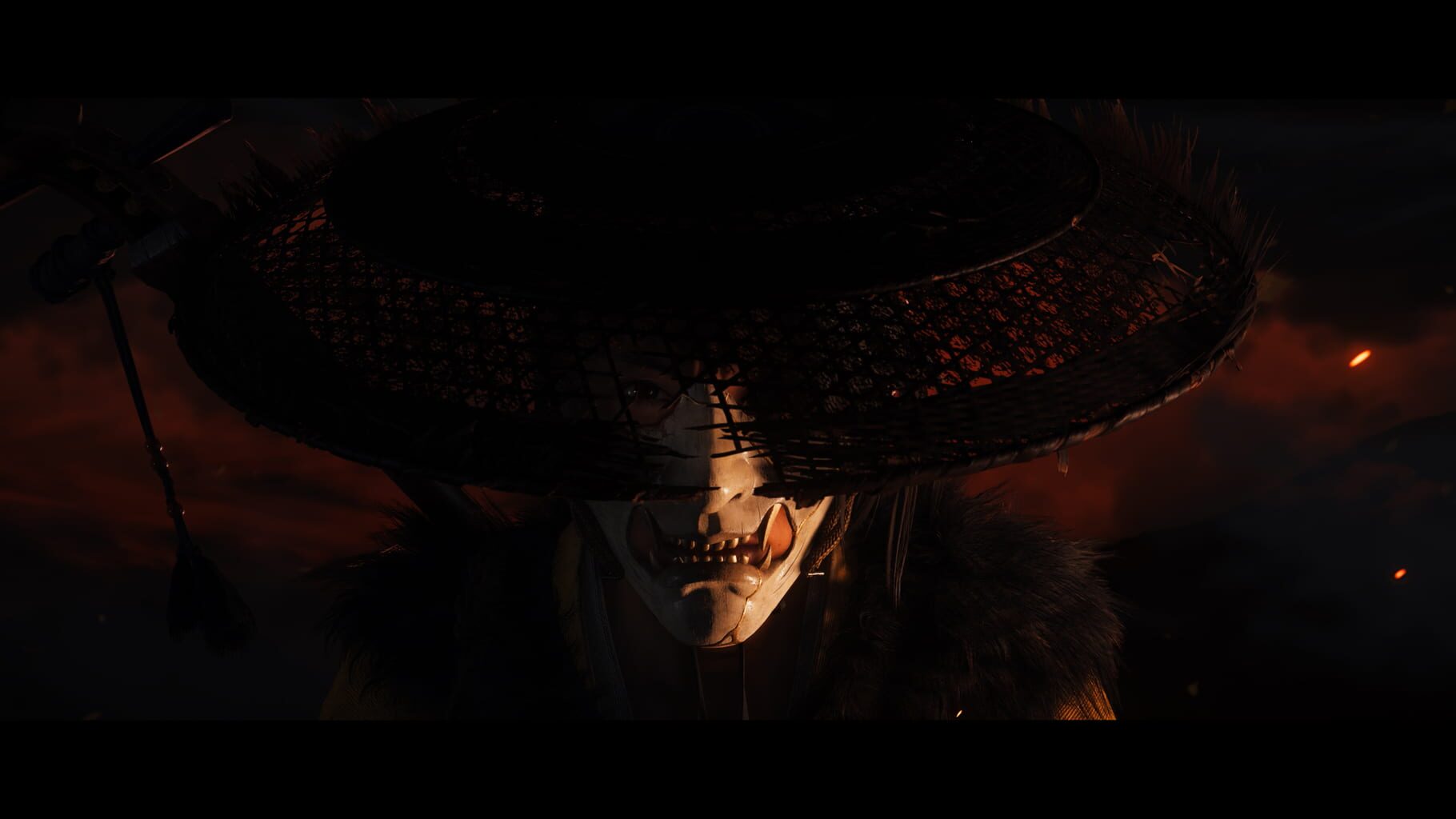
CraftThis is where Ghost of Yotei becomes something close to breathtaking. The frontier of Ezo is a landscape built to be photographed, and Sucker Punch composes it like a painter: wind moving through grassland in long silver waves, snow settling over pine and stone, low light raking across a valley to turn an ordinary ride into a portrait. Where Tsushima made its islands beautiful, Yotei makes its wilderness feel almost sacred, and the studio's command of color, weather, and negative space is among the very best in games.
The combat inherits that visual grace. Duels are staged with a cinematic patience, a held breath before the blades move, and the animation sells both the elegance and the brutality of a killing blow without tipping into spectacle for its own sake. Even the interface gets out of the way, letting the frame stay composed, so that the game frequently looks less like something you are playing and more like something you are inside.
The score is the equal of the visuals and, for many reviewers, the single element that elevates the whole. The music understands restraint, sitting quiet under exploration and swelling only when a moment earns it, and the sound design, the ring of steel, the hush of a snowfield, the wind that never quite stops, builds an atmosphere so complete it does much of the emotional work on its own. Between the art and the audio, Yotei is one of the most sensuously realized worlds on the platform, and that alone carries long stretches of the game.
A gorgeous, superbly crafted, and confidently refined samurai epic with among the best art and audio on the platform, held just short of greatness by an open-world structure that plays it safe.
Pros & cons
The ledgerIn its favour
- Refined stance-and-parry combat that is cleaner and more responsive than Tsushima's
- Some of the finest art direction and landscape composition in the medium
- A restrained, superb score and immersive sound design that carry the mood
- A revenge-driven story that gives the open world real momentum and purpose
- Streamlined, less menu-bound mission and objective tracking
- A confident, polished frontier setting that feels genuinely open to explore
Against it
- The underlying open-world structure is very familiar and plays it safe
- Camp-clearing and points-of-interest loops rarely surprise a genre veteran
- Refinement over reinvention will disappoint players wanting a bolder sequel
- Some systems feel iterative rather than genuinely new
- As a full-price sequel, its creative caution is its most debatable choice
Screens
Official media© Sony Interactive Entertainment. Media via IGDB.
Verdict
The callGhost of Yotei is Sucker Punch operating at the absolute top of its craft. It is more beautiful than Tsushima, it plays more smoothly, its combat is sharper, and its sense of place, the wind, the snow, the score under it all, is so completely realized that the game earns its acclaim on atmosphere alone. As a piece of execution, it is close to flawless, and its near-top-of-the-year aggregate is entirely deserved.
The one reservation is the ambition. Yotei is a game that refines rather than reinvents, and its open world, for all its elegance, is built on a template you have played many times. That is a perfectly defensible choice, and most players will be thrilled to spend forty hours in this version of it, but it is the reason the game sits just below the tier of sequels that redefine their series rather than perfect them.
At 8.8, Ghost of Yotei is an essential PlayStation 5 exclusive and one of the best-looking, best-sounding games on the system. If you loved Ghost of Tsushima, this is a straightforward, joyful recommendation, more of what you loved, made better in almost every measurable way. If you are looking for a sequel that reinvents the wheel, know that Yotei would rather polish it to a shine, and that on those terms, it succeeds beautifully.
Sources
Original review by Aymen Sakouhi from the licensed facts above. Score: 8.8/10.