Dragon Ball: Sparking! ZERO Remembers What Budokai Tenkaichi Was Actually For
Our Dragon Ball: Sparking! ZERO review covers the arena combat, destructible battlefields, roster, and the story mode that holds it back.
Aymen Sakouhi·Writer · Games Hobbyist//6 min read
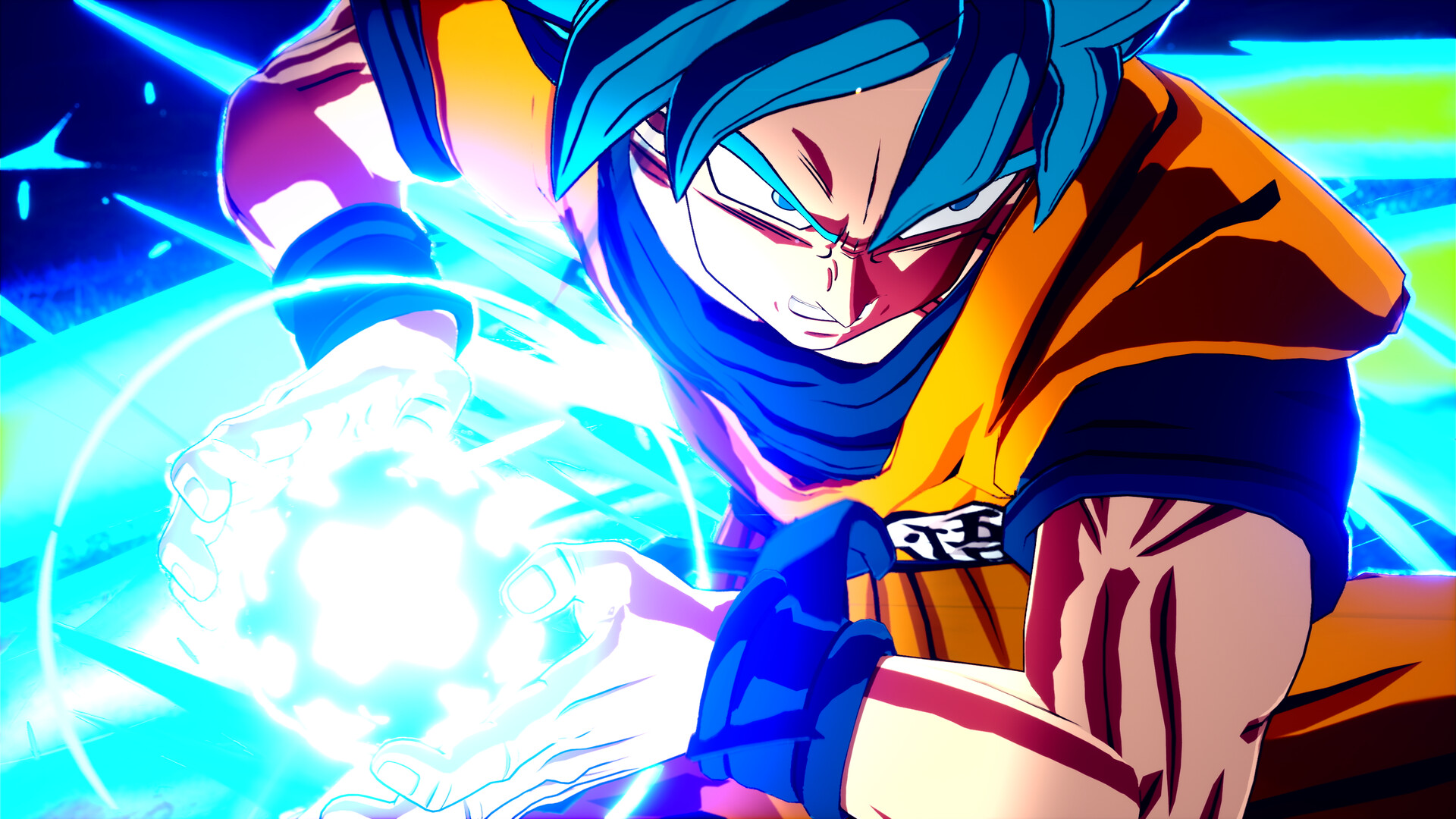
© Bandai Namco Entertainment. Official media via Steam.
The pitch
OverviewEvery few years a licensed fighter promises to finally nail the feeling of watching two overpowered aliens punch a mountain range flat, and almost every one of them settles for a corridor and a health bar instead. Dragon Ball: Sparking! ZERO does not settle. Spike Chunsoft and Bandai Namco Entertainment built this as a direct continuation of the Budokai Tenkaichi arena-fighter lineage, and the pitch is simple: full 3D battlefields big enough to actually get lost in, a cast pulled from across the entire franchise, and combat systems designed around movement and positioning rather than a 2D plane and a special-move gauge.
It launched on Steam in October 2024 at a full premium price, sitting squarely in the Action genre with the trappings you would expect from a modern fighting-adjacent release: online PvP with dedicated ranked play, local split-screen for couch matches, full controller support, Steam Achievements, and a set of accessibility touches, camera comfort options and custom volume sliders among them, that suggest some real thought went into who gets to sit down and play this comfortably.
The reception backs up the ambition. Across more than 36,000 Steam reviews the community verdict lands at Very Positive, with roughly 87 percent of players recommending it, and Metacritic's critic aggregate sits comfortably in the low 80s. That is not a fluke bump from launch-week hype; it is the kind of number that holds up once the initial wave of curiosity fans has moved on and only the people who actually play fighting games are left rating it.
What follows is where that number comes from, and where it does not quite hold: a combat system that earns every bit of its praise, and a presentation layer around it that occasionally undercuts its own ambition.
How it plays
PlayThe core loop is built around vertical, destructible arenas rather than a fixed stage, and that single decision changes everything about how a fight reads. Characters fly, teleport-counter each other's rushdowns mid-air, and knock one another through mountains, buildings, and entire city blocks that do not reset between exchanges. A fight that starts in a quiet valley can end in a crater, and the terrain damage is not cosmetic: line of sight, cover, and available space all shift as the environment gets chewed up, which gives even a straightforward one-on-one bout a sense of consequence most arena fighters only fake.
The moment-to-moment combat rewards reading your opponent rather than memorizing strings. Ki blasts can be countered with well-timed guards, teleport clashes turn into brief tugs of war when both fighters commit at once, and the vanishing-step dashes that let you close or break distance are fast enough that a single missed read can cost you half a health bar. Ultimate attacks and transformations are gated behind resource management rather than handed out freely, so pulling off a screen-filling signature move feels earned rather than scripted, even when you have seen the animation a hundred times before.
The roster is the game's other headline strength, and it is built for range rather than just raw count. Characters pulled from decades of the source material sit alongside each other, each with a genuinely different toolkit rather than a reskin with a new coat of paint, so switching from a grappler-style brawler to a zoning specialist actually changes how a match is played, not just how it looks. Newcomers who do not know the lore going in can still pick a fighter that appeals to them and get real mileage out of it purely on movement and feel.
Online play is where the promise gets shakier. Ranked matchmaking has drawn real frustration from players who find themselves paired against opponents several tiers above their own skill level, and a thin population outside peak hours makes that gap harder to smooth over. It is a fixable problem in principle, but out of the box it can turn what should be a confidence-building climb up the ladder into a series of one-sided losses, especially for anyone new to the genre's execution demands.
The story mode is built around narrated retellings of the anime's major arcs, letting you replay pivotal battles with altered outcomes and branching what-if paths. The concept is sound, but the execution leans heavily on static illustrations and narration to cover story beats rather than full cinematic sequences, and that gap is the single most common complaint from players who came in expecting the cutscene spectacle of a modern anime tie-in. Treated as connective tissue between fights rather than the main event, it does its job. Treated as the reason to buy the game, it disappoints.
A scenario editor lets players script their own hypothetical matchups outside the main campaign, mixing and matching fighters and conditions in ways the official story never touches. It is a quieter feature than the headline combat, but for anyone who has ever wanted to stage their own dream fight, it is exactly the kind of tool that keeps a roster this large interesting long after the story credits roll.
Local split-screen deserves a mention on its own, since so few modern fighting games bother with it anymore. Two players sharing one screen and one couch changes how these matches get talked about, less a ranked grind and more the kind of loud, chaotic argument-starter that arena fighters used to be built around. Pairing that option with full controller support and the camera comfort settings mentioned earlier suggests the accessibility work here was not an afterthought bolted on for a checklist, but a real attempt to widen who gets to sit down and enjoy the spectacle.
Art & atmosphere
CraftVisually, the game commits hard to reading as the source material in motion rather than a game merely based on it. Cel-shaded character models hold up at speed, energy attacks light up entire battlefields with the kind of oversaturated glow the anime is known for, and the scale of the arenas makes even the smaller fighters feel like they are throwing around genuine city-leveling force. Destruction is not just a particle effect layered on top; buildings crumble in ways that persist for the rest of the round, and that persistence does more for the sense of spectacle than any single explosion could.
Camera work is doing a lot of quiet heavy lifting here. Locking onto an opponent mid-dash while the environment blurs past sells speed better than raw frame count alone would, and the game knows when to pull back and let a transformation or an ultimate attack fill the whole screen without cutting away from the actual fight happening underneath it.
Sound design leans on the franchise's signature effects work, punchy impacts, screaming energy charges, the distinctive whoosh of a teleport dash, and it is loud in the way a show built on shouting attack names has always been loud. It suits the material. This was never going to be a subtle game, and it does not pretend otherwise.
The destructible, momentum-driven combat and deep roster justify the near-90 percent community approval, but shaky ranked matchmaking and a narration-heavy story mode keep it just short of the top tier.
Pros & cons
The ledgerIn its favour
- Destructible, vertical arenas that make every fight feel consequential
- Fast, readable combat built around counters and positioning, not memorized strings
- A wide roster with genuinely distinct movesets, not reskins
- Strong accessibility options including camera comfort and custom volume controls
- Local split-screen alongside full online PvP
- A scenario editor for building your own custom matchups
Against it
- Story mode leans on narration and static art over animated cutscenes
- Ranked matchmaking can pair newcomers against far stronger opponents
- Full premium price for what is fundamentally a fan-service fighter
- Advanced techniques like teleport counters take real time to internalize
- Thin off-peak online population makes matchmaking issues harder to avoid
Screens
Official media© Bandai Namco Entertainment. Official media via Steam.
The player verdict
Real reviews · Steam- Recommended
“Got this on sale and it was so worth it. No idea who half the characters are but it's so much fun. Might have to binge watch the series lol”
17 found helpfulvia Steam - Not recommended
“As much of a dragon ball fan as I am, I deeply regret buying this game and I believed it was really overhyped during its release. Majority of the cutscenes in the story mode aren't even animated and its mostly a narrator telling you what's…”
9 found helpfulvia Steam - Recommended
“I love this game I play it a lot but I wish that more people play I am always getting pared with z ranked players and I cant hit them ever I am exited for the new update and I hope that it brings some players back.”
7 found helpfulvia Steam - Recommended
“I don't get the hate on this game. You people got to understand ITS A FIGHTING GAME NOT STORY BASSED!. If you like 3D fighters, then get this peak game.”
6 found helpfulvia Steam
Verdict
The callDragon Ball: Sparking! ZERO succeeds where it matters most for an arena fighter carrying this much legacy weight: the actual fighting feels fast, readable, and genuinely consequential, with destructible battlefields that turn every match into something that looks and plays differently from the last one. That core is strong enough to carry a roster this wide and make it feel worth exploring rather than just padding out a character-select screen.
Where it stumbles is everywhere the fighting stops. The story mode's reliance on narration over animated cutscenes will read as a letdown to anyone expecting a cinematic retelling, and ranked matchmaking needs real tuning before the online ladder feels fair to newcomers. Neither issue undoes what the combat gets right, but both keep this from being the complete package its ambition was clearly aiming for.
For longtime fans of the Budokai Tenkaichi format and anyone who wants an arena fighter with real weight behind its hits, this is an easy recommendation and the community's near-90 percent approval reflects that. Players hoping the story mode alone justifies the price should temper expectations accordingly.
Sources
Original review by Aymen Sakouhi from the licensed facts above. Score: 8.2/10.