DOOM Eternal Review: A Combat Puzzle Disguised as a Power Fantasy
DOOM Eternal turns demon-slaying into a fast, resource-juggling combat puzzle. Brilliant and exhausting in equal measure — our full review.
Aymen Sakouhi·Writer · Games Hobbyist//6 min read
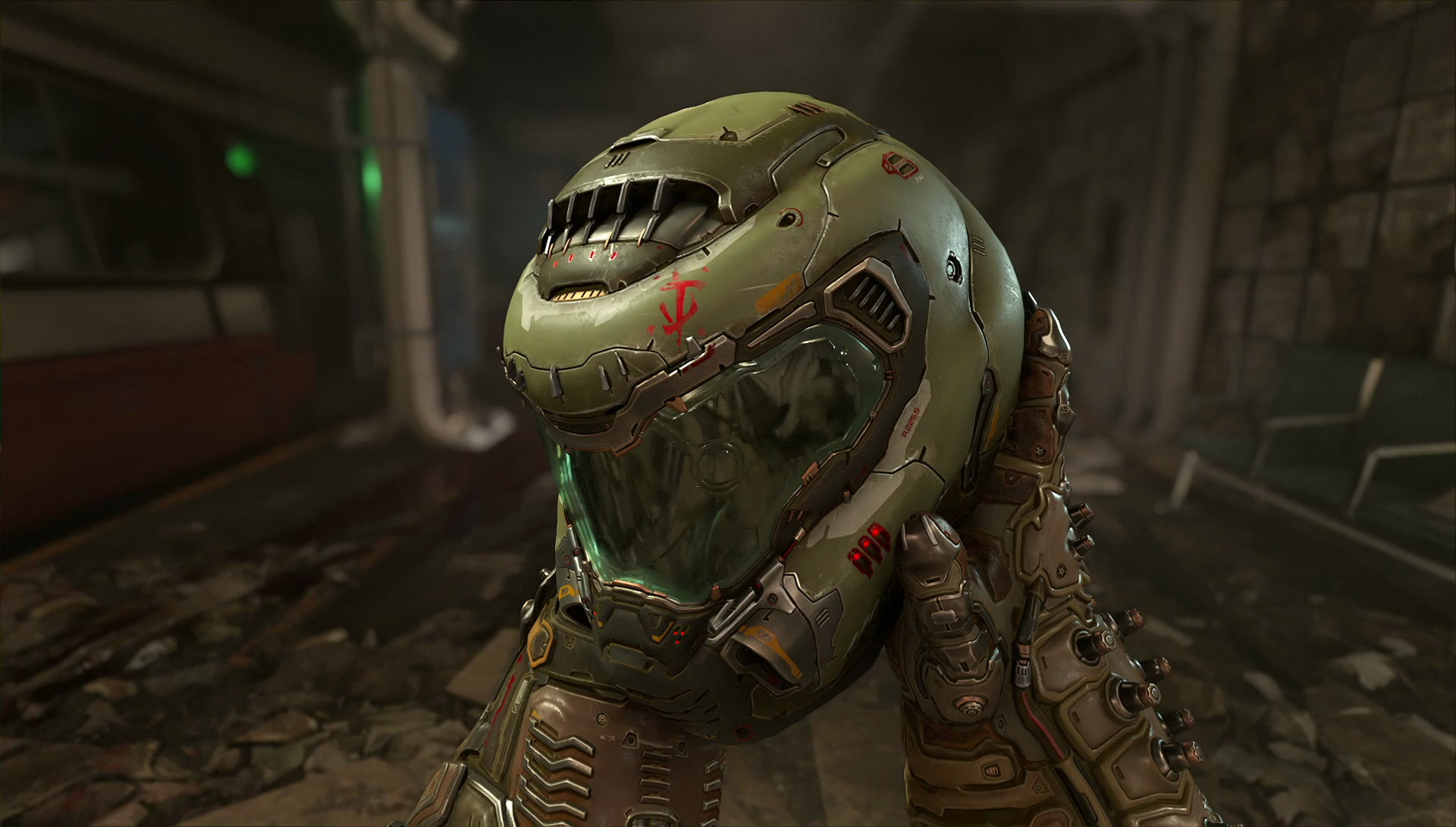
© Bethesda Softworks. Official media via Steam.
The pitch
OverviewDOOM (2016) was a shooter you could sink into like a hot bath, provided the bath was full of viscera. It asked for aggression and repaid it, and its pleasures arrived instantly. DOOM Eternal is a different animal wearing the same skinned face. It takes the reboot's push-forward loop, accelerates it, complicates it, and hands you a to-do list in the middle of a firefight. The bath is now a chessboard, and several of the pieces are on fire.
The premise remains gloriously stupid in the best possible way. You are the Slayer, an unkillable engine of retribution; Hell has annexed Earth; the story mostly exists to shuttle you from one arena to the next. id Software builds the entire experience around a single question: can you keep moving, keep swapping, and keep killing without ever standing still long enough to actually think? Stand still and you die. Think too slowly and you die. It is a game that would like you to reach a state of flow, and it is entirely willing to kill you repeatedly until you find it.
What Eternal is genuinely reaching for is closer to a fighting game than a power fantasy. It wants mastery, not tourism. Every weapon has a job, every demon has a counter, and the joy lives in executing the correct answer at speed rather than in raw firepower. When the pieces click into place, it produces a kind of violent lucidity that almost nothing else in the genre can touch.
That ambition is also its fault line. This is the rare blockbuster sequel that answers 'more of the same?' with a flat refusal, and the gamble buys it brilliance at the price of ease. Eternal is a masterclass and a homework assignment in the same breath, and not everyone who loved the reboot signed up for the second one.
How it plays
PlayThe engine of Eternal is a resource triangle you are never permitted to stop feeding. The chainsaw, running on regenerating fuel, butchers weaker demons into a fountain of ammunition. The Flame Belch sets enemies alight so they shed armor shards as you damage them. The Glory Kill, a melee finisher on a staggered foe, sprays health across the floor. Ammo caps are kept deliberately stingy, so you cannot simply pick a favorite gun and lean on it forever; the game forces you to rotate through the whole arsenal, harvesting what you need directly from the bodies of your enemies as you fight.
This is combat as active resource management, and it is exhilarating precisely because it refuses to let you relax. Run dry on shells mid-fight and you have to chainsaw a grunt to refill or improvise with a weapon you were rationing. Health critical and no fodder nearby? Now you are hunting a Glory Kill under real pressure. The loop rewards planning three moves ahead and punishes tunnel vision instantly, which is thrilling when it works and genuinely stressful when it doesn't. There is no cover to cower behind, retreat is a slow form of suicide, and the only reliable defense is offense delivered accurately.
Mobility is the other half of the sentence. Double jumps, air dashes, monkey-bar swings, and a grappling meat hook welded to the super shotgun turn every arena into a three-dimensional playground you are expected to exploit constantly. Between fights the game breaks into outright platforming, with wall climbs and swing sections that give the shooting somewhere to breathe. It is a smart pacing device, though the floatier jumping puzzles can feel like a gentler, different game bolted onto the flank of a brutal one.
Enemy design is where the craft truly announces itself. Nearly every demon carries a weak point or a specific counter: pop the Cacodemon's gaping mouth, shear off the Revenant's shoulder cannons, blow the turret from an Arachnotron's back. Each encounter becomes a live triage problem, a prioritized kill order you assemble on the fly while everything tries to flank you. Presiding over the whole roster is the Marauder, a shielded, axe-swinging duelist who punishes both aggression and retreat and insists you fight on his exact terms. He is either the finest or the most infuriating enemy the series has ever produced, and reasonable people have come to blows over which.
A light progression layer keeps the toolkit evolving. Weapon mods, upgraded via collectible drones, bolt alternate fire modes onto each gun; runes tweak your rules of engagement; Praetor suit points and hidden Sentinel batteries dole out passive perks and unlock optional caches. Between missions you drift through the Fortress of Doom, a hub that doubles as a trophy room for your growing arsenal. None of it is deep in the traditional RPG sense, but it meaningfully reshapes how you read and attack an arena.
There is plenty to chew on beyond the campaign, which itself runs a generous fifteen-plus hours. Punishing Master Levels remix existing maps for experts, secret encounters and collectibles reward the curious, and the asymmetric Battlemode pits a single Slayer against two player-controlled demons for anyone who wants to take the calculus online. Difficulty scales from forgiving to openly sadistic, and generous checkpointing keeps each failure cheap. The one persistent drag is how relentlessly the game explains itself: pop-up tutorials, on-screen prompts, and floating tooltips interrupt the flow far too often in the opening hours, and the lore has swollen into a self-serious mythology the moment-to-moment carnage never actually needed.
Art & atmosphere
Craftid built a version of Hell you can parse at a full sprint, and that legibility is the whole design philosophy made visible. Everything is color-coded for the fight: stagger a demon and it flashes a sickly blue for a Glory Kill, torn health glows green, armor shards read as pale cyan, ammunition pops against the gloom. The screen is essentially a heads-up display disguised as a splatter film, tuned so that even at peak chaos you can always tell what to hit and what killing it will hand back to you.
The art itself is loud, saturated, and completely unembarrassed. Ruined cathedrals hang over lakes of lava, chrome-and-bone Sentinel architecture crashes into corrupted cityscapes, and the gore is rendered with a gleeful, comic-book exaggeration that ought to be exhausting and somehow reads as pure joy. The Slayer is a walking tank of green plate and barely contained fury; the demons are grotesque in a heavy-metal-album-cover way that suits the register exactly. Nothing here is subtle, and nothing is trying to be.
Then there is the sound, which does far more than accompany the game; it conducts it. Mick Gordon's score is a wall of down-tuned industrial djent and pounding percussion that syncs its heaviest moments to your most desperate ones, so a last stand against a full arena arrives scored like the climax of a stadium set. The weapons bark with satisfying, chunky weight, demons announce themselves with distinct roars you quickly learn to fear, and the whole mix begs to be played loud. Turn it up and Eternal stops being a shooter and becomes a rhythm you bleed to keep.
A ferociously designed, uniquely expressive shooter that occasionally mistakes busywork for depth and asks more homework than a share of players will ever want to do.
Pros & cons
The ledgerIn its favour
- Combat this kinetic and expressive has no real peer in the genre
- The resource-triangle loop makes every firefight a fast tactical problem
- Superbly readable roster where each demon is its own puzzle
- Movement so fluid that traversal itself becomes a weapon
- Mick Gordon's score is relentless and perfectly matched to the mayhem
- Master Levels and upgrades give mastery somewhere real to go
Against it
- Heavy tutorialization and constant prompts smother the early flow
- Platforming stretches sit tonally apart from the combat
- The Marauder is a genuinely divisive, patience-testing enemy
- Far less pick-up-and-play than the 2016 reboot
- The lore has inflated into self-serious mythology few asked for
Screens
Official media© Bethesda Softworks. Official media via Steam.
The player verdict
Real reviews · Steam- Not recommended
“Do not force me to log in to an additional account just to play a game in single player that I have already paid for.”
111 found helpfulvia Steam - Recommended
“Fun game but didn't like it as much as DOOM 2016. Too much platforming and the need to constantly swap weapons kinda kills it for me at times. But when the gameplay loop is working it SMACKS. Incredible soundtrack as well.”
19 found helpfulvia Steam - Recommended
“So, this game is trully amazing im giving it a solid 10/10. This game gives an unbelievable and unique expirience and gives a feeling that makes you incorruptable. Its a great way to spend your evening by slaying down all that scum that…”
11 found helpfulvia Steam - Not recommended
“Feels like playing bop-it with 4 different bop-its at once while a motorized IV pumps sheer cocaine into your blood. not in a good way - cocaine actually sucks. FYI, I have played through the entire campaign at least once via a... less…”
9 found helpfulvia Steam
Verdict
The callDOOM Eternal is the rare sequel with the nerve to make its beloved predecessor feel like a first draft, and the skill to mostly justify that arrogance. It trades the reboot's loose, headbanging groove for a stricter, faster combat calculus, and that single trade is the entire review. When you are dashing between demons, cycling weapons in mid-air, and threading a Glory Kill through a wave of fodder to top off your health at the last conceivable second, nothing else in the genre feels remotely like it. This is one of the most expressive action games anyone has ever built.
The cost is accessibility, in both senses of the word. Eternal wants a student, not a spectator, and it grades on a punishing curve. Players who adored the reboot for its pick-up-and-play immediacy may bounce hard off the constant resource juggling, the mandatory weapon-swapping, and a difficulty that treats hesitation as a capital offense. The platforming detours and the overheated mythology give the strict combat somewhere to breathe, but they also dilute the very focus that makes the whole thing sing.
Commit to its terms, though, and there is a euphoria here that lingers for days. This is a shooter that respects you enough to be genuinely difficult and generous enough to make the resulting mastery feel like a gift rather than a grind. Just know exactly what you are signing up for: not a warm bath, but an exam you will be strangely glad you sat.
Sources
Original review by Aymen Sakouhi from the licensed facts above. Score: 8.7/10.