Directive 8020: The Dark Pictures Finally Leaves Earth
Supermassive sends The Dark Pictures off-world for the first time. The twist lands, the atmosphere holds, but the stealth and the launch co-op gap do not.
Aymen Sakouhi·Writer · Games Hobbyist//6 min read
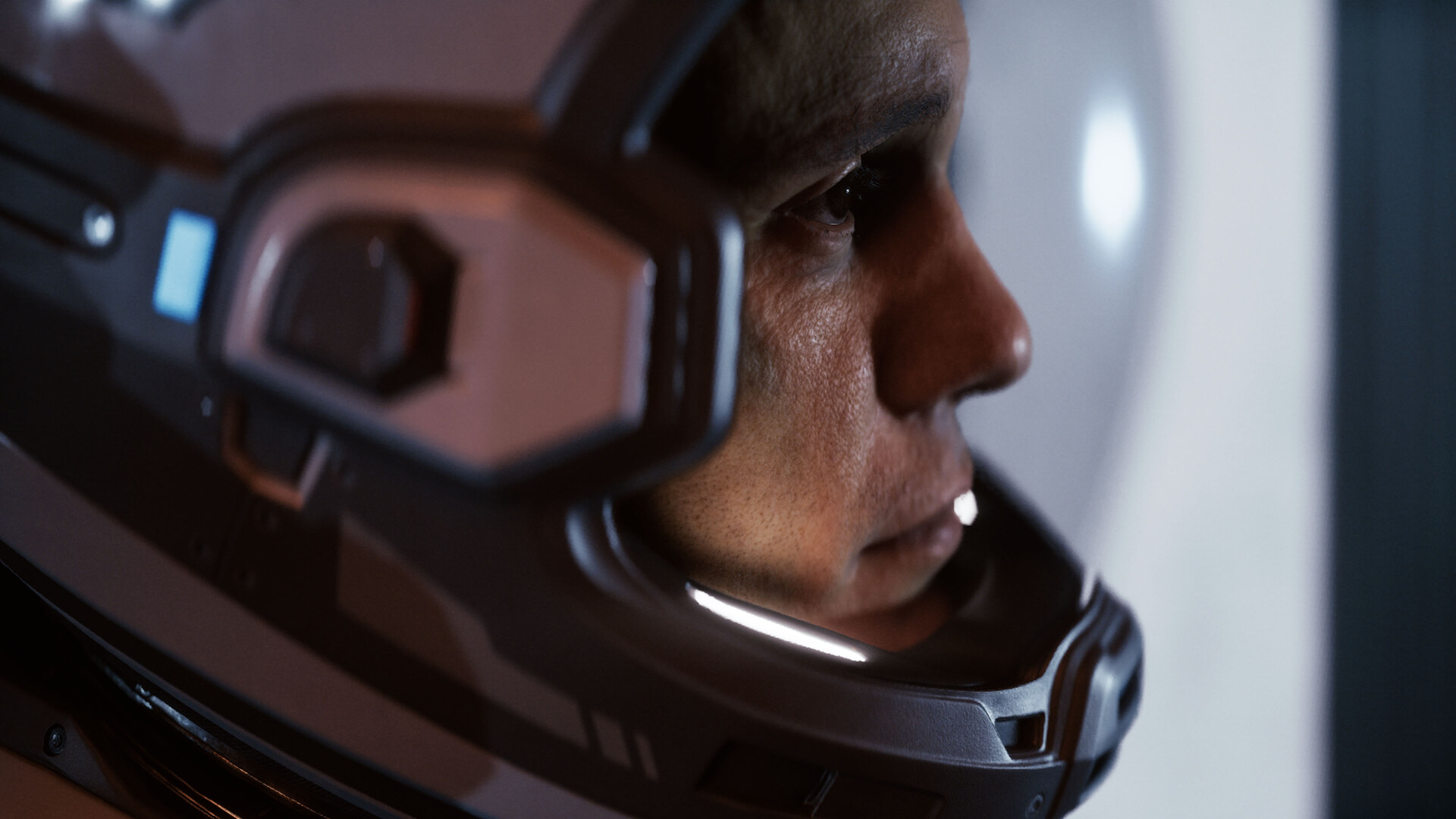
© Supermassive Games. Official media via Steam.
The pitch
OverviewTwelve light years from a dying Earth, the colony ship Cassiopeia crash-lands on Tau Ceti f looking for a fresh start and finds something that has been waiting for one instead. Directive 8020 is the fifth entry in Supermassive Games' Dark Pictures Anthology and the first to leave Earth behind entirely, trading English manors and ghost stories for a wrecked spacecraft, a hostile planet, and an alien organism that can wear anything it has eaten. The influences are worn openly: Alien's industrial dread, The Thing's paranoia about who is still human, a dash of Event Horizon's cosmic wrongness.
Directed by Will Doyle with a score from Jason Graves, the game follows five crew members, led by astronaut Brianna Young, played by Lashana Lynch, as they try to survive the crash, the thing hunting them, and a slow-burn reveal about exactly why they were sent here in the first place. It is built on the same branching-choice, quick-time-event skeleton every Dark Pictures game shares, but layered with more active stealth and exploration than the series has attempted before.
Four years removed from The Devil in Me, this is Supermassive visibly trying to grow past the format's limitations rather than just reskinning it, and for long stretches it works. Underneath the alien-on-the-loose plot sits a slower reveal about why the Cassiopeia's crew was chosen for this mission at all, one that recontextualizes earlier scenes once it lands, and it is the rare Dark Pictures twist that critics said they genuinely did not see coming rather than one telegraphed three episodes early.
The reception since May has been genuinely split, though, and not for the usual reasons critics dock these games points. The story mostly holds together and the twist actually lands; it is the parts meant to make you feel like more than a passenger that are the sticking point.
How it plays
PlayThe backbone is familiar Dark Pictures machinery: branching dialogue, timed prompts, and choices that can permanently kill a character and reroute scenes for the rest of the campaign. What is new is that the crew is unarmed. There is no gun to point at the shapeshifting threat stalking the Cassiopeia's wreckage, so Supermassive builds entire sequences around evasion instead of confrontation, a design philosophy the studio has called threatening exploration, where characters can die outside of scripted set-pieces just from being caught in the open.
In practice that means creeping through corridors, sticking to shadow, listening for movement, and thinking twice before flicking on a flashlight that will give your position away. The crew carries a small utility kit rather than weapons: a scanner for reading the environment, a remote for hacking doors and terminals, and a wedge tool that doubles as a stun baton with a cooldown. It is a meaningfully more hands-on loop than the stand-still-and-hold-your-breath stealth beats of earlier entries, and the first few hours sell it well. The problem is repetition. The tools and the patrol logic barely evolve across the runtime, so a mechanic introduced as a tense novelty in episode two is doing the identical hide-scan-move dance by episode seven, and more than one reviewer has flagged it as the game's clearest soft spot: not broken, just worn thin by the time the credits roll.
The more interesting addition is Turning Points, a rewind system that lets you jump back to a recent pivotal decision instead of restarting a whole chapter after a bad quick-time event or a choice you immediately regret. It is a real quality-of-life fix for a format that has historically punished a single missed prompt with a permanently worse story, and most critics have welcomed it. It is not without a cost, though: letting players freely undo consequences chips at the tension the series built its reputation on, and it is fair to ask whether a choice you can always take back is really a choice.
Movie Night, the local pass-the-controller mode that lets up to five people play through the story together, returns and works as advertised for couch groups. What it does not do at launch is go online. Supermassive confirmed before release that networked co-op would arrive as a free post-launch update rather than ship day one, and it has landed as a genuine sore point in the Steam reviews, with buyers who assumed a 2026 horror release would support online multiplayer out of the box venting loudly about the omission.
The campaign runs roughly eight hour-long episodes intercut with flashforwards, and the writing that drives it is uneven in ways that show up in player feedback more than critic reviews: several vocal Steam reviewers describe the surviving crew's decision-making as baffling under pressure, and complain that branching choices feel like they steer dialogue more than outcomes. That is a harsher read than most critics gave the game, but it is not an unreasonable one, and it is worth going in knowing the story's ambition occasionally outruns its internal logic.
The familiar quick-time combat is still here for the moments when hiding stops being an option, and it is the most refined version of that system the studio has shipped: prompts are readable without being telegraphed, and failure states feed back into the branching structure rather than just triggering a death screen. Between chapters, the game tracks relationships and a story-tree map that shows which of your decisions actually forked the plot, which is a small but welcome bit of transparency for players who want to see the shape of what they changed on a second playthrough rather than guessing at it.
Art & atmosphere
CraftWhere Directive 8020 is least contested is presentation. The Cassiopeia and the alien world around it are lit with real intent, drenched in sickly greens and reds during the timeline's darker turns and washed in a colder, cleaner palette during the earlier flashforward sequences, so you can often tell which point in the story you are in before a single line of dialogue confirms it. Performance capture carries the five leads well, Lynch in particular, even as some of the supporting cast and background models feel reused or stiffer than the scenes around them deserve.
Jason Graves' score leans into scraping metal and distant groans rather than jump-scare stings, and the sound design's habit of going almost silent before letting a single distant clang do the work is the game's most reliably effective horror tool. Critics who otherwise had reservations about the gameplay were near-unanimous that Supermassive nailed the atmosphere here, and it is the throughline that makes the weaker mechanical stretches easier to forgive.
The Cassiopeia itself is a strong piece of environmental design in its own right, all cramped maintenance shafts, flooded cargo bays, and biolab corridors gone wrong, built on Unreal Engine 5 in a way that lets damage and decay read clearly at a glance. It gives the stealth sections somewhere genuinely interesting to be tense in even when the mechanics underneath them are repeating themselves, and it is one of the clearer signs that the art and audio teams were working from a more confident brief than the systems designers had time to fully realize.
A genuine step up in atmosphere, performance, and story for the series, weighed against stealth that overstays its welcome and an online co-op mode missing at launch, roughly matching its low-70s Metacritic average and Mixed Steam reception.
Pros & cons
The ledgerIn its favour
- The strongest overall narrative and twist the Dark Pictures series has produced
- Lashana Lynch anchors the cast with the series' best lead performance to date
- Turning Points lets you undo a bad quick-time event without restarting a whole chapter
- Lighting, color-coded timelines, and Jason Graves' score sustain real dread
- Threatening exploration gives players more active agency than any prior entry
- Local Movie Night co-op for up to five works exactly as advertised
Against it
- Stealth sequences repeat the same hide-scan-move loop long after it stops being tense
- Online co-op wasn't ready at launch and only arrives as a later free update
- Supporting cast animation and some reused models undercut otherwise strong scenes
- Several player reports describe crew decision-making and branch outcomes as inconsistent
- Leans so hard on Alien and The Thing that homage sometimes tips into imitation
Screens
Official media© Supermassive Games. Official media via Steam.
The player verdict
Real reviews · Steam- Not recommended
“Stealth was a really bad idea. Stealth is the worst type of gameplay if you're not capable to do it right. It cant be bad, it can't even afford to be mid. And your decisions seem to matter very little since the crew is incredibly stupid…”
41 found helpfulvia Steam - Not recommended
“Honestly I can't really recommend this to anyone. I'm a big fan of the supermassive games and all the dark picture series. This new addition to the horror choice games was just a bad Idea in all. It has the right idea to a good story and…”
21 found helpfulvia Steam - Not recommended
“My english students can write better and more believable stories than this. Nothing about this game makes any logical sense, and everything happens only to serve up to the next thing happening. I'll give an example of what I mean: For…”
18 found helpfulvia Steam - Not recommended
“I bought this game with the intent of playing it with friends ONLINE. I am very disappointed that this game has NO online co-op in any form. I was so confused that I looked it up and found out that upcoming "CO-OP UPDATE" that is supposed…”
9 found helpfulvia Steam
Verdict
The callDirective 8020 is a genuine step forward for The Dark Pictures Anthology and, by several critics' accounts, the best the series has managed yet: a tighter story, a twist that actually surprises, strong lead performances, and a horror sci-fi setting that suits Supermassive's strengths better than another haunted house. It is also a game whose new ideas do not all survive contact with an eight-hour runtime, with stealth that repeats itself past the point of tension and an online co-op mode that simply was not ready when the game launched.
That split is visible in the numbers as much as the writing: a Metacritic average in the low seventies and a Mixed rating on Steam sitting around two-thirds positive, which is an honest reflection of a game that impressed a lot of critics on craft while frustrating a chunk of its actual buyers on substance. Dark Pictures regulars and anyone who wants their sci-fi horror atmospheric over action-heavy will get real value here. Newcomers, or anyone buying specifically for online co-op at launch, should wait for the post-launch update and adjust expectations for the stealth accordingly.
Sources
Original review by Aymen Sakouhi from the licensed facts above. Score: 7.2/10.