Deep Rock Galactic: Rogue Core: Great Guns, Thin Runs
Ghost Ship's dwarven roguelite spin-off nails the gunplay and boss fights but ships with a repetitive loop and an undercooked perk system. Early-access impressions.
Aymen Sakouhi·Writer · Games Hobbyist//6 min read
© Ghost Ship Publishing. Official media via Steam.
The pitch
OverviewGhost Ship Games built its name on Deep Rock Galactic, a co-op mining shooter beloved for its warmth as much as its combat — a game whose community catchphrase, "Rock and Stone," became shorthand for a specific kind of cheerful, blue-collar teamwork rare in the genre. Deep Rock Galactic: Rogue Core takes that same cast of dwarven Reclaimers and folds them into a standalone roguelite spin-off: 1-4 player co-op, procedurally generated mining facilities, and a new run-based structure where teams descend into the earth, harvest a resource called Expenite, fight through a hostile new enemy faction called the Corespawn, and push toward sealing off a void gate before their time runs out. It launched into Early Access on May 20, 2026, at €29.99, and Ghost Ship has been upfront that this is a foundation the game will build on over time, not a finished release.
Early reception has landed somewhere between promising and prickly. Steam's community verdict sits at Mostly Positive across more than 7,600 reviews (about 71% positive), and outside critics who put real hours into the Early Access build have generally come away describing a fun, mechanically confident shooter underneath. But the loudest voices in the Steam review section skew from the original game's veteran playerbase — some citing a thousand-plus hours in the base game — who argue Rogue Core leans hard on assets, tone, and ideas already established by its parent title while asking full price for what they see as a slimmer, standalone product, and who feel the studio has been slow to act on early community feedback around the perk system and the timer.
That tension is the real story of this review. Judged purely as a shooter — as gunplay, movement, and boss design — Rogue Core is confident and often thrilling. Judged as a complete package against the depth DRG built up over years of updates, it hasn't yet earned the right to stand fully apart from the game that spawned it. Both things are true at once, and which one matters more to you will likely decide whether this is worth buying now or worth watching from a distance for a patch or two.
How it plays
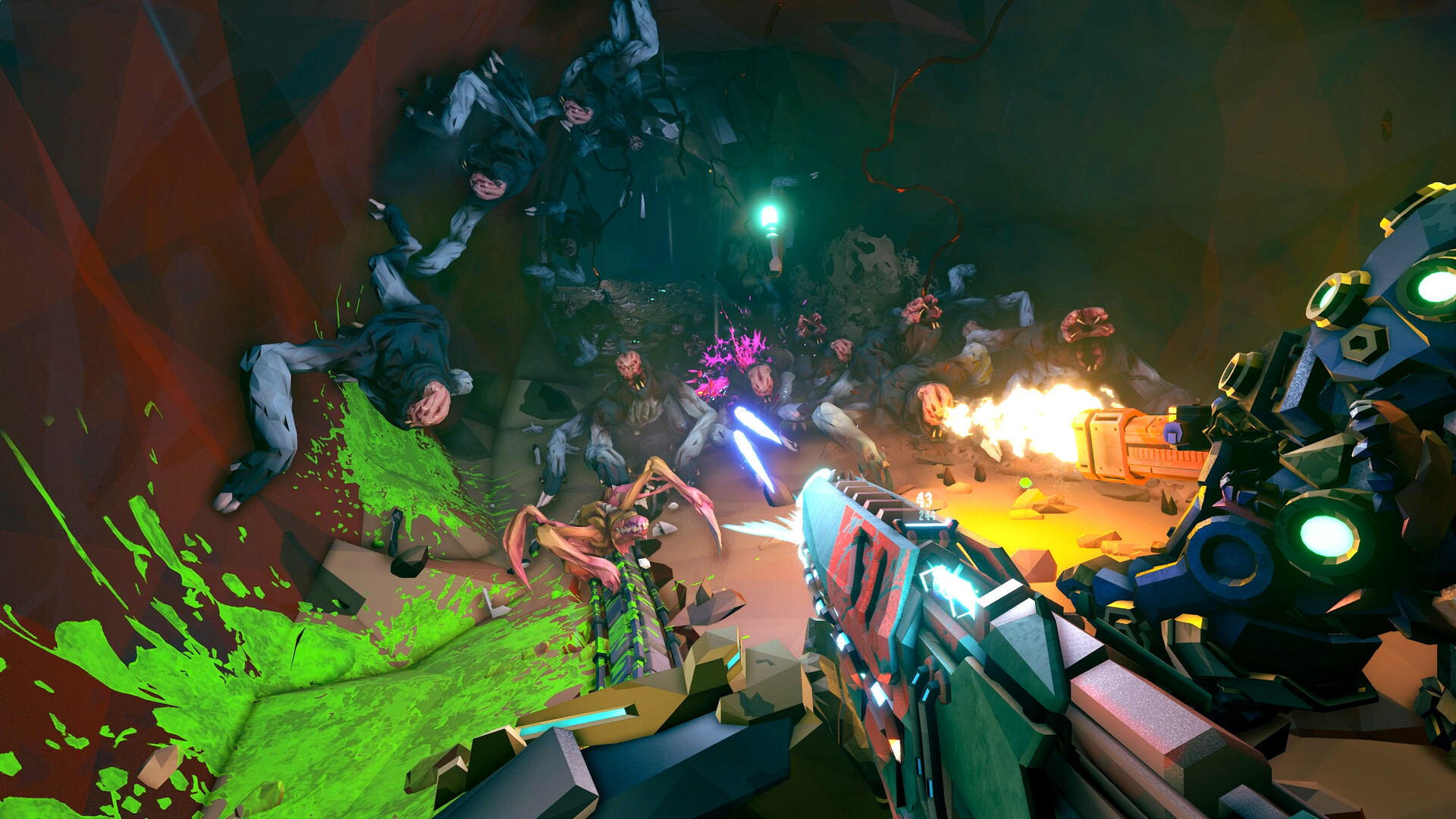
PlayThe core loop will be instantly familiar to DRG veterans and instantly legible to newcomers: pick a dwarf, drop into a cave system with up to three teammates, mine your way toward objectives, and fight off the Corespawn — a new enemy faction distinct from the original's glyphids — along the way. What's new is the pressure. Each level runs on a hard timer, and dawdling doesn't just cost time; it summons increasingly dangerous burrowing worms that can grab and drag off players who linger too long. It's a smart, tense addition that reviewers have generally praised for keeping runs propulsive and forcing real risk-reward calls about whether one more resource vein is worth the detour — though a vocal contingent of players wants it as an optional toggle rather than a mandatory constant, arguing it undercuts DRG's traditionally more exploratory pace.
Gunplay is where Rogue Core is at its most confident. Weapons across the board feel weighty and distinct, from sidearm pistols up to the minigun, and melee combat has been noticeably beefed up from the base game, letting dwarves wade into swarms and carve through Corespawn in a way the original never quite supported. The class roster gives each dwarf a genuinely different toolkit — the drone-wielding Falconer and the time-rewinding Retcon, who can bank a position and stats before going all-in on a fight and then rewind, are the standout examples early adopters point to. The three end-of-run bosses back this up: they're meaty, mechanically demanding fights that ask players to lean on their full kit rather than just hosing them down, and they're consistently cited as one of the build's strongest features.
The friction shows up around progression. Rather than picking upgrades individually, the team draws from a single shared pool of perks and takes turns choosing — a deliberately communal system that, in principle, fits DRG's cooperative spirit. In practice, the perks on offer are mostly flat stat bumps rather than build-altering choices, so turns can feel like picking the least-bad option instead of a meaningful decision, and going last in the pick order can leave a player with nothing worth taking. Starting weapons compound the problem: they're weak enough that early turns in a run can feel like a chore before the loadout comes together. None of this breaks the game, but it's the clearest sign of a system still waiting on its next content pass.
Mission variety is the other soft spot. Runs follow a consistent shape — traverse, mine, defend, extract — regardless of difficulty, and after enough hours that structure starts to repeat rather than surprise, especially compared to the mission-type variety the base DRG built up over years of updates. The Corespawn enemies themselves are well-designed, with legible weaknesses that reward tactical play even in a full-swarm horde, but a wider bestiary (glyphids from the original game are a frequently requested addition) would go a long way toward breaking up the sameness. Co-op coordination, notably, hasn't been a pain point — testers report the shared-perk negotiations tend to play out cooperatively rather than contentiously, which suggests the bones of the system are sound even if the content on top of them isn't there yet.
One further wrinkle worth flagging for series veterans: cave generation here is noticeably more linear than in the original Deep Rock Galactic, and the level design leans harder on combat around fixed industrial structures than on the freeform tunneling and terrain destruction that defined the base game's exploration. That's not a flaw so much as a design choice suited to a run-based roguelite — a 45-to-50-minute session needs pacing a fully open cave system doesn't naturally provide — but it does mean Rogue Core plays like a distinct, more linear cousin of DRG rather than a straight roguelite reskin of it, and players coming in expecting the original's sandbox-y digging will need to recalibrate expectations.
Art & atmosphere
CraftVisually, Rogue Core keeps the chunky, industrial-sci-fi silhouette that made the original instantly readable in co-op chaos, and it adds real biome variety — frozen caverns and toxic swamp caves sit alongside the more familiar rock-and-ore tunnels, each reskinning the mining-facility backdrop enough to feel distinct without chasing photorealism it was never going to need. It's not chasing AAA fidelity, and it doesn't need to: the install is famously lean for a modern co-op shooter, and the atmosphere carries plenty of the original's charm despite the smaller footprint.
Audio does real workload here too. The soundtrack shifts convincingly between hushed, ambient synths during exploration and mining, and driving, aggressive accompaniment once the Corespawn show up or the timer starts screaming — a dynamic push-pull that reinforces the run's escalating tension better than the visuals alone could.
A confidently built roguelite shooter with genuinely strong combat and boss design, held back from a higher score by a repetitive mission loop and an upgrade system that still reads as Early Access provisional.
Pros & cons
The ledgerIn its favour
- Punchy, weighty gunplay across the full weapon range, from pistols to the minigun
- Melee combat meaningfully expanded over the base game, letting dwarves fight through swarms up close
- Three end-of-run bosses that demand real use of a class's full kit rather than just sustained damage
- Distinct class kits — the drone-based Falconer and rewind-focused Retcon stand out
- Timer-and-worm pressure system creates genuine risk-reward tension without breaking co-op flow
- Reported to run stable with minimal bugs on a lean, small install size for an Early Access build
Against it
- Shared perk pool leans on flat stat bumps instead of build-defining choices, making picks feel like a formality
- Starter weapons are weak enough to make early minutes of a run feel like a slog before loadouts come together
- Mission structure repeats the same traverse-mine-defend-extract shape regardless of difficulty
- Mandatory level timer has no toggle, which alienates players who preferred the original's exploratory pace
- A vocal veteran segment sees it as leaning on the base game's assets and identity while priced as a full standalone title
Screens
Official media© Ghost Ship Publishing. Official media via Steam.
The player verdict
Real reviews · Steam- Not recommended
“While it has been improved, this game still fails to justify itself as a standalone game that costs just as much as DRG . It's not like it isn't enjoyable, but most of what's enjoyable about it is the enjoyable stuff that was already…”
194 found helpfulvia Steam - Not recommended
“It's almost like the developers are going out of their way to ignore good suggestions and implement bad ones out of spite. I had hope with the first update that things were trending in the right direction, but after what they've done with…”
95 found helpfulvia Steam - Not recommended
“I have around 1,000 hours in the original Deep Rock Galactic on another Steam account. I played on the highest difficulties, both solo and with other players, so I know what I like about DRG and what I expect from a game in this universe.…”
50 found helpfulvia Steam - Not recommended
“The devs have lost their touch, this game is DRG in the name only but it's not made for DRG fans, can't agree with the decisions they make during its development.”
45 found helpfulvia Steam
Verdict
The callDeep Rock Galactic: Rogue Core is a genuinely well-made roguelite shooter wrapped around a genuinely underdeveloped content layer, and the gap between those two things is the whole story right now. The gunplay, melee, boss encounters, and moment-to-moment tension of the timer are all things Ghost Ship clearly got right on the first pass. The perk pool, mission variety, and starter-loadout balance are all things that still read as provisional — present, functional, and obviously waiting for the updates the studio has already started shipping.
Whether that's worth €29.99 today depends heavily on your tolerance for Early Access rough edges and your relationship to the original game. Roguelite fans coming in fresh are likely to find a tense, satisfying loop worth a few dozen hours even now. DRG loyalists hoping for a fully-loaded spin-off that matches the depth their thousand-plus hours built up should probably wait for a couple of major content passes before buying in — the frustration visible in Steam's user reviews isn't really about whether the game is fun, it's about whether it's finished enough yet to be worth the ask.
Sources
Original review by Aymen Sakouhi from the licensed facts above. Score: 6.8/10.