Death Stranding 2 Is a Bigger, Stranger, More Confident Walk to the End of the World
Kojima's delivery sequel is a technical marvel with deeper gameplay and a haunting world, if a little less magic than the original. Our verdict: 8.8/10.
Aymen Sakouhi·Writer · Games Hobbyist//5 min read
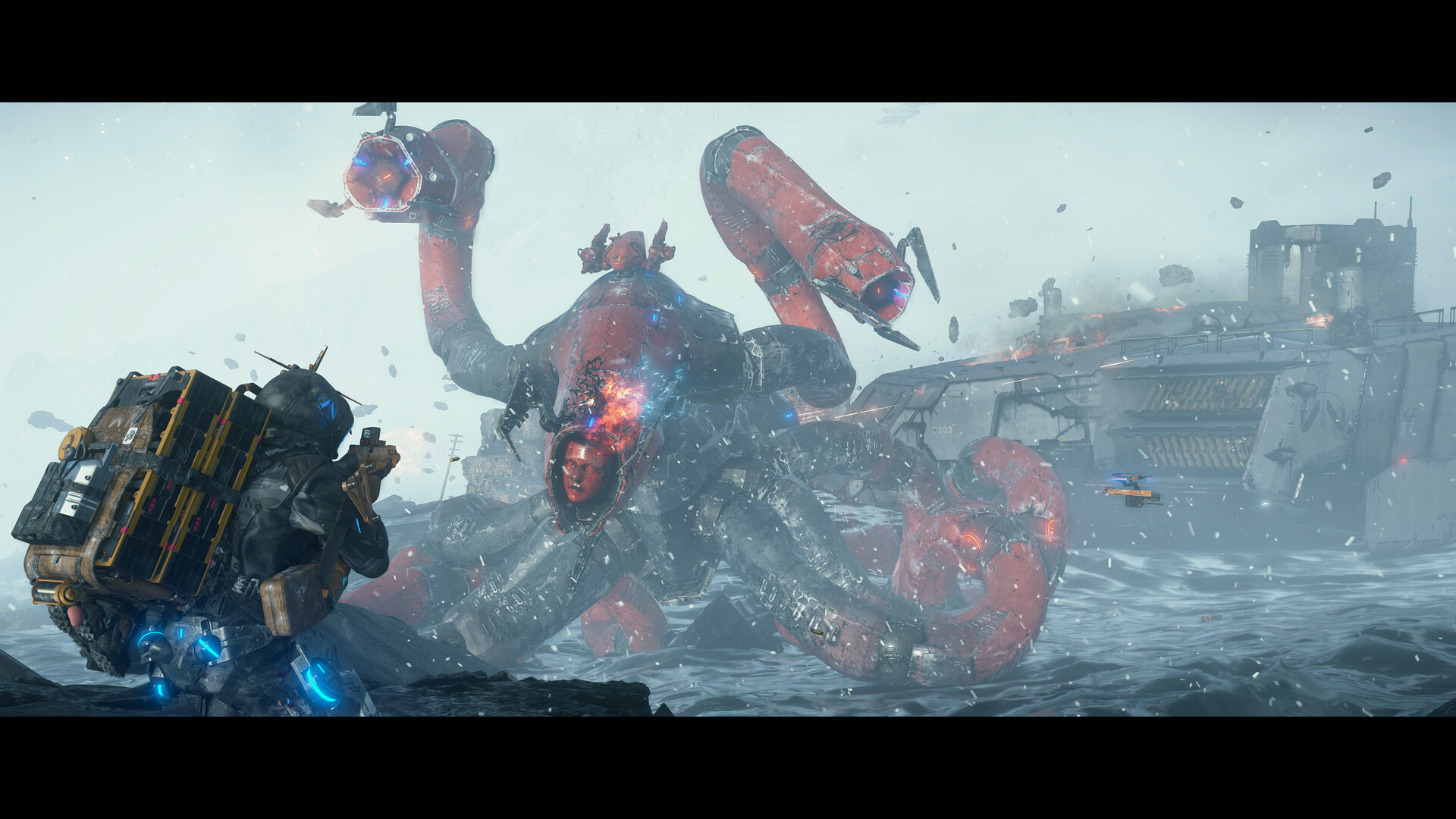
© PlayStation Publishing LLC. Official media via Steam.
The pitch
OverviewDeath Stranding 2: On the Beach is Hideo Kojima doing the thing only Kojima does: taking one of the strangest ideas in blockbuster gaming, a game about walking, balancing, and delivering parcels across a broken world, and building a lavish, star-studded, philosophically overwrought sequel around it. Developed by Kojima Productions and published by PlayStation, it came to PC on 19 March 2026 at a premium seventy-nine euros, and it doubles down on almost everything that made the first game a cult obsession.
Sam is back, companions in tow, on a new journey to save humanity from extinction, traversing a world of otherworldly enemies and punishing terrain while the series asks its central, uneasy question louder than ever: should we have connected at all? If you have played the first game, you know the shape of this: a meditative, methodical traversal sim wrapped in dense sci-fi lore and Kojima's inimitable, sincere strangeness. If you have not, there is genuinely nothing else quite like it.
The reception has been Very Positive on Steam, with around 95 percent of early reviews positive, and a broad agreement that the sequel is mechanically better than the original: more varied, more polished, and a genuine technical showcase. The most common praise is that Kojima Productions has refined the delivery loop into something deeper and more playable while pushing the presentation to a stunning new level.
The honest tension, and it runs through the reviews, is that a more refined Death Stranding is not automatically a more special one. A vocal share of players who adored the strange, lonely novelty of the first game feel the sequel, for all its polish, has lost a little of that lightning-in-a-bottle magic, and at full price that matters. This is a superb game that is also, for some, a slightly less singular one, and both things are true.
How it plays
PlayAt its core this is still a traversal game, and that remains its bold, divisive heart. The moment-to-moment loop is about reading terrain, managing Sam's balance and stamina and the weight and fragility of his cargo, and figuring out the smartest route across rivers, cliffs, and enemy territory to deliver a load intact. It is slow, deliberate, and strangely absorbing, a game that turns the simple act of getting from one place to another into a genuine, satisfying puzzle. The sequel widens the toolkit considerably, with more gadgets, vehicles, weapons, and traversal options, so the delivery fantasy has more expression and more variety than before.
The asynchronous multiplayer that defined the first game returns and remains its quiet masterstroke. The structures you build, ladders, bridges, ropes, roads, appear in other players' worlds, and theirs in yours, so you are constantly aided by and aiding strangers you never meet. It reframes an intensely lonely game as a quietly cooperative one, and it is still one of the most genuinely novel ideas in the medium. As one player put it, other games have you save the world; this one has you carefully place a ladder so a stranger saves twelve seconds, and somehow that is profound.
Combat and encounters are more substantial this time, and generally better for it. The confrontations with the world's otherworldly threats have more options and more spectacle, and the sequel is less shy about being an action game when it wants to be. Whether that is a gain depends on your taste: it makes the game more varied and accessible, but a few purists feel it dilutes the original's tense, avoidance-focused vulnerability. It is a reasonable trade that most will welcome.
Where opinion splits hardest is the whole. Many players call it flatly better than the first game, a 9-out-of-10 refinement, while others find that the added polish and scale cost it the eerie, isolated magic that made the original feel like nothing else. Some also note that the story, strong at the outset, shows cracks as its many hours and many ideas pile up, in the maximalist, self-indulgent way Kojima's work often does. None of this stops it being excellent; it just means the sequel trades a little of the first game's fragile uniqueness for craft and scale.
The practical caveat is price and length. At around eighty euros it is a premium purchase, and it is a long, slow, demanding game that asks for patience and buys into a very particular rhythm. Several players who love it still suggest waiting for a discount rather than paying full price, which is fair advice for a game this specific.
Art & atmosphere
CraftTechnically, Death Stranding 2 is a showcase, and one of the best-looking games you can run. Kojima Productions' Decima engine renders its desolate, beautiful landscapes with astonishing detail, from rain-slicked rock to vast, haunting vistas, and the PC version in particular impresses with near-instant load times, a rock-solid presentation, and HDR support. It is the kind of game people install partly to see what their hardware can do.
The art direction is unmistakably Kojima: gorgeous, melancholy, and deeply strange. The world is a place of stark natural beauty punctured by surreal, dread-soaked imagery, and the character and creature design carries that same blend of the cinematic and the uncanny. It is a game that is frequently breathtaking and just as frequently unsettling, often in the same frame.
Sound completes it. The soundscape of wind, rain, and the eerie quiet of an empty world is exceptional, and the licensed, mood-drenched soundtrack that swells in during key traversals is once again a signature touch, turning a long walk into an emotional set piece. Between the visuals, the audio, and the sheer technical polish, the presentation is close to flawless, and it is the least divisive thing about the whole package.
A more refined, technically stunning, mechanically deeper sequel to a one-of-a-kind game, held just short of the top by a slightly diminished sense of magic, an indulgent late story, and a premium price.
Pros & cons
The ledgerIn its favour
- A refined, deeper traversal loop with far more gadgets, vehicles, and options than the original
- Asynchronous multiplayer that turns a lonely game into a quietly cooperative one
- A genuine technical showcase: stunning visuals, near-instant PC load times, HDR
- A gorgeous, melancholy, unmistakably Kojima world and soundtrack
- More varied combat and encounters that broaden the appeal
- Overwhelmingly a step up in polish and scale over the first game
Against it
- For some, the added polish costs a little of the original's singular, lonely magic
- A strong story that gets more self-indulgent and uneven over its long runtime
- Premium price (around eighty euros) for a long, slow, demanding game
- The deliberate traversal-first design remains an acquired taste
Screens
Official media© PlayStation Publishing LLC. Official media via Steam.
The player verdict
Real reviews · Steam- Recommended
“Normal games: save the world. This game: carefully place ladders so strangers on the internet can save 12 seconds. The sequel somehow made walking even more stressful and relaxing at the same time. I don't understand it. I don't question…”
78 found helpfulvia Steam - Recommended
“MASTERPIECE 5/5 Edited review: Review after 100 hours and almost 100% This is an extended review of what I think of the game. Death Stranding 2 is better than the first one. But there was a sacrifice. You can’t properly review this game…”
24 found helpfulvia Steam - Not recommended
“I wanted to love it. I wanted to feel everything I felt again from the first game. I'm left empty and questioning why I bothered spending full price on this. DS1 was a breath of fresh air. I've never played a game by Kojima and took a…”
20 found helpfulvia Steam - Not recommended
“The game is gorgeous. It feels great to be back into this environment. Technical powerhouse, zero load times, beautiful graphics, excellent soundtrack. Solid premise for the story. I got what I expected. At first. But then the cracks start…”
12 found helpfulvia Steam
Verdict
The callDeath Stranding 2: On the Beach is a bigger, more polished, more confident version of one of gaming's strangest ideas, and by almost every mechanical measure it is a better game than the original. Kojima Productions widened the traversal toolkit, sharpened the combat, and delivered a technical showcase that is genuinely stunning on PC, all while keeping the quietly brilliant asynchronous multiplayer that makes its lonely world feel secretly shared. Taken on its own terms, it is excellent.
The one honest asterisk is magic. The first Death Stranding was a shock to the system, a game that felt like nothing before it, and no sequel can recapture that first-contact strangeness. A meaningful share of players feel that in trading novelty for refinement, the second game is a little less special even as it is more accomplished, and its sprawling story gets more indulgent as it goes. At full price, those are fair things to weigh.
But this is still a remarkable, singular game, and there is nothing else on the market that scratches the same itch. If you loved the first game, this is a richer, better-playing return to its world; if you are curious, it is a stunning, strange, deeply personal blockbuster unlike anything else. Consider waiting for a discount if the premium price gives you pause, but do not let the it-lost-some-magic conversation fool you into thinking this is anything less than one of the year's most ambitious and accomplished games.
Sources
Original review by Aymen Sakouhi from the licensed facts above. Score: 8.8/10.