The Witcher 3: Wild Hunt and the Side Quest as High Art
Our The Witcher 3: Wild Hunt review revisits CD PROJEKT RED's benchmark RPG: peerless quests, dated combat, and two elite expansions.
Aymen Sakouhi·Writer · Games Hobbyist//5 min read
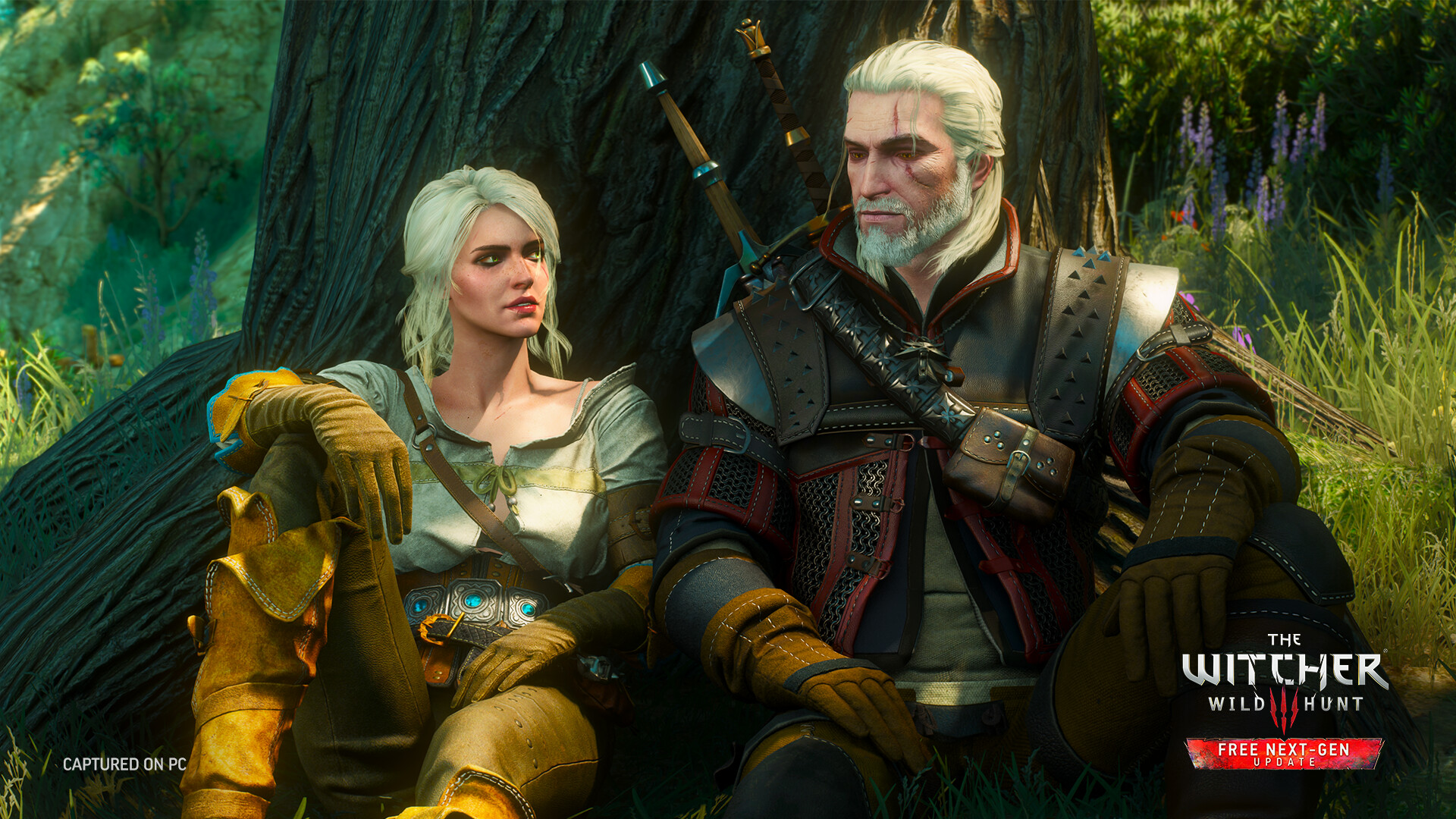
© CD PROJEKT RED. Official media via Steam.
The pitch
OverviewA decade on, the scene most people still quote from The Witcher 3 is not a boss or a battle. It is a grieving father in a Velen bog, a spirit bound beneath a gnarled tree, and a choice with no clean answer waiting on either fork of it. The Bloody Baron questline remains the clearest single argument for what this game did that its rivals mostly would not: treat a side story with the full moral seriousness of a main campaign, and then refuse to tell you which lever is the right one to pull.
You play Geralt of Rivia, a professional monster hunter with a silver sword, a fondness for baths, and a dry, put-upon streak, tracking his adopted daughter across a continent gutted by war and stalked by a spectral cavalry called the Wild Hunt. It is an enormous open-world RPG adapted from Andrzej Sapkowski's novels, but its real subject is people, desperate, compromised, ordinary people, and the grubby business of taking their contracts and living with the fallout.
CD PROJEKT RED was reaching for the novelistic in a medium that usually settles for the operatic. Fewer chosen-one prophecies, more war profiteers and frightened villagers and morally bankrupt sorcerers. The ambition was to make the writing, rather than the stat sheet, the reason you kept playing, and then to hold that standard across a genuinely absurd quantity of content without letting it thin out.
It mostly succeeded so completely that it rewrote the genre's expectations. For years afterward, every open-world RPG got compared to it, usually unfavorably, on the one axis it owned outright: the sheer quality of its quests. A decade and a small army of imitators later, that particular crown has barely slipped an inch.
How it plays
PlayCombat is the part that has aged least gracefully. Geralt fights with a mix of fast and strong sword strikes, sidesteps and rolls, five magic Signs, and a deep alchemy layer of oils, potions, and bombs brewed against specific monster families. On paper it is a satisfying loop of preparation and payoff: read the bestiary, oil the blade, down the right decoction, then dance. In the hand it can feel floaty and imprecise, Geralt pirouetting a half-beat after you asked him to, and once you invest in Signs, the Quen shield in particular, a great many encounters simply stop being dangerous at all.
Everything wrapped around the combat, though, is exceptional. The world is carved into handcrafted regions with real identity: muddy, war-scarred Velen, the crowded merchant sprawl and witch-burnings of Novigrad, the storm-lashed Viking isles of Skellige, each one thick with folklore, contracts, and small human dramas you stumble into rather than get funneled toward. Even the throwaway witcher contracts open with investigation and monster-tracking and close with a bestiary entry, so each hunt feels specific rather than stamped from a template.
The quest design is the headline, and it earns the billing. Side stories here routinely carry the weight, ambiguity, and craft that most games reserve strictly for their finales, and the game trusts you to make ugly calls and then pointedly declines to reassure you afterward. Choices pay off hours or whole regions later, often in ways you have half-forgotten you set in motion. It is the rare RPG where clearing the optional content makes the world feel deeper rather than more padded.
Then there is Gwent, a collectible card game so well-designed it threatens to annex your entire playthrough, the sort of side diversion people abandon the main quest for weeks to go build decks around. And there are two expansions, Hearts of Stone and Blood and Wine, that rival or arguably surpass the base campaign, the former a tight, mischievous ghost story with one of gaming's best antagonists, the latter a sun-drenched fairy-tale duchy roughly the size of a smaller game entirely.
Character progression sorts into the familiar witcher triad, fast-attack swordplay, Sign intensity, and alchemy, with mutations from the Blood and Wine expansion bolting on powerful capstone abilities for the truly invested, and Places of Power scattered across the map handing out free skill points to anyone who bothers to explore. Sign-focused mages, alchemy-fuelled bruisers who drink themselves nearly to the toxicity threshold, and pure swordmasters all remain viable routes through the game. The main quest runs a good fifty hours and the complete package well past a hundred, with a New Game Plus for players not ready to hang up the silver sword, though the leveling is loose enough that an over-leveled region or a trivial contract can leave the difficulty curve lurching unpredictably rather than climbing.
Exploration can overreach, mind. Skellige's map in particular is buried under a rash of near-identical question marks, most of them guarding a smuggler's cache worth three crowns and a weary sigh, and this box-ticking is the one place the design borrows the very open-world habits the rest of it quietly transcends. The handcrafted material is peerless; the connective filler between it is merely fine. The friction that remains is mostly interface-shaped rather than fundamental. Inventory management is a persistent chore, the menus are fiddly and slow to navigate, and the sheer volume of loot rarely justifies the sorting it constantly demands. Years of patches and a full next-gen update have smoothed the original's clumsier corners, but the swordplay and the menu design still mark this, unmistakably, as a game built in an earlier era of the genre.
Art & atmosphere
CraftCD PROJEKT RED mines Slavic folklore for a world that feels weathered rather than designed. Velen is a palette of mud, bruised sky, and gallows silhouettes; Novigrad is all soot, candlelight, and zealotry; Skellige is a storm-bleached green under enormous northern light. The studio's artists understood weather as mood better than almost anyone in the business, few games have made rain and low, slanting sun this genuinely melancholy, and the monster design leans grimy and anatomical, the drowners, the noonwraith, the leshen assembled from antler and bark, never generic bestiary filler.
The real signature, though, is the score. Marcin Przybylowicz and the Polish folk band Percival build it from hurdy-gurdy drones, hand drums, and keening female vocals, so the Crones' theme genuinely unsettles and Priscilla's ballad genuinely aches, sung diegetically in a crowded tavern and then lodged in your head for a solid week. The voice acting matches it, Geralt's weary gravel, a supporting cast that never once slips into pantomime, and sound design that makes a lonely contract in the woods feel faintly haunted before anything has even happened.
It is beautiful in an unglamorous, folkloric register, closer to a muddy Brueghel than a glossy fantasy poster, and it has aged far more gracefully than its swordplay. The look was never chasing spectacle; it was after a lived-in, superstitious world you can half-believe people are surviving in just off the edge of the screen.
A storytelling and worldbuilding benchmark whose writing and expansions remain elite even as its combat and menus visibly show their age.
Pros & cons
The ledgerIn its favour
- Side quests carry the moral weight most games reserve for their main campaign
- Handcrafted regions dense with folklore, character, and stumbled-upon detail
- Gwent is a genuinely great card game smuggled inside an RPG
- Two expansions that stand shoulder to shoulder with, or above, the base game
- A folk-rooted score and diegetic ballads that lodge in your head for days
Against it
- Sword combat feels floaty and dated next to modern action-RPGs
- Menu and inventory management is a persistent, clumsy chore
- Signs like Quen trivialize many fights the moment you spec into them
- Loot volume rarely justifies the constant sorting it demands
Screens
Official media© CD PROJEKT RED. Official media via Steam.
The player verdict
Real reviews · Steam- Recommended
“Short Review Witcher 3 is one of the best AAA RPGs I've played to date. The world is massive and full of life, the lore pulls you in even if you've never touched the previous games, the DLC is among the best ever released for a AAA title,…”
40 found helpfulvia Steam - Recommended
“10/10 GAME!!! Man where do I even start, this game has it all. The story is great but that's not what makes this game great its the amount of things you can do and learn about which makes this game great. From the main quest to secondary…”
23 found helpfulvia Steam - Recommended
“The Witcher 3: Wild Hunt Vote [url=https://store.steampowered.com/app/292030/The_Witcher_3_Wild_Hunt/]96 ✅ There's very little to say...those familiar with the game know what I'm talking about. Pure video game art. Every single, tiny…”
15 found helpfulvia Steam - Recommended
“I had The Witcher 3 sitting in my game library for years. Every time I looked at it, I told myself, "I'll play it when the time is right." Somehow, the "right time" never came. Then two of my friends (who are hardcore TW3 fans) finally got…”
11 found helpfulvia Steam
Verdict
The callThe Witcher 3 endures because it understood, earlier and more completely than most, that a role-playing game lives or dies on its writing and its world rather than its stat sheets. The quests remain the medium's high-water mark for consequence and character, the world is dense without ever feeling like a checklist, and the two expansions push an already enormous package into faintly absurd value.
The combat has been lapped by younger, sharper action-RPGs, and the inventory remains a genuine irritant, so this is not some flawless artifact to be waved through on reputation alone. But as a piece of storytelling architecture it has barely been equaled in the decade since, and at its usual sale price it edges close to essential.
Newcomers should forgive the swordplay, ignore the menu clutter, and stay for absolutely everything else; there is still no better argument for games as a narrative medium working on a budget. Lapsed players who never finished should know the expansions are exactly where it peaks. This remains the one the others keep getting measured against.
Sources
Original review by Aymen Sakouhi from the licensed facts above. Score: 9.1/10.