The Lantern of the Laughless Saint is a rough, soulful Morrowind love letter
Early-access verdict: 7.5/10. A janky but soulful open-world RPG that channels Morrowind's learn-by-walking spirit, with co-op and real personality.
Aymen Sakouhi·Writer · Games Hobbyist//4 min read
© NerveLabs. Official media via Steam.
The pitch
OverviewThe Lantern of the Laughless Saint arrives with one of the most specific pitches in recent memory: it wants to be Morrowind. Not Skyrim, not a modern open-world checklist, but the strange, obtuse, learn-the-world-by-walking-it Elder Scrolls of 2002, the one that trusted you to get lost and figure things out. That is a bold target for a small team, and the remarkable thing about NerveLabs' early-access RPG is how often it actually gets there.
A recurring dream pulls your character to a remote island, and you come to beneath the shadow of a tower that never speaks. From there the game hands you its world with very little ceremony. There are no glowing quest markers herding you along, no map full of icons to vacuum up. Instead there is a place to be understood, a saint's strange legend to pick apart, and a real thematic question, about longing and what is worth preserving, that the game is genuinely interested in.
It wears its influences openly and well: the exploration-first design of Morrowind, a streak of the character-driven weirdness that made Disco Elysium special, and the drop-in co-op freedom of something like Valheim. That last point matters, this is a Morrowind-like you can play with a friend, which is rare enough to be a selling point on its own.
A crucial caveat frames everything that follows: this is Early Access, and it plays like it. This is a review of impressions, not a finished verdict. The game is rough, sometimes literally broken, and buying now means signing up for a work in progress. But the foundation underneath the jank is unusually promising, and it has the one thing you cannot patch in later: soul.
How it plays
PlayThe core loop is exploration and discovery, and it lives or dies on your appetite for being left alone. There is a full, open world here to wander, and the game deliberately withholds the modern conveniences that guide you through most RPGs. You find things by looking, by talking, by paying attention and walking somewhere because a conversation made you curious. For players raised on Morrowind's design philosophy, this is the dream. For anyone who needs a waypoint and a to-do list, it will feel obtuse and occasionally aimless, and that is by design rather than by accident.
Character progression follows the same old-school instincts, rewarding you for doing rather than for spending points in a menu. Early testers have already found the kind of systemic quirks that fans of the genre adore, the sort of exploit where you can grind a skill to absurd heights by repeating an action, which is less a bug than a knowing wink at the games it is emulating. Whether that reads as charming or sloppy will depend entirely on your affection for the era it is channeling.
The co-op is the standout structural idea. Being able to explore this strange island with a friend, sharing the confusion and the discoveries, gives the game a texture most single-player RPGs cannot match, and the early-access build already supports a completable main quest in co-op or solo. It is not seamless, but the ambition of a co-op Morrowind-like is exactly the kind of swing that makes this project interesting.
And then there is the roughness, which is impossible to ignore and only fair to foreground. This is an unfinished game. Testers report falling through floors, systems that misbehave, and the general instability you would expect from an ambitious open world built by a small team and shipped early. The content is there and the main quest can be completed, but you should expect friction, jank, and the occasional reload, and you should buy in accordingly.
Judged as an early-access foundation rather than a finished product, though, what is here works. The world is worth getting lost in, the systems have the right texture, and the exploration delivers the specific satisfaction its inspirations were built on. The bones are good. The polish is the part that still needs time.
Art & atmosphere
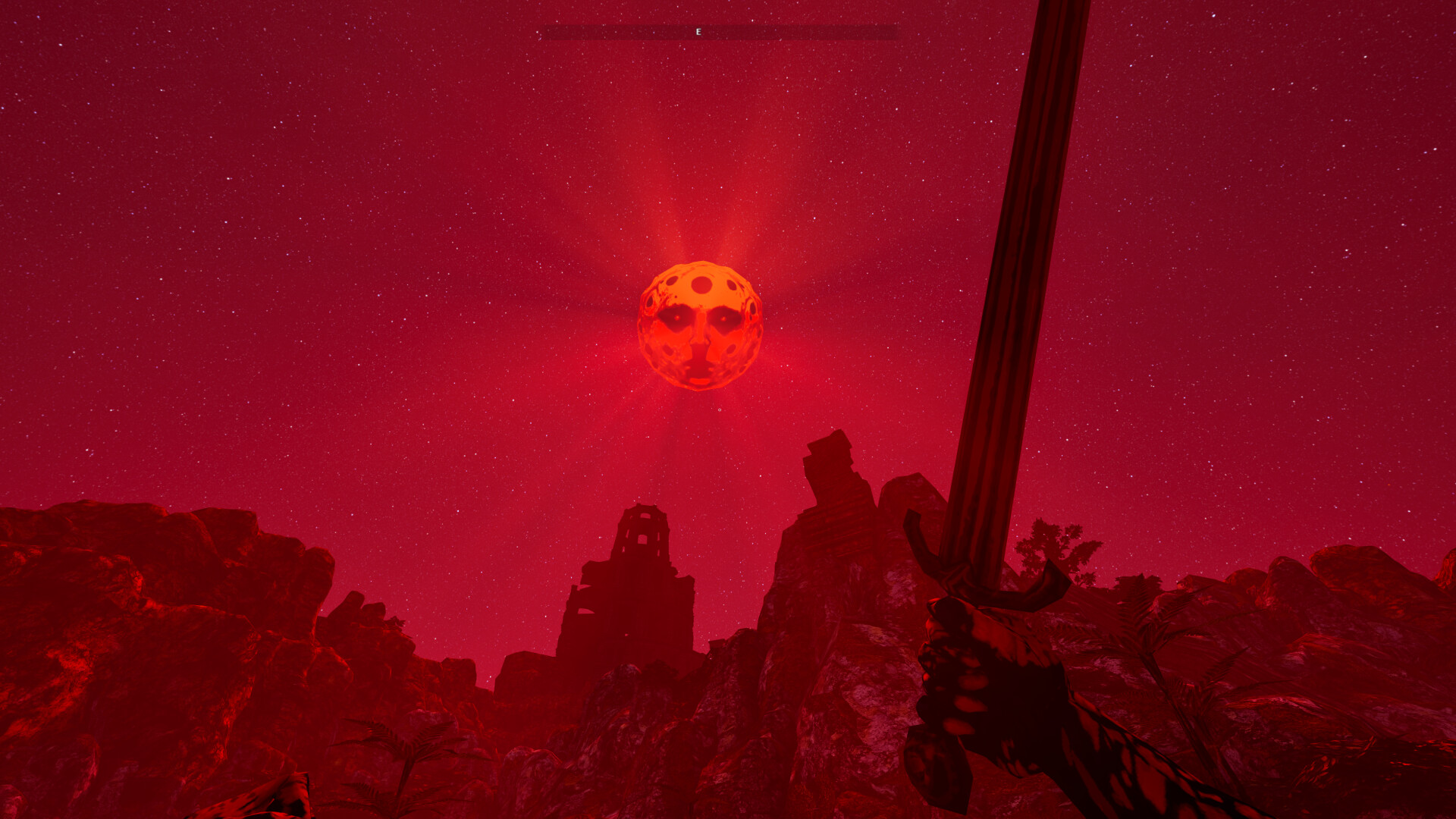
CraftAesthetically, the game trades fidelity for atmosphere, and mostly wins the trade. It is not a technically dazzling RPG, and it does not pretend to be, but it has a distinct, slightly dreamlike sense of place that suits its premise of a dream-summoned island. The silent tower looming over everything gives the world a constant sense of purpose and unease, a fixed point that quietly pulls your curiosity toward it.
What it has in abundance is personality, the intangible quality reviewers keep reaching for when they compare it to the Bethesda of old. The writing and world design carry a genuine strangeness and specificity, a willingness to be weird and let you sit with it, that far bigger productions have largely sanded away. It feels handmade and slightly unpredictable, and in an era of focus-tested open worlds, that is refreshing.
The presentation carries the same early-access caveat as everything else: expect rough edges, uneven animation, and moments where the seams show. But the mood holds even when the polish does not, and the atmosphere does enough heavy lifting that the technical shortcomings feel like something to be patched rather than a fundamental flaw.
A soulful, exploration-first Morrowind-like with rare co-op and real personality, weighed against the instability and jank of an unfinished early-access build. Very Positive on Steam. As an early-access impression, a 7.5 reflects a genuinely promising, atmospheric RPG whose vision currently outruns its polish, with clear upside as it matures.
Pros & cons
The ledgerIn its favour
- A genuine Morrowind-like: exploration-first, no hand-holding, learn-by-walking
- Real personality and strangeness, the Bethesda-of-old feel reviewers keep citing
- Drop-in co-op, a rare and compelling twist on the formula
- A full open world and a completable main quest already in early access
- Systemic, exploitable RPG quirks that fans of the era will love
- Strong, dreamlike atmosphere anchored by the looming central Tower
Against it
- Early Access: rough, unstable, with bugs like falling through floors
- Deliberately obtuse design will frustrate players who want guidance
- Not a technical showcase; animation and polish are uneven
- Systems can feel sloppy as easily as charming, depending on taste
- Buying now means committing to an unfinished work in progress
Screens
Official media© NerveLabs. Official media via Steam.
The player verdict
Real reviews · Steam- Recommended
“If you Spam Punch the Dude in the start of the game you Can level your unarm to level 100. 10/10 Broken just like Morrowind”
638 found helpfulvia Steam - Recommended
“A fantastic experience full of personality. This game has heart and soul not seen in many releases today. It feels like the Bethesda of old. The gameplay is great, the world is fun to explore, the story really interesting. It's full of…”
127 found helpfulvia Steam - Recommended
“The Lantern of the Laughless Saint is nothing short of an amazing RPG. I had the pleasure of playtesting this game for over 200 hours. At every turn, the developers were hands on and intently listened to feedback. In doing so they have…”
104 found helpfulvia Steam - Recommended
“West is South and South is East, and East is North and North is West. But other than that and some performance issues and holes in the floors that'll send you to you last save (that will absolutely be patched), this is an excellent Elder…”
67 found helpfulvia Steam
Verdict
The callThe Lantern of the Laughless Saint is one of the more exciting early-access RPGs in a while, precisely because it is chasing something specific and unfashionable. A co-op Morrowind-like, built on exploration and trust rather than markers and checklists, is a genuinely appealing idea, and NerveLabs has already captured the hardest part to fake: the feeling of a strange world worth understanding on its own terms. When it clicks, it delivers the exact satisfaction its inspirations were famous for.
The honest reservation is its state. This is an unfinished, occasionally broken game, and the roughness is not cosmetic, you will hit bugs, instability, and the general friction of an ambitious project still under construction. Anyone expecting a polished, guided modern RPG should wait, and possibly wait a good while, because early access is a promise, not a guarantee.
But for the right player, the one who misses being dropped into a weird world and left to make sense of it, especially with a friend along for the confusion, there is already something special here. As an early-access impression, it earns a cautious, genuinely enthusiastic recommendation: rough around every edge, but with more heart and vision than games many times its size. Buy in for the promise, not the polish.
Sources
Original review by Aymen Sakouhi from the licensed facts above. Score: 7.5/10.