Tales of Graces f Remastered Gives a Sleeper Tales Entry the Second Chance It Deserved
Our Tales of Graces f Remastered review checks TOSE's PC remaster: technical combat, direction markers, and the bundled Lineage and Legacies epilogue.
Aymen Sakouhi·Writer · Games Hobbyist//5 min read
© Bandai Namco Entertainment. Official media via Steam.
The pitch
OverviewTales of Graces f first found its audience on console hardware more than a decade ago, and Bandai Namco handing TOSE a full PC remaster says something about how much residual affection that release still commands. This is not a reboot or a reimagining. It is the same story wearing a sharper coat of paint and a handful of overdue conveniences, aimed equally at fans who never got to play it on PC and newcomers who skipped the console era entirely.
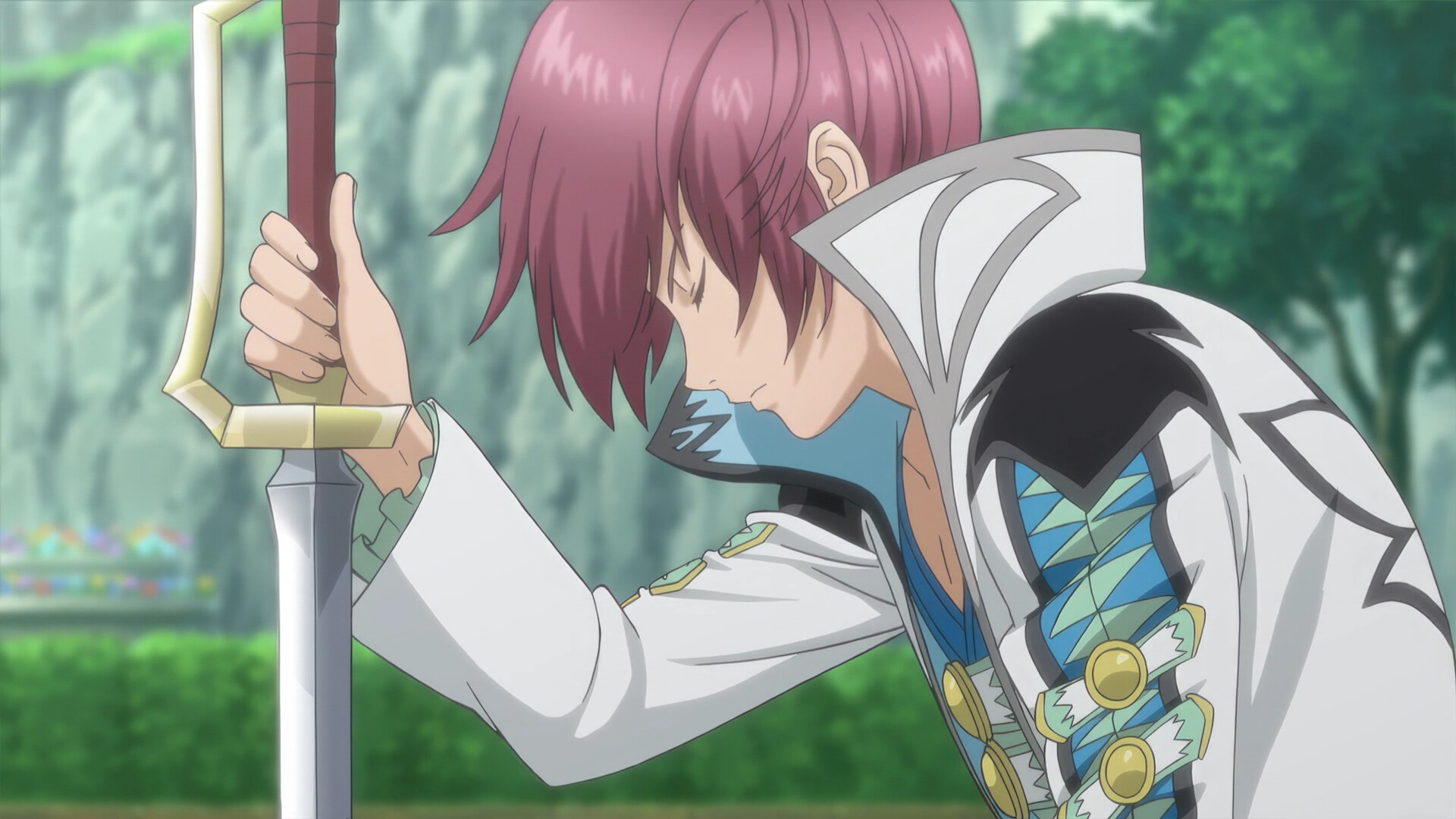
The setup is quieter than most Tales openers tend to be: two brothers pulled apart by their father's bad choices, a childhood friendship strained by years of separation, and a plot that keeps circling back to what happens when scientific ambition outruns basic compassion. It is not a flashy hook, but it gives the cast something to actually argue about instead of a generic world-ending threat to react to.
What TOSE has actually changed is smaller than the word remaster tends to promise. The pitch is a beautiful and easier-to-play version, and that mostly holds up: navigation aids now exist where the original expected players to wander blind, and the post-game Lineage and Legacies epilogue ships as part of the base package instead of a separate purchase. What has not changed is the skeleton underneath, and that skeleton is unmistakably from an older generation of Tales design.
None of that makes this a hard sell. It makes it a specific one, aimed at a specific kind of player.
How it plays
PlayCombat is where this remaster earns its keep. It is real-time and positional, closer to a technical action game grafted onto an RPG party structure than the turn-based rhythm plenty of players expect walking in. Reading an enemy's wind-up, angling your approach, chaining combos before a stamina-style gauge runs dry, and swapping party members mid-fight to answer whatever an encounter throws at you all matter here. It rewards players willing to actually learn its rhythms rather than mash through them, and that reward holds up remarkably well for a system built well over a decade ago.
The catch is that learning those rhythms takes patience the game does not always pay back quickly. Early encounters can feel sparse next to what the combat system is eventually capable of, and the pacing sags hardest in the middle stretch, where new mechanics stop arriving as often and the story slows down to connect earlier beats to later ones. Players who push through tend to describe it as a game that rewards persistence rather than one that grabs you in the first hour, which tracks with how a lot of that console generation's JRPGs were built.
The remaster's most meaningful addition might be its smallest: proper direction markers. The original was notorious for stretches where the path forward genuinely was not clear, certain sections in particular, and TOSE has quietly patched over that specific friction without touching how the areas themselves are laid out. It is not a redesign, it is a courtesy, and it removes a specific, long-standing complaint without flattening the exploration.
Lineage and Legacies, the epilogue originally sold on its own, is bundled in from the start here. It gives the story room to breathe past the point where the main cast's individual arcs resolve, rather than cutting off right there, and folding it into the base package removes what used to be an awkward extra purchase for anyone chasing the fuller version of the ending.
Character writing is a mixed bag, and honestly so by the account of players who have actually finished it: strong at the center, thinner at the edges. The core relationships carry real weight, but supporting characters can flatten into a single repeated trait across dozens of scenes, and the script leans on genre shorthand more than its stronger moments suggest it needs to.
Outside of the main story path there is room for detours and optional skirmishes for players chasing full completion, and the remaster makes no attempt to pad or trim that scope. It is presented largely as it always was, which is either a comfort or a complaint depending on how much affection you already carry for the source material.
On the technical side, the PC release supports full controller input, including both DualShock and DualSense, which matters more than it sounds for a combat system this dependent on quick directional inputs. It remains a single-player experience through and through, with no multiplayer layer added for this release.
The rest of the package is standard modern Steam housekeeping rather than anything transformative: achievements to chase, cloud saves that carry a profile between machines, and Family Sharing support for households splitting one library. None of it changes how the game plays, but it removes the small frictions that used to separate an old console game from a native PC citizen, and at a €39.99 asking price, buyers are effectively paying current full-price rates for content built on a decade-old foundation. That is a fair trade for the cast who wanted this specific game back. It is a harder sell for anyone shopping purely on production values.
Art & atmosphere
CraftTOSE's visual pass is conservative but effective. Character models and environments read cleaner and sharper than the source material without chasing a full stylistic overhaul, which is the right call for a game whose anime-adjacent art direction was already doing most of the heavy lifting. It looks like a game from its era wearing a genuinely fresh coat, not a game pretending to be something newer than it is. Lighting and texture work benefit the most from the pass, giving towns and battle arenas a cleaner silhouette even though the underlying geometry and animation rigs are unmistakably from an earlier hardware generation.
The original Japanese voice cast is intact and selectable, which matters to a fanbase with strong, specific opinions about Tales dub quality across the series. The soundtrack does the genre-standard job of underscoring dungeons and battles without demanding to be remembered on its own, competent rather than distinctive.
Where the remaster's limits show most is in UI and menu design, which still carries the density typical of a console JRPG from that generation. It has not been reworked for mouse and keyboard so much as made functional with one, and that gap between remastered and redesigned is the clearest tell of the game's real age.
A technically excellent combat system and two genuine quality-of-life fixes push this well past a straightforward reissue, though a sagging midgame and thin side characters keep it short of the genre's very best.
Pros & cons
The ledgerIn its favour
- Technical, positional combat that rewards real skill
- Family-driven story with genuine emotional stakes
- Direction markers fix the original's worst navigation complaints
- Lineage and Legacies epilogue included at no extra cost
- Original Japanese voice cast preserved
- Full DualShock and DualSense controller support
Against it
- Pacing sags noticeably through the middle chapters
- Side characters can flatten into a single repeated trait
- Menus and UI still carry console-era clutter
- Single-player only, no multiplayer or co-op
- Slow opening hours before the combat system fully opens up
- Full current-gen price for a game built on decade-old foundations
Screens
Official media© Bandai Namco Entertainment. Official media via Steam.
The player verdict
Real reviews · Steam- Recommended
“PLEASE TALES OF THE ABYSS NEXT !!!!!!!!!!!!!!!!!!!! With that out of the way, this is a really good remaster. I especially appreciate that there are direction marks now because there are parts of the game like the Wallbridge section that…”
13 found helpfulvia Steam - Recommended
“Brothers separated by a father’s poor choices, a childhood friendship, and the dangers of science without compassion or ethics, these mistakes from the past threaten the future. As a longtime Tales fan who started with Tales of Destiny and…”
0 found helpfulvia Steam - Recommended
“Tales of Graces is a very solid game with a very good story, a fun cast, and a stellar combat system that rewards skilled, technical play. It does have some pacing issues, especially near the middle. And the characters can seem flat at…”
0 found helpfulvia Steam - Recommended
“This is my 2nd time beating this game (1st time on PS3) filled with friendship crap but I like it despite the story. Characters are fun and combat is great as expected from the Tales dev team, in this case Destiny team. JP casting is…”
0 found helpfulvia Steam
Verdict
The callTales of Graces f Remastered is not trying to convert skeptics of the genre. It is trying to hand a genuinely well-regarded, somewhat overlooked Tales entry back to the people who wanted it, and to smooth out the specific frustrations that kept new players from finishing it the first time around. On both counts it succeeds.
The combat system alone justifies a look for anyone who prefers their action RPGs technical rather than mashy, and the bundled epilogue plus the navigation fixes remove the two biggest historical complaints against the original release. What the remaster cannot fix is a middle stretch that drags and side characters who never quite round out, the honest cost of polishing a script rather than rewriting it.
Recommended for Tales veterans revisiting an old favorite and for action RPG fans willing to put in the hours before the combat system fully opens up. Newcomers hunting for an immediately gripping JRPG from the first scene should look elsewhere first and come back to this one later.
Player sentiment on Steam sits firmly in Very Positive territory at review time, and the shape of that sentiment matches everything above: real enthusiasm for the combat and the family drama at its center, tempered by an honest acknowledgment that the game takes its time paying that enthusiasm back. That is a fair summary of the whole package.
Sources
Original review by Aymen Sakouhi from the licensed facts above. Score: 8.4/10.