Fractured Daydream Turns Sword Art Online Into a Weekly Co-op Habit, Store Included
Our SWORD ART ONLINE Fractured Daydream review: a 21-character co-op brawler with real fan appeal, undercut by a full price tag and an in-game store.
Aymen Sakouhi·Writer · Games Hobbyist//5 min read
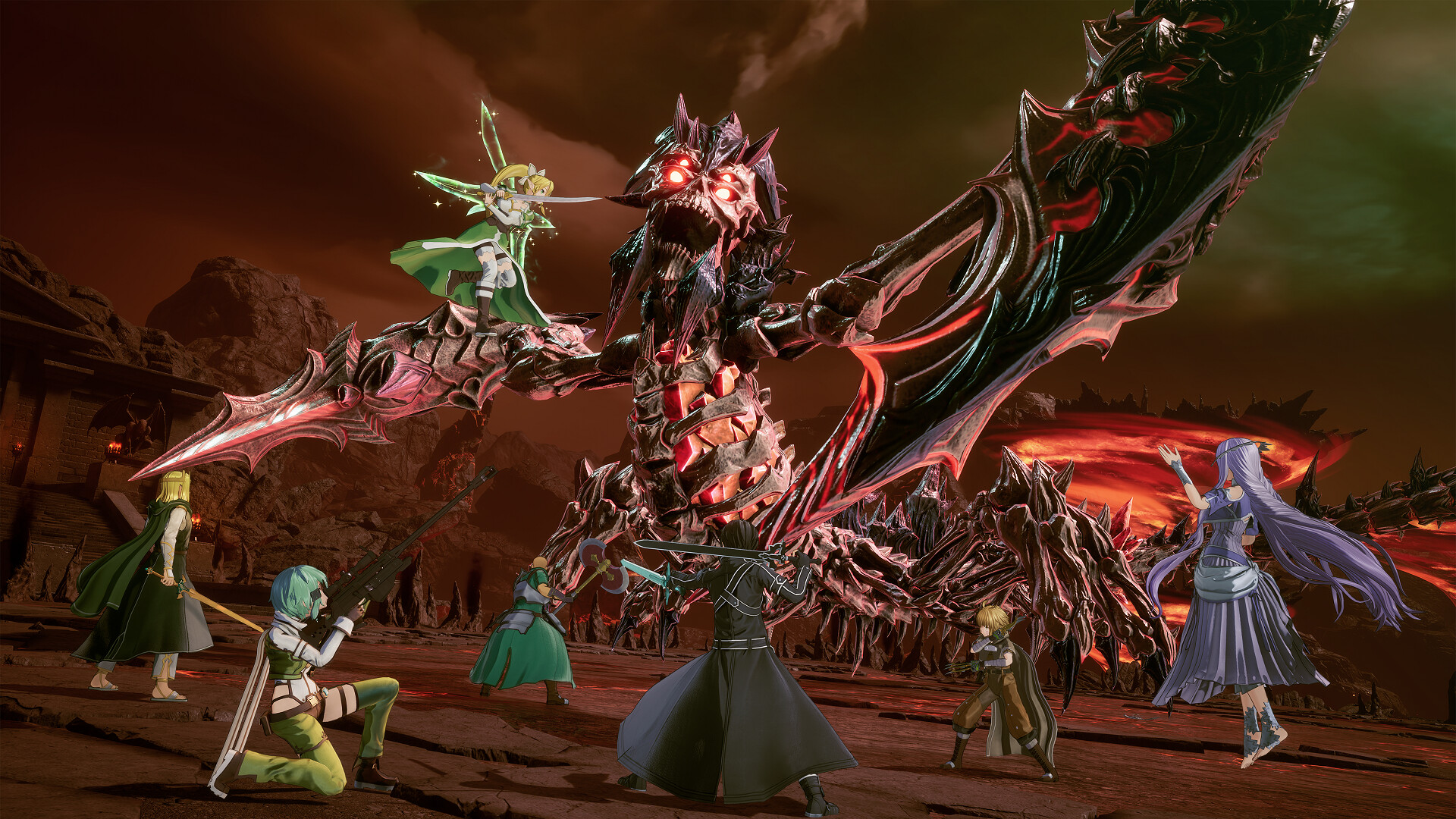
© Bandai Namco Entertainment. Official media via Steam.
The pitch
OverviewSword Art Online is ten years past its original anime run and Bandai Namco is marking the anniversary with two separate games rather than one, a sign of how much mileage the publisher still finds in this catalog. Fractured Daydream is the cooperative half of that push, built by Dimps as a real-time action game where a roster pulled from across the franchise, twenty-one characters deep, fights through content built to be tackled solo or shoulder to shoulder with friends.
Dimps has spent years turning licensed anime and manga properties into playable combat systems, and that background shows in how quickly Fractured Daydream gets a controller-shaped hand into the actual fighting rather than lingering in menus. The pitch here is less about telling a definitive Sword Art Online story and more about giving the extended cast a shared battlefield, then asking players to keep coming back to it. Windows is the platform this review covers, and the game arrives here with full controller support already tuned in, which matters for a combat system this reliant on tight, readable inputs.
Steam's own numbers tell an honest story about how that pitch landed: Mostly Positive at 71 percent across a little over a thousand reviews. That is a real audience that likes what it is playing, but it is also a modest sample size for a game riding a major franchise, and the split between enthusiastic and furious reviewers is wider than the headline percentage suggests.
What follows is an attempt to explain both halves of that reaction: why the combat and the cast keep a certain kind of player logging back in, and why the price structure sitting underneath all of it gives plenty of others a real reason to bounce off.
How it plays
PlayThe core loop is real-time action combat built around switching between characters who genuinely feel different from one another. Twenty-one is a large enough roster that Dimps clearly leaned on distinct weapon types and signature techniques rather than reskinning a handful of shared movesets, and that variety is the game's strongest single asset. Picking a favorite from the cast and learning their combo timing carries the kind of moment-to-moment satisfaction licensed action games rarely bother to earn. Switching targets mid-fight, chaining a light combo into a signature technique, and reading an enemy's tell before it lands all feel like they were tuned by people who actually play action games, not just people who license them.
Sitting underneath that combat is a gear and skill progression system that keeps getting expanded after launch. Players report the addition of higher-tier, so-called omega-level skills for equipment well after release, which points to a team still actively tuning the power curve rather than shipping once and walking away. For players invested in min-maxing a favorite character's loadout, that kind of post-launch attention matters more than a flashy trailer moment.
Cooperative play is where the design clearly wants your attention. Missions scale between solo and group play, with online co-op and cross-platform matchmaking meaning a friend on a different storefront can still drop into your session. Playing alongside others changes the rhythm noticeably, turning what can feel like a repetitive solo grind into something closer to a shared beat-em-up night, coordinating buffs and finishers rather than just taking turns hitting the same target. Communication tools are basic but functional, and the matchmaking rarely leaves a session waiting long, which counts for a lot in a game whose best moments are inherently social.
The story side is thinner than the combat side, and it shows. Missions are framed around the beyond memory premise pulling cast members from across the timeline into a single conflict, but the connective tissue between fights leans more on fan service than on building anything a newcomer would follow without prior investment in the anime or novels. Series veterans will recognize plenty; anyone hoping for a fresh, self-contained plot should adjust expectations accordingly. Cutscenes and dialogue exist mostly to set up the next fight rather than to build toward anything resembling a climax, and the game seems entirely comfortable with that arrangement, treating the fighting itself as the actual reward rather than whatever a mission briefing promises.
The part of the package that draws the most consistent criticism is monetization. This ships as a full-price release, not a free-to-live-service title, and it still carries an in-game store on top of that entry fee. That combination, premium price plus ongoing purchases, is exactly the kind of structure that turns a chunk of the audience hostile before they have even judged the combat on its own merits, and it is a fair complaint rather than a reflexive one.
Credit where it is due on accessibility: the Casual label Steam applies to this alongside Action and RPG is earned. Controls are legible on a pad, full controller support is well implemented, and the combat rewards timing without demanding frame-perfect execution. New players unfamiliar with character-action games can get functional within a session or two, even if mastering a favorite character's full kit takes longer.
Art & atmosphere
CraftThe character models lean on the same clean, expressive anime style the franchise has always traded in, and the roster's size means a real variety of silhouettes and weapon animations on screen rather than a handful of costume swaps. Ability effects are bright and readable in the chaos of a group fight, which matters more than raw fidelity once four or five combatants are all triggering skills in the same few seconds.
What stands out most is how much the presentation is built to serve recognition over spectacle. Every character animates in a way that reads instantly as themselves to anyone who has spent time with the source material, and that fidelity to established designs is clearly where the art budget went. It is not a game chasing photorealism or cinematic set pieces; it is a game making sure a decade of established characters look and move like the versions fans already carry in their heads.
Hit feedback carries more of the game's personality than the environments do. Impacts land with a satisfying snap, signature techniques get a beat of visual emphasis without stalling the pace of a fight, and the overall audio mix keeps the clatter of a four-player skirmish legible instead of collapsing into noise. Arenas themselves are functional rather than memorable, built to host the fighting cleanly and stay out of the way, which is a reasonable trade for a game that spends most of its budget on the cast standing in them.
A varied roster and genuinely fun co-op combat earn real goodwill, but a full price tag stacked with an in-game store and a thin story keep it from greatness.
Pros & cons
The ledgerIn its favour
- Twenty-one characters with genuinely distinct movesets and weapons
- Co-op play, including cross-platform, is where the design shines brightest
- Ongoing post-launch gear and skill updates keep progression alive
- Accessible, pad-friendly combat that welcomes newcomers to the genre
- Strong fan-service fidelity to established character designs
Against it
- Full retail price paired with an in-game store draws fair criticism
- Story mode is thin scaffolding rather than a real narrative destination
- Community reception is genuinely split, not uniformly warm
- Solo play loses much of what makes the combat loop compelling
- Requires prior investment in the franchise to land emotionally
Screens
Official media© Bandai Namco Entertainment. Official media via Steam.
The player verdict
Real reviews · Steam- Not recommended
“Pure garbage, Aincred looks like a masterpiece next to this. I do not recommend this game to anyone.”
0 found helpfulvia Steam - Recommended
“This game is good, but not for everyone. This is a live service game with an entry fee and an ingame store. at the time of writing this review the game added omega lvl skills for your gear so its very active. Story is there and is kinda…”
0 found helpfulvia Steam
Verdict
The callFractured Daydream is easiest to recommend to a specific kind of player: someone who already has affection for the Sword Art Online cast and wants a reason to hang out with them in real-time combat, ideally alongside a friend or two rather than alone. For that audience, the combat variety and the steady stream of post-launch gear updates deliver on a genuine, ongoing loop.
Outside that audience, the calculus gets harder to defend. A full asking price stacked with an in-game store is a real deterrent, the story is closer to a backdrop than a destination, and the Mostly Positive reception on Steam reflects a fanbase that is engaged but not universally won over. This is a solid co-op brawler wrapped around a beloved cast, not a must-play action game on its own terms, and going in with that framing will save most players from disappointment.
Judge it on what it actually tries to be, a character-action hangout spot for an established fandom rather than a landmark new entry in the genre, and it clears that lower bar comfortably. Judge it as a standalone sixty-euro action game competing against everything else on the market, and the entry fee stacked on top of a store starts to look like the harder sell it genuinely is.
Sources
Original review by Aymen Sakouhi from the licensed facts above. Score: 7.2/10.