Stonewards Builds a Whole Co-op Game Around One Very Good Decision
Verdict: 8.0/10. A 1-4 player dwarf roguelite whose mine-or-defend tension is genuinely clever. Superb with friends, thinner solo. Early Access.
Aymen Sakouhi·Writer · Games Hobbyist//5 min read
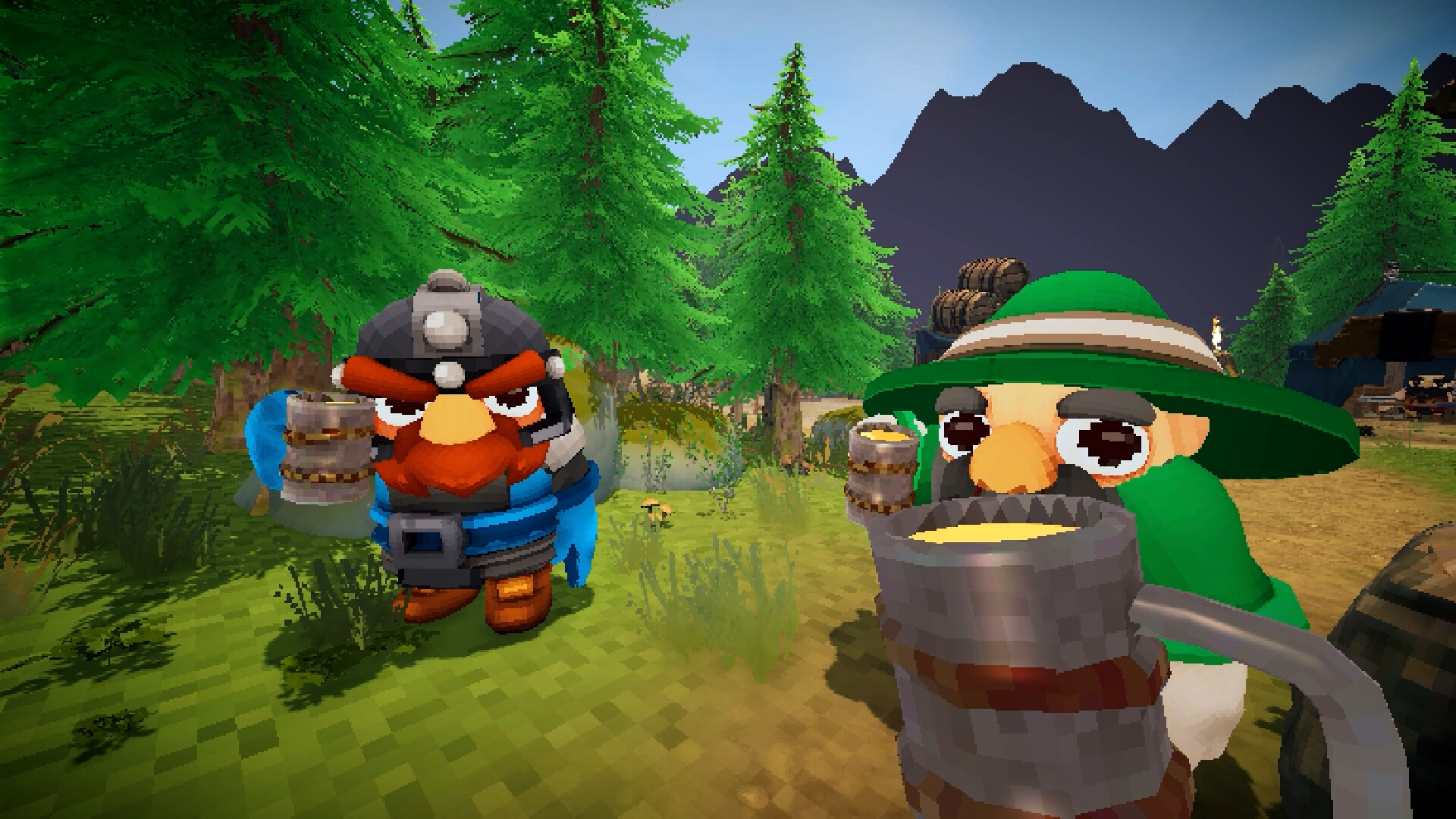
© Banana Tiger Studio. Official media via Steam.
The pitch
OverviewStonewards is a 1-4 player co-op roguelite about dwarves who dig, forge, and defend, and it is built almost entirely around a single excellent idea. The dig-forge-defend loop sounds familiar on paper, the kind of thing you have played in a dozen survival and horde games. What makes this one worth a look is the tension it wrings out of splitting those jobs between real people under a ticking clock.
The premise is cheerfully simple. A band of stubborn dwarves leaves its base camp to answer distress calls from nearby kingdoms. You tunnel into procedurally generated mines for the ores and materials you need, haul that loot back to a bastion to forge ammo and repairs, and then hold the line when the monsters come. At the heart of the bastion sits the King. If he falls, the kingdom falls with him, and the run is over.
It launched into Steam Early Access on August 11, 2026 at ten dollars, and the reception has been strongly positive, sitting in the mid-90s across hundreds of reviews. That is a healthy start for a small co-op game, and having spent time with what is here, the enthusiasm makes sense. This is an early-access build, so treat this as impressions of a promising foundation rather than a verdict on a finished, content-complete game.
The short version is that Stonewards found one genuinely clever mechanic and had the discipline to build a whole game around it, and the honesty to keep it cheap. What it has not yet done is dress that idea in anything memorable, or make it sing when you play alone.
How it plays
PlayThe loop is the pitch: mine, forge, defend, repeat. When the horn stops, the clock starts, and you tunnel into the 3D procedural mines to find the rare ores and materials hidden in the dark. You bring that loot back to the bastion to craft ammo, repair walls, and fill a stockpile that triggers randomized power-ups for your current run. Then you defend, keeping the monsters away from the King on his throne. Lose him and you lose everything.
The clever part, the thing the whole game rests on, is that mining and defending are the same limited pool of time and people. Every second you spend deep in the mine chasing one more ore vein is a second your teammates are holding the walls one dwarf short. That single constraint transforms what is usually the most tedious phase of a game like this, the resource grind, into a genuine decision. Do you push your luck for a better stockpile and richer power-ups, or pull back to help hold the line? It is a small design idea with a large payoff, and it is why the moment-to-moment play stays tense instead of settling into busywork.
That tension is at its best in a full co-op group. The game is clearly designed for four, and the social texture is the point: teammates react when you come back late from the mines, and the pressure of letting them down is half of what makes the risk feel real. Coordinating who digs and who defends, and calling the moment to switch, is where Stonewards is most alive. An evening with friends is exactly the experience it is engineered to deliver.
Solo, a lot of that evaporates. Without teammates to answer to, the core tension between mining and defending loses its emotional weight, and the loop reads much closer to an ordinary gather-and-hold game. You can play alone, but you are playing a diminished version of the design, and it is fair to say roughly half the appeal goes with the missing people. Go in expecting a co-op game first and a solo game a distant second.
The randomized power-ups from the stockpile give runs some variety and a light sense of build-crafting, and the procedural mines keep the digging from feeling identical each time. Whether that is enough for the long haul is the open Early Access question. Replayability here depends heavily on continued variety in waves, maps, and upgrades, because the dig-forge-defend rhythm is legible enough that it can become predictable once you have seen its range. That is precisely the kind of thing an early-access roadmap is meant to feed, and it is the number to watch as the game grows.
Art & atmosphere
CraftPresentation is the weakest link, and the game does not really try to hide it. The pixel art is competent but anonymous, the sort of clean, unremarkable style you have seen in a hundred indie games, and nothing about the look will lodge in your memory. It is not ugly or cheap, just forgettable, and in a crowded genre a stronger visual identity would have done a lot of work.
The tone leans on well-worn dwarf shorthand, beards and mining and stubborn charm, without adding much of its own to it. It is pleasant and easygoing, and it suits the beer-and-friends mood the game is going for, but it is comfort-food personality rather than anything with a distinct voice. You come here for the systems and the company, not for a world that grabs you.
Where the craft actually lands is in feel and readability. The shift between the claustrophobic dark of the mines and the frantic clarity of the defense is clear at a glance, which matters enormously when you are making split-second calls about where to be. The audio does its job too, with the horn and the rhythm of a wave giving you the information you need without a menu. It is functional, legible design, and for a game this dependent on fast decisions, functional is worth more than flashy.
One genuinely clever co-op tension mechanic, disciplined design, and an honest price carry a strongly-received Early Access roguelite, held back by forgettable presentation, weak solo play, and unproven long-term content.
Pros & cons
The ledgerIn its favour
- The mine-or-defend time pressure is a genuinely clever core idea
- Turns the usual tedious resource grind into a real strategic decision
- Excellent, tense fun in a full 1-4 player co-op group
- Clean readability between the mine and defense phases makes fast calls easy
- Randomized power-ups and procedural mines add run-to-run variety
- Cheap Early Access entry at ten dollars
Against it
- Solo play loses much of the core tension and roughly half the appeal
- Forgettable, anonymous pixel-art presentation
- Leans on generic dwarf humor without a voice of its own
- Long-term replayability depends on content variety that is not all here yet
- Early Access, so overall content volume and roadmap are still unproven
Screens
Official media© Banana Tiger Studio. Official media via Steam.
The player verdict
Real reviews · Steam- Recommended
“Very cute light game with rogue lite mechanics and progression. All mechanics are simple but work. Core gameplay loop is solid, you'll know if you like it within an hour or so of gameplay. You mine a procedurally generated area that…”
30 found helpfulvia Steam - Recommended
“Game needs ALOT of work, (Mage needs buff pls) but its quite fun with friends and solo. Definitely needs a way for just crafting defenses instead of finding them as a wave upgrade, gives a use for resources instead of just upgrade points.”
15 found helpfulvia Steam - Recommended
“I've been waiting for this game since the demo was released, an interesting game that takes hours of your life because of its vibe and at least its beautiful design. I believe this game still has a lot ahead, and I wish the developers lots…”
13 found helpfulvia Steam - Recommended
“after around 50 hours of playtime (demo, playtester version and early access) the game is still enjoyable nice models, good audio usage and rewarding progression simple yet appealing gameplay and fun classes to use and unlock cant wait for…”
9 found helpfulvia Steam
Verdict
The callStonewards is a small game that understood exactly what it was good at. The mine-or-defend tension is one of those ideas that seems obvious the moment you feel it, and the whole design is disciplined enough to keep pointing back at it instead of cluttering it up. Played with a full group, it delivers the specific, escalating panic of a good co-op night, where every trip into the mine is a small bet against your friends holding the wall. That is a real thing, and it is worth ten dollars on its own.
The caveats are just as clear. The presentation is forgettable, the humor is stock, and the solo experience is a shadow of the co-op one, so this is a game to buy with people in mind, not to play by yourself. And as an Early Access title, the long-term question of whether the loop stays fresh is genuinely open and depends on what content arrives next.
At 8.0, Stonewards earns its Very Positive reception on the strength of one excellent idea, executed with restraint and priced honestly. It is not the prettiest or the most original-looking game in its space, but it is one of the smarter co-op designs to land this year, and if you have a group looking for their next hour-a-night habit, it is an easy recommendation.
Sources
Original review by Aymen Sakouhi from the licensed facts above. Score: 8.0/10.