Static Dread: The Submarine Makes the Sonar Screen the Scariest Thing in the Ocean
Verdict: 7.5/10. A tense Lovecraftian submarine horror where sonar and crew decisions carry the dread. More visual novel than deep sim, short, but it grips.
Aymen Sakouhi·Writer · Games Hobbyist//5 min read
© Polden Publishing. Official media via Steam.
The pitch
OverviewStatic Dread: The Submarine understands something most horror games forget. The worst moment is not the one where the monster appears. It is the long stretch before it, when you are staring at a screen full of noise and trying to decide whether one of those blips is nothing or the end of everyone aboard. You are not the captain here. You are the captain's right hand, the person who assigns the crew, reads the instruments, and carries the weight of every call without ever getting to be the hero who gives the final order. That framing turns out to be the whole game. The dread does not come from what you fight. It comes from what you have to notice, and from how easy it is to miss.
The setup is Lovecraftian in the oldest sense. A military submarine descends into water that should not be paid attention to, into pressure and dark and things that answer back when you scan them. Over a handful of in-game days you manage a small crew, listen to the sonar, and make branching choices that decide who holds together and who comes apart. It is short, roughly a few hours a run, and built to be replayed for the routes and endings you did not reach the first time.
Coming out of the gate its Steam reception is Very Positive but genuinely divided, and the split is worth understanding before you buy, because it is not really about quality. It is about what kind of game you think you are getting. Solarsuit Games and publisher Polden Publishing have made something closer to a management-flavored horror visual novel than the deep submarine simulator the premise might suggest, and where you land on that gap will decide almost everything about how you feel here.
How it plays
PlayThe loop runs on days. Each stretch of the descent asks you to assign your crew to stations, keep an eye on their state, and work the sonar to understand what is around you. The sonar is the heart of it. Passive scans let you listen without announcing yourself, active scans reveal more but risk pinging back whatever is out there, and the space between those two choices is where most of the tension lives. You sweep the dark, pick apart wrecks and trenches from the echoes, and slowly learn to tell a harmless return from something that is turning to face you. When an echo answers on its own, the game does not need a jump scare. The screen is already doing the work.
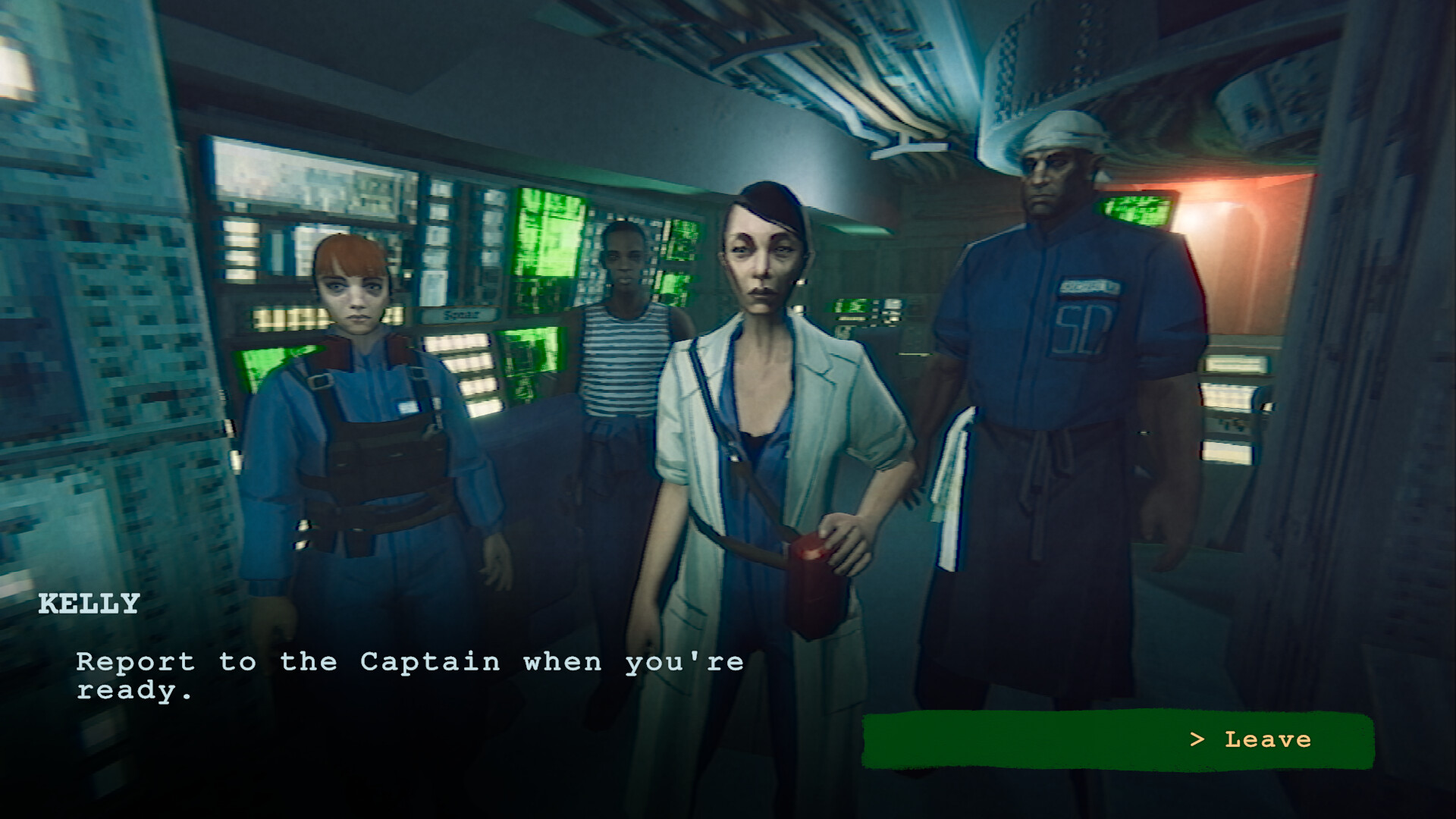
Around that sits the crew. People have limits, and the further you go the more those limits fray. Keeping the crew from madness is the stated goal, and it plays out through assignment, dialogue, and the choices you make when something goes wrong. The most effective horror the game has is not a creature at all. It is the realization, hours in, that one of your people has been quietly compromised and you did not catch it, because you were watching the water instead of the person next to you. That is the trick the whole design is built to pull, and when it lands it lands hard.
Choices branch, and they matter. Who you trust, who you assign where, and how you respond to the first signs of trouble ripple out into who survives and which of the several endings you reach. A single run is short, a few hours, which is clearly by design. You are meant to come back, take a different route, and see the parts of the story your first set of decisions closed off. For a game about hard calls made with incomplete information, replaying with what you now know is its own quiet kind of horror.
Here is the honest caveat, and it is the reason the reviews split. This is not a deep systems-driven submarine sim. If you come expecting granular control of the boat, complex resource chains, and emergent simulation, you will feel the thinness quickly, and the management layer will read as light rather than deep. Static Dread is really a psychological horror story with a management interface and a genuinely clever sonar mechanic wrapped around it. Judged as that, the systems are enough to carry the mood. Judged as a sim, they are not trying to be what you want. The game is upfront about its priorities once you are in it, but the store framing can set the wrong expectation, and that mismatch is what sours the players it sours.
Taken on its own terms, the pacing is strong. The days give it structure, the sonar gives it a hook you do not see elsewhere, and the branching keeps a short game from feeling slight. It asks for patience and attention rather than reflexes, and it rewards the player who reads carefully and thinks about the people, not just the instruments.
Art & atmosphere
CraftThe submarine is the whole world, and the game leans all the way into that confinement. The interior is cramped, low-lit, and heavy with the sense that there is nothing outside but water and pressure, and the presentation keeps you pinned inside it. There is no relief valve of open space, which is exactly right for a story about people slowly running out of room in their own heads.
The sonar display is the signature image, and it earns that place. A horror game that makes an abstract readout of green sweeps and returns into its scariest screen has found something real, because it puts the fear where your attention already is. You are not waiting for a monster to walk into frame. You are interrogating a piece of equipment and dreading what it tells you. That is a smarter, more sustained kind of tension than most of the genre reaches for, and it is the thing you will remember.
Sound does a lot of the heavy lifting, as it should in a game set in a metal tube in the deep. The creaks, the pings, and the silences are the atmosphere, and the writing fills the rest. As a piece of craft it is clearly an indie, and the presentation will not overwhelm you with spectacle. It does not need to. The restraint is part of the effect, and the mood holds from the first descent to the last.
A tense, atmospheric Lovecraftian submarine horror with a standout sonar mechanic and real psychological dread, marked down for a light management layer, short single-run length, and a premise that sets sim expectations the game does not aim to meet.
Pros & cons
The ledgerIn its favour
- The sonar mechanic turns an abstract screen into the scariest thing in the game
- Crew madness and the slow-burn infection reveal deliver genuine psychological dread
- Branching choices meaningfully change who survives and which ending you reach
- Short runs plus multiple routes make replaying feel purposeful, not padded
- Confined submarine setting and sound design build a consistent, gripping mood
Against it
- Plays like a management-flavored visual novel, not the deep submarine sim the premise implies
- The management systems are light and will feel thin to players wanting simulation depth
- A single run is only a few hours, so the value leans on your appetite for replays
- Store framing can set the wrong expectation, which is what divides its reception
- Indie-scale presentation with limited spectacle beyond the core mood
Screens
Official media© Polden Publishing. Official media via Steam.
The player verdict
Real reviews · Steam- Not recommended
“oh no, that was not good. i loved static dread: the lighthouse, but the submarine totally flails and flops very disappointingly. i'm also very suspicious of some of the other reviews on this game, between the em dashes and calling this…”
75 found helpfulvia Steam - Not recommended
“Unfortunately, this game does not live up to its potential. It feels rushed and unpolished. - There are major and frequent discrepancies between what the voice actors say vs. what's written on screen. - The pacing is all over the place,…”
27 found helpfulvia Steam - Not recommended
“To start, I played the original Static Dread, and I did enjoy the concept. Hearing that the Submarine was going to be a bit of a story within that universe and hopefully wed get deeper lore was exciting. I want to acknowledge the game has…”
20 found helpfulvia Steam - Recommended
“Really cool upgrades to this game since Static Dread: The Lighthouse. The voice acting was one of my favorite parts, and the story was fun and engaging! I felt like all my decisions really mattered, which gives it a ton of replayability.…”
19 found helpfulvia Steam
Verdict
The callStatic Dread: The Submarine is a horror game that knows exactly where fear lives and puts it there. By making the sonar screen and the crew the real objects of your attention, it earns a slow, sustained dread that does not depend on monsters lurching into view, and its best moment, the quiet horror of noticing too late that someone aboard has changed, is as good as anything the genre has done this year. The branching choices give a short game real weight, and the confined setting never lets the pressure off.
The honest catch is expectations. This is a psychological horror story with a light management layer and one brilliant mechanic, not the deep submarine simulator some players want it to be. Go in wanting simulation depth and you will find it thin. Go in wanting a tense, atmospheric horror story that you steer through hard decisions, and it delivers cleanly, especially across a couple of replays.
At 7.5, this is a strong, distinctive indie horror held back mainly by a genre-expectation gap and a slim systems layer rather than by any failure of nerve. If the pitch of reading dread off a sonar screen while trying to keep your people sane speaks to you, it is well worth the descent.
Sources
Original review by Aymen Sakouhi from the licensed facts above. Score: 7.5/10.