Star Wars Zero Company Is the XCOM Game the Clone Wars Always Deserved
Verdict: 8.3/10. Ex-XCOM devs bring sharp turn-based tactics to the Clone Wars: excellent squad combat and characters, dragged only by real performance issues.
Aymen Sakouhi·Writer · Games Hobbyist//6 min read
© Electronic Arts. Official media via Steam.
The pitch
OverviewStar Wars has been almost every kind of game except, until now, a proper turn-based tactics game. Star Wars Zero Company fixes that, and it does so with a pedigree that should make strategy fans sit up. It is built by Bit Reactor, a studio founded by Greg Foertsch, a twenty-two-year Firaxis veteran and the art director on the modern XCOM games, and staffed with a couple of dozen more people who worked on them. Add Respawn Entertainment in a supporting role and EA and Lucasfilm Games on the box, and the ambition is clear: this is XCOM in a galaxy far, far away, and it plays like the people who made XCOM know exactly what that means.
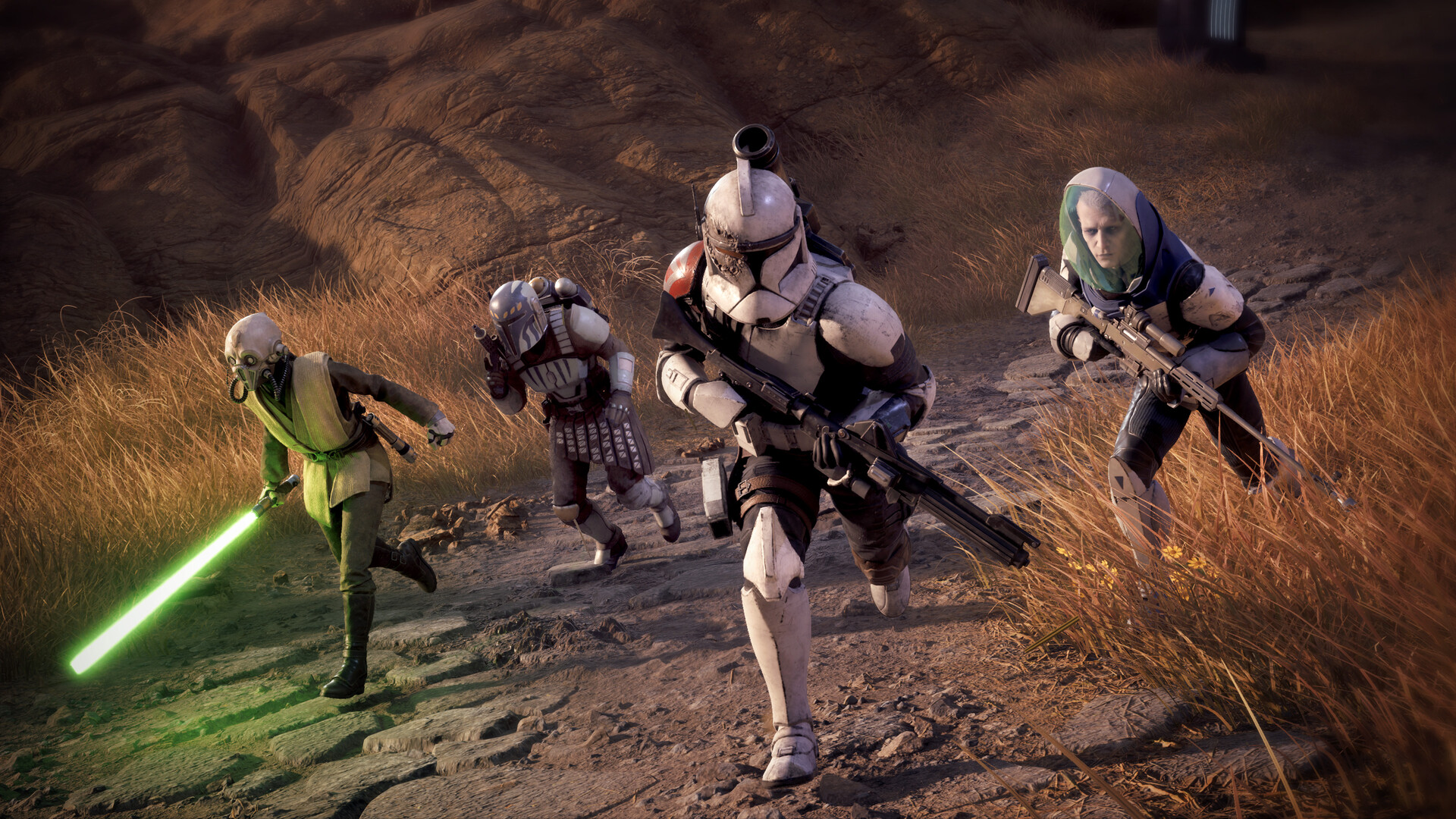
The setting is the Clone Wars, around twenty years before the original film, and the framing is refreshingly small. You are Hawks, a fully customizable former Republic officer who commands Zero Company, a ragtag squad of mercenaries and misfits rather than a chosen one with a lightsaber. The deliberate focus on non-Jedi soldiers is the smartest storytelling decision in the game, letting it tell a grounded, ground-level war story with a writer, Aaron Contreras of Jedi: Fallen Order and Survivor, who knows how to make Star Wars feel lived-in rather than mythic. There is a plague-tinged threat in the antagonist Kundri Fathom and the Infinite Coil, and yes, a certain fan-favorite clone captain turns up, but the heart of it is your squad.
Mechanically it is unabashedly XCOM, and unashamed of it. You move squadmates across cover-strewn, handcrafted maps on a three-action-point economy, set overwatch lanes, manage line of sight, and live and die by permadeath. Between missions you run a base called the Den, researching upgrades and gear, customizing astromech droids for support and explosives, and advancing time in cycles. Critics have not been shy about the comparison, but the more interesting note, from PC Gamer among others, is that it reaches past XCOM toward Mass Effect: a relationship and bonding layer between squadmates that pays off in tactical synergy bonuses, so who you fight alongside matters as much as how.
The result released on August 27, 2026 for fifty dollars on PC and sixty on console, and it arrived to a striking split. Critics are enthusiastic, with a generally favorable consensus and a raft of scores in the high eighties and nineties, while the Steam crowd sits a notch lower, mostly positive but visibly frustrated. That gap is the whole story of this review, and the good news is that it is not a gap about the game underneath.
How it plays
PlayThe tactical core is excellent, and it is excellent in the specific, confident way you would expect from people who spent a decade refining the genre. The three-action-point turn structure, the cover system, the overwatch lanes that snap and fire as enemies break cover, the constant tension of permadeath, all of it is tuned and legible. Encounters are handcrafted spaces with procedurally placed enemies, which keeps missions feeling authored while still throwing curveballs, and the difficulty leans on the classic XCOM push and pull between playing safe and pressing an advantage before the situation turns.
Where it earns its own identity is the squad. Zero Company is built from distinct classes with real ability trees, and specialization choices carry weight across a campaign, so a veteran roster becomes a set of tools you have personally shaped. The customizable protagonist and the customizable astromech droids extend that further, letting you tailor a support-and-explosives layer around your soldiers. This is a game about a specific group of people you have invested in, and permadeath makes every one of those investments feel fragile in the best way.
The bonding system is the standout addition and the reason the Mass Effect comparison keeps coming up. Squadmates build relationships, and those relationships translate into tactical synergies on the battlefield, so the social layer is not just flavor text between missions but a genuine mechanical incentive to field your people thoughtfully. It gives the whole campaign a throughline that pure XCOM has always lacked, marrying the strategy-layer attachment to a written cast worth being attached to.
The base layer holds it together. The Den is where research, gear upgrades, and the cycle-based passage of time live, and it provides the between-mission rhythm that a tactics campaign needs to breathe. It is not the deepest strategic meta-layer in the genre, and veterans of the giants may find it a touch lighter than they want, but it does its job of giving your choices context and consequence between the firefights.
The honest criticisms of the design, as opposed to the technical ones, are modest. The story is strong in its back half but several reviewers found the opening merely competent, taking time to find its footing, and the RNG can occasionally spike into a difficulty swing that feels more like luck than tactics. There are minor interface niggles too. None of these are serious wounds, and for a first outing in a genre this demanding, the fundamentals are remarkably assured.
The serious problems are technical, and they are the reason the Steam reception sits where it does. Reviews and players report frame-rate drops, UI flickering, and long hang times while the game resolves enemy turns, the last of which is a real drag on the pace of a slow, deliberate genre. It runs particularly badly on the Steam Deck, where it struggles to hold a playable frame rate at all. This is a game whose design deserves better than the state it shipped in on some setups, and how much it bothers you will depend heavily on your hardware and your patience for waiting on the AI to think.
Art & atmosphere
CraftPresentation is a genuine strength, and it is where the Respawn collaboration and an Unreal Engine 5 build show their value. Zero Company looks and sounds like a serious Star Wars production, with cinematic mission framing, strong character models, and the authentic clatter and hum of the era's hardware. The choice to center clones and ordinary soldiers rather than Jedi gives the art team a grittier, more grounded palette to work in, and the game wears it well, feeling closer to a war film than a space opera.
The cast is the other half of the presentation, and it is the part that lingers. A well-written squad, performed with care and deepened by the bonding system, turns a tactics game into an ensemble story, and the game is smart enough to let its characters carry scenes that a lesser Star Wars project would have handed to a lightsaber. The return of a familiar clone captain is fan service done right, earned rather than dropped in, and it lands because the game around it has done the work of making this corner of the war feel populated and real.
The caveat, again, is that the technical seams undercut the spectacle. A cinematic tactics game selling itself on presentation is poorly served by frame-rate dips and interface flicker, and the contrast between how good it looks in a clean moment and how rough it can run in a busy one is the sharpest expression of the game's central tension. The craft is there. The polish, in places, is not yet.
An excellent, confident turn-based tactics game from modern-XCOM veterans, elevated by a written customizable squad, permadeath stakes, and a Mass-Effect-style bonding system, and embraced by critics; held back from the top tier by real, widely reported performance issues, a slow-starting story, and a lighter strategy meta-layer.
Pros & cons
The ledgerIn its favour
- Sharp, confident turn-based tactics from a team of modern-XCOM veterans
- A written, customizable squad plus permadeath that makes every soldier matter
- A relationship and bonding system that turns social ties into tactical synergy
- A grounded Clone Wars story that smartly centers soldiers over Jedi
- Strong Unreal Engine 5 presentation and a cast worth caring about
- Accessible enough for newcomers to the genre without dumbing down the depth
Against it
- Performance problems: frame-rate drops, UI flicker, and long enemy-turn hangs
- Runs poorly on Steam Deck, often below a playable frame rate
- A competent but slow-starting story that only fully clicks in its back half
- Occasional RNG spikes that turn a fight on luck rather than tactics
- The base and strategy meta-layer is a touch lighter than genre veterans may want
Screens
Official media© Electronic Arts. Official media via Steam.
The player verdict
Real reviews · Steam- Recommended
“Turn off the "environment geometry detail" setting in your graphics if your fps is tanking. i got a boost by 40 frames from that. Edit: i turned off my comments on my review because ♥♥♥♥♥♥♥♥♥ some of yall are unhinged, but i would like to…”
1,746 found helpfulvia Steam - Recommended
“Always tell me the odds. There is no doubt, for me: this is one of the best games in the Star Wars universe since Jedi Academy. + X-COM gameplay is just difficult enough to feel like you scraped by with a win. + The base is a delight to…”
1,197 found helpfulvia Steam - Not recommended
“Good gameplay! It's XCOM with Star Wars IP. Negative review is because the game is unoptimized as hell, requiring frame gen (that barely works) to get above 30fps. The state of video game optimization in 2026 is absolutely mind boggling.…”
1,125 found helpfulvia Steam - Not recommended
“Thumbs Down / Not Recommended (for now) First Impressions & Gameplay: The core gameplay loop and overall game design in the first hour are genuinely engaging, well-crafted, and make me want to dive in much deeper. There is a lot of…”
588 found helpfulvia Steam
Verdict
The callStar Wars Zero Company is the turn-based tactics game the setting has been waiting decades for, and when it is running well it is close to everything you would want from that sentence. The people who built modern XCOM have brought their craft to the Clone Wars, wrapped it around a grounded story about ordinary soldiers, and added a bonding system that gives the strategy a beating heart. The tactical combat is excellent, the squad is worth fighting for, and the decision to keep the Jedi at the edges is exactly the right instinct. Critically it has been embraced, and players who look past its rough edges are calling it one of the best Star Wars games in years.
The reservation is entirely about the state it shipped in on some platforms. The frame-rate drops, the interface flicker, and above all the long waits on enemy turns are real, and they sit heaviest on a genre defined by patience and on hardware like the Steam Deck. These are the kind of problems that patches tend to fix, and none of them touch the quality of the design, but they are present now and they are the difference between a great game and a great game you occasionally have to fight.
At 8.3, Star Wars Zero Company is a confident, characterful, genuinely excellent tactics game held back from the top tier by performance rather than design. If you have wanted XCOM in this universe, it delivers with real authority, and on a capable machine it is an easy recommendation. Come in knowing the technical caveats, and Zero Company is one of the most rewarding things Star Wars has done with a strategy map.
Sources
Original review by Aymen Sakouhi from the licensed facts above. Score: 8.3/10.