Planet Zoo 2 Builds a Wilder World, and Asks for Your Patience
Early verdict: 7.6/10. Planet Zoo 2 adds aquatic and flying animals and wildlife reserves to Frontier's deep zoo sim, with the series' usual demands intact.
Aymen Sakouhi·Writer · Games Hobbyist//5 min read
© Frontier Developments. Official media via Steam.
The pitch
OverviewPlanet Zoo 2 does not try to reinvent what Frontier Developments already built. The 2019 original became the most detailed zoo management game ever made, a creative sandbox where you could agonize over the slope of a habitat wall and the enrichment schedule of a single gorilla, and its sequel is clearly aimed at widening that world rather than replacing it. Developed and published by Frontier, it launched on October 13, 2026 across PC, PlayStation 5, and Xbox Series X and S, and its pitch is right there in the marketing: a wilder world, with animals and spaces the first game never reached.
The early read is positive but modest. At launch the Steam reception sat Mostly Positive, drawn from a small pool of a few dozen reviews, and there was no aggregate critic score yet. That is a genuinely thin sample, and it is worth saying plainly up front: this is an early verdict on a deep simulation that players and critics will be still be unpacking weeks from now, not a settled judgment on a game that has had time to be fully explored or fully patched.
What is clear already is the shape of the sequel's ambition. The headline additions are fully aquatic and flying species, two categories the original could only gesture at, and Wildlife Reserves, a mode that lets you take animals beyond the zoo and release them into larger, more natural spaces. Together they push the fantasy outward, from running a great zoo toward stewarding animals across their whole arc. Whether that breadth deepens the sim or simply spreads it is the question the coming weeks will answer, and the early signs lean cautiously toward the former.
How it plays
PlayAt its core this is still the Planet Zoo loop, and that is both the reassurance and the warning. You design habitats from the ground up, manage the biological and emotional needs of individual animals, balance a business that has to keep guests happy and solvent, and shape every path, barrier, and viewing platform with a building toolset that is as much a creative suite as a management layer. If you loved that in the original, the sequel gives you more surface to apply it to. If you bounced off its depth and its learning curve before, very little here is designed to ease you in gently.
The new animal categories are the most meaningful change to the actual play. Aquatic species bring genuinely different habitat logic, water volumes and quality and the three-dimensional space of a tank rather than a floor plan, and flying species add verticality that the original's habitats never really had. These are not cosmetic unlocks; they change how you think about an exhibit, and in the best moments they make old instincts feel fresh again. The breadth of species on offer gives the creative players the one thing they always want more of, which is variety to build around.
Wildlife Reserves are the structural swing. Pushing beyond the zoo gates into larger release spaces reframes the goal from pure attraction management toward something closer to conservation roleplay, and it gives the simulation a second register to operate in. It is the kind of idea that can either add a satisfying long-game or feel like a mode that sits slightly apart from the core, and the early sample is not large enough to call which way it settles for most players.
The cautions are the ones that follow this studio's sims around. A simulation this detailed is demanding on hardware once a zoo grows large and busy, and performance at scale is historically where Frontier games are tested hardest, so expect that to be a live topic as big builds appear. The depth that enthusiasts cherish is the same depth that makes the opening hours intimidating, and the onboarding only partly solves that. And because this is a Frontier management sim, the long shadow of a paid downloadable-content roadmap hangs over the launch roster: the base game is substantial, but the series' history sets an expectation that more animals and features will arrive over time behind additional cost, which shapes how generous the day-one package feels.
Art & atmosphere
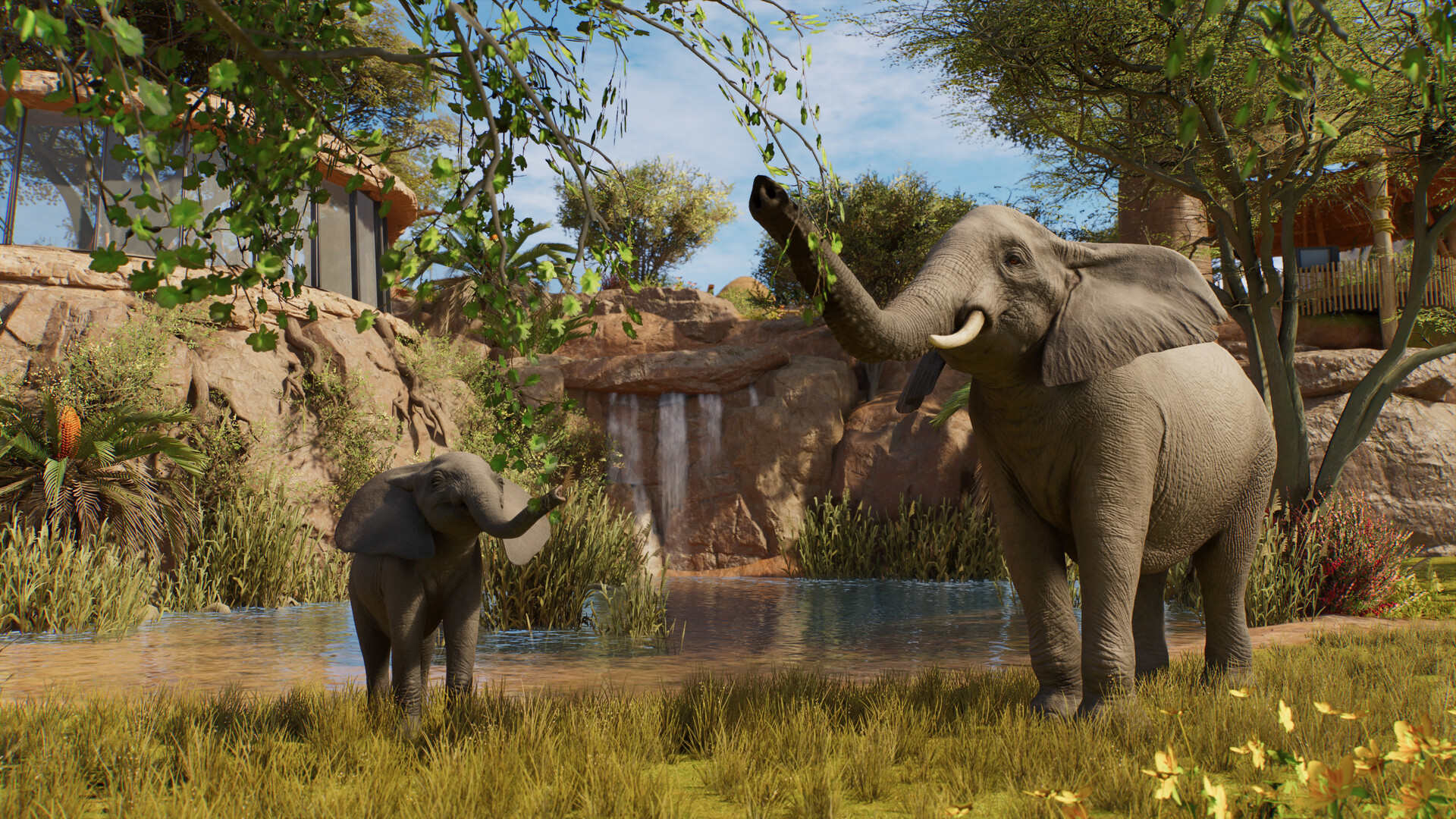
CraftPresentation has always been one of Planet Zoo's quiet strengths, and the sequel carries that forward. The animals are the stars, rendered and animated with the kind of observed detail that makes a habitat feel inhabited rather than decorated, and the step up to convincing aquatic and flying creatures is where the craft shows most. Watching a tank of marine life move with weight through water, or birds use the full height of an aviary, is the sort of thing that sells the premise before a single management menu is opened.
The building and theming tools remain a creative playground, and the game is at its most beautiful in the galleries of player-made zoos that a community like this inevitably produces. The art direction favors warmth and naturalism over spectacle, which suits a game about care and stewardship, and the UI has the dense, information-rich look that a simulation of this depth needs, for better and worse. It is readable once learned and overwhelming before that, which is a fair summary of the whole game's relationship with its audience.
A deeper, wilder sequel that adds aquatic and flying animals and conservation reserves to an already peerless zoo sim, held back for newcomers by a steep curve and the usual Frontier demands, and judged early on a small launch sample.
Pros & cons
The ledgerIn its favour
- Fully aquatic and flying species add genuinely new habitat logic, not just cosmetics
- Wildlife Reserves extend the fantasy from zoo management toward conservation
- The deepest creative building and management toolset in the genre, expanded
- Beautifully observed animal animation that sells the premise instantly
- A substantial base roster that gives creative players plenty to build around
Against it
- A steep learning curve that does little to welcome newcomers
- Demanding on hardware as zoos grow large, with performance a likely flashpoint
- The series' paid DLC roadmap shapes how complete the launch package feels
- Early, small Steam sample and no aggregate critic score yet to lean on
- Wildlife Reserves may feel slightly apart from the core loop for some players
Screens
Official media© Frontier Developments. Official media via Steam.
The player verdict
Real reviews · SteamVerdict
The callPlanet Zoo 2 is a confident, content-rich sequel that understands exactly who it is for. It takes the most detailed zoo simulation ever made and widens it in the directions fans most wanted, with aquatic and flying animals that change how you build and a Wildlife Reserves mode that gives the whole thing a larger purpose. For the committed management-sim player, there is a great deal here to sink dozens of hours into, and the early Mostly Positive reception suggests that audience is being served well.
The honest caveats are about expectation and access rather than quality. This is a demanding game that asks for patience, both in its learning curve and in the hardware it wants once your zoo sprawls, and it arrives carrying the series' familiar DLC-roadmap expectation that colors how generous day one feels. It is also, for now, judged on a thin early sample, so this verdict is a confident first impression rather than a final word.
At 7.6, Planet Zoo 2 is an easy recommendation for anyone who loved the original or who finds joy in deep, creative, caretaking simulations, and a harder sell for anyone hoping the sequel would smooth the edges that made the first game niche. It did not come to be gentler. It came to be bigger, and on that promise it largely delivers.
Sources
Original review by Aymen Sakouhi from the licensed facts above. Score: 7.6/10.