Ori and the Will of the Wisps Is the Rare Sequel That Betters a Beloved Original
A stunning, emotional metroidvania that surpasses a beloved original, with world-class art and music. A near-perfect adventure. Our verdict: 9.2/10.
Aymen Sakouhi·Writer · Games Hobbyist//5 min read
© Xbox Game Studios. Official media via Steam.
The pitch
OverviewOri and the Will of the Wisps is the game a studio makes when it has already proven it can move you and now wants to prove it can do everything else too. The 2015 original, Ori and the Blind Forest, was a beautiful, brutal little platformer that made a lot of people cry in its first ten minutes. This sequel from Moon Studios, published by Xbox Game Studios, keeps that emotional core and builds a far larger, more ambitious metroidvania around it. It launched on 10 March 2020 at around thirty euros, and it is one of the most acclaimed games of its kind.
The premise is simple and immediately affecting. Ori, the little spirit guardian, sets out beyond the forest of the first game to save a young owl named Ku, and is pulled into a vast, decaying new land full of towering enemies, hidden secrets, and one heartbreak after another. If you played Blind Forest, you know the shape of this: gorgeous hand-painted worlds, tight movement, a soaring orchestral score, and a story told almost wordlessly through gesture and music. If you did not, this is a fully standalone place to start.
The reception has been about as good as it gets. On Steam the reviews are Overwhelmingly Positive, with roughly 97 percent of more than thirty thousand reviews positive, and it holds a strong critical aggregate score of 88 on Metacritic. Players and critics alike single out the same things: the art, the animation, the music, and the way the game deepens the first one's ideas without losing what made them special. It is widely regarded as one of the best games in its genre.
The honest caveats are small and mostly about the launch. Some players hit technical problems and performance bugs in the early days, most of which were patched, and the sequel is meaningfully harder and more combat-focused than the gentle original, which not everyone wanted. None of that stops it being what it plainly is: a beautiful, generous, deeply felt adventure that improves on a game people already loved.
How it plays
PlayAt heart this is a metroidvania, and a superb one. You explore a large interconnected world, gaining new abilities that open up areas you could not reach before, and the moment-to-moment joy is in the movement itself. Ori is a genuine pleasure to control: dashing, wall-jumping, bashing off projectiles and enemies to fling across gaps, chaining traversal into something that feels less like platforming and more like a dance. The first game had this too, but the sequel widens the toolkit and the spaces to use it in, so mastery feels endless.
The biggest change from Blind Forest is combat, and it is where opinion is most divided. The original was a platformer that mostly asked you to survive; this one gives Ori a proper arsenal of weapons and a Shard system that lets you customize your build, and it leans into real fights with tougher enemies and boss encounters. For most players this is a clear upgrade that adds variety and stakes. A vocal minority who loved the purity of the first game's movement-focus feel the combat, while good, pulls slightly away from what made Ori special. Both readings are fair, and the game is generous enough with options to suit either.
Structurally, the sequel is much more of a true metroidvania than its predecessor. There is a hub, side quests, collectibles, and optional areas, and the world rewards curiosity and backtracking in a way the more linear first game did not. It gives the adventure more scope and more to do, though a few players miss the tighter, more focused shape of Blind Forest. The escape sequences return too, those heart-in-mouth chases where the world collapses behind you and one mistake means starting over, and they remain some of the most thrilling and stressful set pieces in the genre.
The honest friction is difficulty and, at launch, stability. This is a harder game than the original, with combat and platforming challenges that can spike sharply, and while difficulty options help, players expecting the gentler first game should know what they are getting. On the technical side, the early-days release saw a run of performance issues and bugs that frustrated some players, the most common complaint from that period, and the bulk of them were addressed in patches. Anyone playing now gets a far smoother experience than the launch-week reports suggest.
Those caveats aside, the core loop is close to flawless. Exploring this world, learning its movement, and slowly becoming powerful enough to flow through spaces that once stopped you is deeply satisfying, and the game paces its reveals and its emotional beats with real craft. Whether you come for the platforming, the combat, or the story, it delivers, and it respects your time throughout.
Art & atmosphere
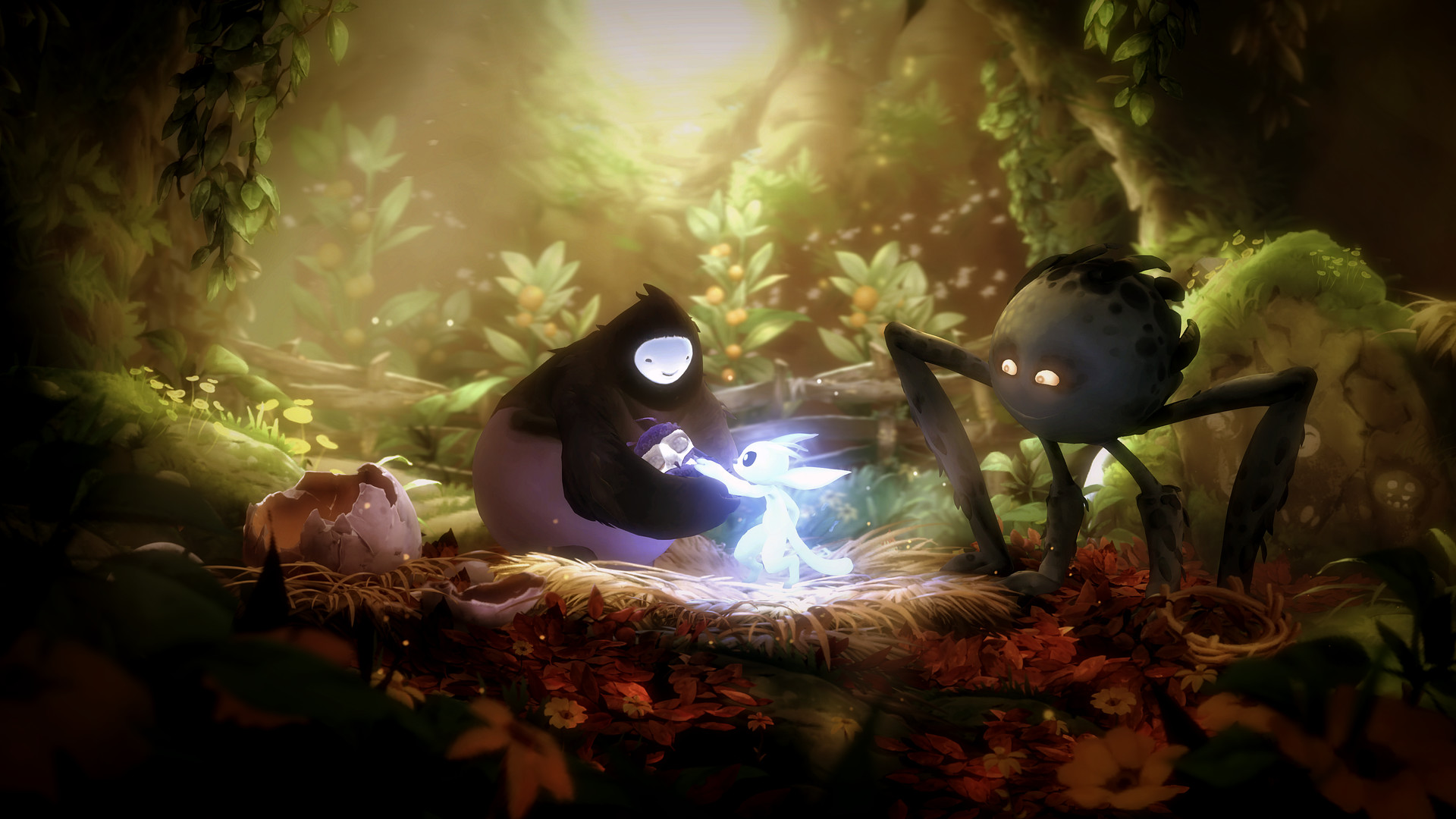
CraftVisually, Ori and the Will of the Wisps is one of the most beautiful games you can play. Moon Studios' hand-painted worlds are rendered with astonishing depth and detail, layered with light, weather, and parallax so that every screen looks like a moving illustration. From glowing forests to drowned depths to windswept ruins, each region has its own palette and mood, and the animation of Ori and the creatures around it is expressive down to the smallest gesture. It is the kind of game people stop playing for a moment just to look at.
The art is not just pretty, it is in service of feeling. The world is designed to make you feel small, then capable, then powerful, and the visual storytelling carries the plot almost entirely without words. Moments of loss, wonder, and triumph land through image and motion alone, which is a rare thing to pull off and rarer still to sustain across a whole game.
Sound completes it, and this is where the game reaches greatness. Gareth Coker's orchestral score is extraordinary, swelling and receding with the action and the emotion, and it does an enormous amount of the storytelling's heavy lifting. Between the visuals and the music, the presentation is not just polished but genuinely moving, and it is the least divisive, most universally praised thing about the entire package.
A sublime, beautiful, deeply emotional metroidvania that betters a beloved original in nearly every way, held a hair short of the very top only by launch-window technical issues and a difficulty and combat focus that shifts from the gentler first game.
Pros & cons
The ledgerIn its favour
- Sublime, flowing movement that turns traversal into a genuine joy to master
- One of the most beautiful hand-painted worlds and animations in all of games
- Gareth Coker's orchestral score is extraordinary and does much of the storytelling
- A larger, richer metroidvania that deepens the original's ideas with more to explore
- A wordless, deeply emotional story that lands through image and music alone
- Overwhelmingly loved by players and critics as a genre high point
Against it
- Noticeably harder and more combat-focused than the gentle first game
- Launch-window performance issues and bugs frustrated some players (largely patched)
- A minority miss the tighter, more movement-pure focus of Blind Forest
- Escape sequences are thrilling but genuinely stressful and unforgiving
Screens
Official media© Xbox Game Studios. Official media via Steam.
The player verdict
Real reviews · Steam- Recommended
“Ori and the Will of the Wisps is a 2D sidescroller ; a platform game emphasizing exploration, collecting items and upgrades, and backtracking to previously inaccessible areas. The game is playable with keyboard and mouse but a controller…”
7 found helpfulvia Steam - Recommended
“English Version (french below) : A very different game compared to the first one. It feels a lot less like a children tale and more like an adventure metroidvania game. It keeps and improves on the beatufiul art direction, effects and…”
5 found helpfulvia Steam - Recommended
“Nota Geral | Overall Rating ⭐⭐⭐⭐⭐ Ori and the Will of the Wisps é a evolução perfeita do que Blind Forest já tinha começado, pegando cada elemento do primeiro jogo e expandindo com mais confiança e ambição. A Moon Studios criou um…”
5 found helpfulvia Steam - Recommended
“I love this game! I found it to be a very emotional experience. It is visually stunning, and the music score was perfect! I had played the first Ori game a long time ago and loved it. This sequel is just as engrossing as the first one. I…”
2 found helpfulvia Steam
Verdict
The callOri and the Will of the Wisps is a rare thing: a sequel that takes a beloved, near-perfect original and makes it bigger, deeper, and somehow just as moving. Moon Studios kept everything that made Blind Forest special, the sublime movement, the hand-painted beauty, the wordless emotional storytelling, and built a fuller, more ambitious metroidvania around it, with real combat, a wider world, and more to discover. On its own terms it is close to flawless.
The honest reservations are minor and mostly a matter of taste. It is a harder, more combat-driven game than the first, which not everyone wanted, and its early days were dogged by technical problems that took patches to settle. Purists may miss Blind Forest's tighter focus, and newcomers should be ready for a real challenge. None of that meaningfully dents the experience you get today.
But this is a genuine masterpiece of its genre, and there is very little else that combines movement, art, music, and feeling this well. If you loved the first game, this is a richer, more generous return to Ori's world; if you are new, it is a stunning place to begin and works completely on its own. Whatever brings you in, Ori and the Will of the Wisps is one of the most beautiful and emotionally resonant games of its era, and an easy recommendation.
Sources
Original review by Aymen Sakouhi from the licensed facts above. Score: 9.2/10.