Onimusha: Way of the Sword Is the Best Sword Duel Capcom Has Built in Twenty Years, When It Stops Wandering
Verdict: 8.4/10. Onimusha: Way of the Sword revives Capcom's samurai action with electric parry combat and great bosses, dulled only by open-world filler.
Aymen Sakouhi·Writer · Games Hobbyist//5 min read
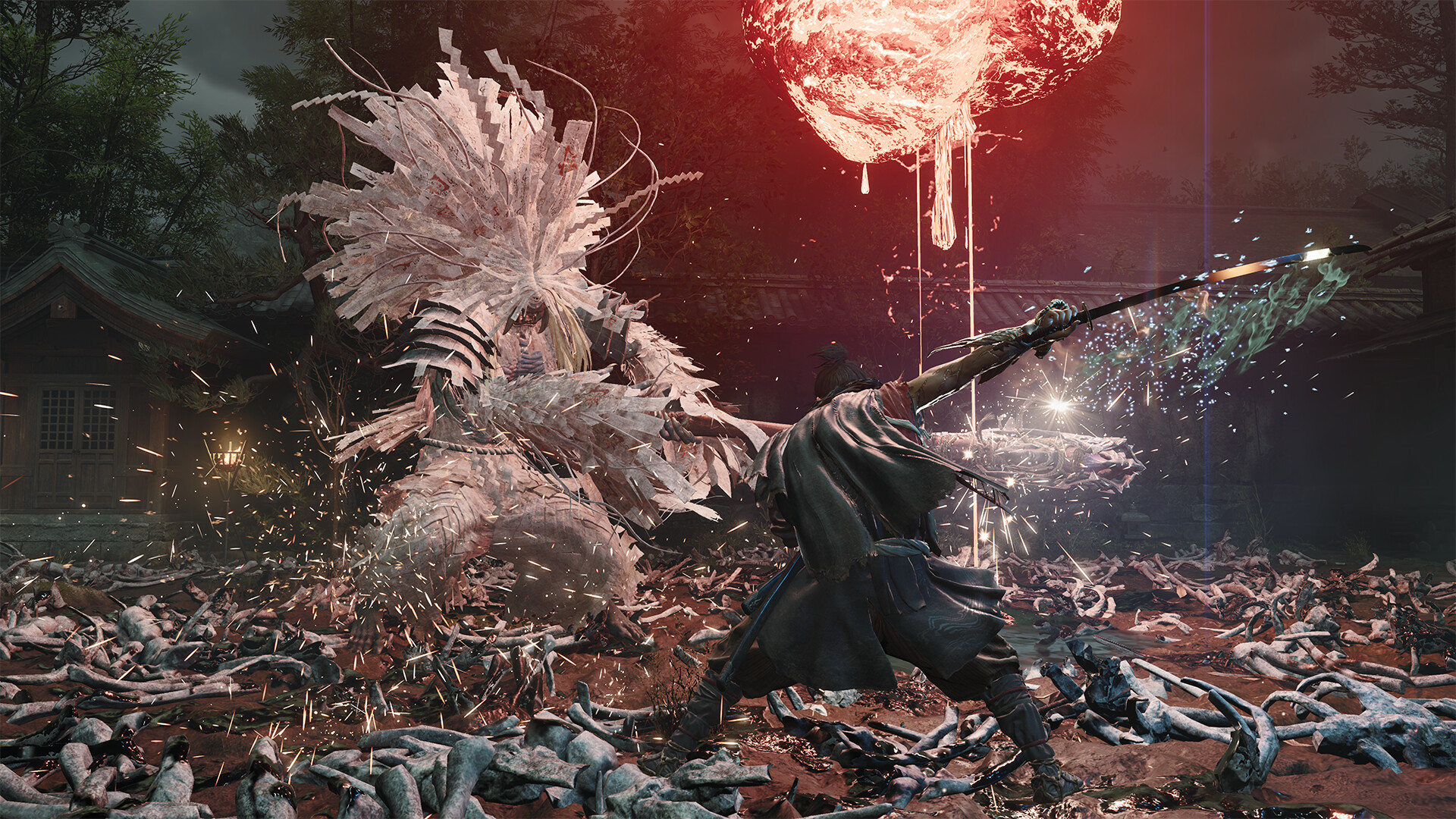
© CAPCOM Co., Ltd.. Official media via Steam.
The pitch
OverviewOnimusha has been asleep for two decades, and Way of the Sword wakes it up the way a good duelist wakes you: with a blade already moving. Capcom's first mainline entry in twenty years does not ease you in with nostalgia. It hands you an Oni Gauntlet, a sword, and an enemy who will punish a lazy block, and it trusts that the feel of steel meeting steel will do the recruiting.
Developed and published by Capcom, the game launched worldwide on September 4, 2026, arriving day one on PlayStation 5, Xbox Series X and S, Nintendo Switch 2, and PC. It landed at Very Positive on Steam, sitting around ninety-three percent across roughly nineteen hundred reviews, with a Metacritic aggregate near the low eighties. Those are the numbers of a comeback that mostly worked, and they match the experience: a game with one genuinely great idea and a handful of ordinary ones bolted to it.
The great idea is the combat. This is a deflection-first action game in the modern lineage, closer in spirit to Sekiro's rhythm than to the fixed-camera survival roots of the older Onimusha titles, built around parries, deflects, Issen counters, and the pull of souls from fallen Genma. You play a samurai making a stand in a Genma-haunted Kyoto, and the moment-to-moment fight is where every ounce of the studio's craft went.
What surrounds that fight is more uneven. Way of the Sword reaches for scale it does not always need, and its pacing sags in the back half. This is not the flawless return the combat alone might have earned, but it is a confident, frequently thrilling one, and for a series that had gone quiet, that is no small thing.
How it plays
PlayCombat is the reason to be here, and it is close to exceptional. The core exchange is built on reading an attack and answering it precisely: block to weather pressure, deflect to open a window, and land an Issen, a perfectly timed killing counter, when the timing is exact. Enemies telegraph, but they telegraph fast, and the game rewards patience under pressure rather than button-mashing aggression. Waiting for the right beat to strike, and having the nerve to hold your guard when everything says to swing, is the whole discipline, and it is deeply satisfying once it clicks.
The Oni Gauntlet is the system that keeps this from being a straight Sekiro tribute. Absorbing souls from slain Genma feeds your abilities and powers, and it gives the fights a predatory pull: you are not only surviving encounters, you are harvesting them. Layered on top are different stances and weapons that shift range and rhythm, so a room of enemies asks you to change your approach rather than repeat one loop, and the skill ceiling stays high without ever feeling arbitrary.
Crucially, the game is generous where Souls-likes are cruel. There is no harsh death penalty draining your progress, and the default challenge sits below the punishing bar set by Sekiro or Elden Ring, which makes the deflection language approachable without gutting it. That said, the game is clearly built to be played with the difficulty pushed up. Turn the challenge higher and each encounter transforms, mastering the blade means every fight feels distinct, and the combat sings loudest when it demands the most from you.
The boss battles are the peak. They are staged like set pieces from an action film, dynamic and theatrical, and several of them rank among the most thrilling duels the genre has produced. They test the exact skills the regular combat teaches, so victory feels like the payoff of a lesson rather than a spike of luck, and the game's best hours are almost all boss hours.
The trouble is everything between those hours. Way of the Sword folds in exploration and open-world texture that the combat never asked for, and much of it reads as filler: stretches of traversal and busywork that dilute the momentum the duels build. Pacing stumbles noticeably in the second half, where the game seems less sure of how to space out its highs. On PC there are also launch-window rough spots worth flagging, including reports that uncapping the frame rate can trigger a crash at startup and a localization that some players found weak, though the underlying performance is otherwise strong.
Taken together, this is a superb action game wearing a merely decent adventure game as a coat. The loop of fight, learn, and overcome is world-class. The connective tissue around it, the wandering and the padding, is the part that keeps Way of the Sword one clean edit away from greatness.
Art & atmosphere
CraftKyoto under the Genma is a genuinely evocative setting, and Capcom leans into the grit rather than the postcard. The world is blood-soaked and heavy, all dark wood, lantern light, and the wet sheen of a fight gone long, and the art direction sells the weight of every strike. This is not a pretty samurai fantasy; it is a grim one, and the visual identity commits to that mood with real conviction.
The craft is loudest in the animation and the staging of combat. Deflections land with a physical crack, Issen counters resolve in a single decisive motion, and the bosses are choreographed like fight scenes, with camera and timing working together to make each duel feel authored rather than generated. That theatricality is the game's aesthetic thesis: violence as performance, each encounter framed to look as good as it feels.
Sound does a lot of the heavy lifting too. The clash of steel, the hiss of a parry, and the low dread of a Genma encounter give the fights their tension, and the audio cues double as combat information, telling you when a window is open. Where the presentation wobbles is outside the arena, in the quieter exploration stretches that never look as considered as the duels, a reminder that this is a game whose heart was always in the fight.
A world-class deflection combat system and outstanding boss battles power a triumphant revival, held back from greatness by open-world filler, second-half pacing, and PC launch rough spots.
Pros & cons
The ledgerIn its favour
- Deflection-first combat that is among the best action systems of the year
- The Oni Gauntlet soul-harvesting gives fights a distinct predatory pull
- Spectacular, film-like boss battles that pay off the combat's lessons
- Approachable difficulty with no harsh death penalty, yet deep when pushed higher
- Grim, committed art direction and combat animation that sells every strike
- A confident, long-awaited revival of a dormant Capcom series
Against it
- Open-world exploration and busywork often feel like filler between duels
- Pacing sags noticeably in the second half
- PC launch rough spots, including reports of a startup crash when uncapping the frame rate
- Localization quality drew criticism from some players
- Enemy variety is thin in the earlier areas
- The adventure scaffolding rarely matches the quality of the fighting
Screens
Official media© CAPCOM Co., Ltd.. Official media via Steam.
The player verdict
Real reviews · Steam- Recommended
“I've been waiting for 20 years for another entry into this franchise. I'm happy to say Capcom killed it. Absolutely worth the wait. This series got me through Hurricane Katrina as a kid, now it's time to get me though lower back pain in my…”
1,045 found helpfulvia Steam - Recommended
“This game is a banger. Excellent graphics and optimization. Kino story and presentation, but the English localization is horrible. The combat is incredibly good and fun, though there's a lack of enemy variety in the earlier areas. It's…”
788 found helpfulvia Steam - Recommended
“Do not uncap frame rate in settings before starting a game. Its causing a crash right after the names and history warning. When set to limit frame rate and vsync it runs fine.”
674 found helpfulvia Steam - Recommended
“As a huge action game lover, I would definitely recommend this game to everyone. The combat system is top notch, fun to play, and looks amazing as well. The characters are super goofy, just like many other Capcom characters. Easily the…”
568 found helpfulvia Steam
Verdict
The callWay of the Sword is proof that Capcom still remembers how to build a duel. When it is just you, a blade, and an enemy who demands your full attention, this is one of the most satisfying action games in years, a deflection loop with real depth, capped by boss fights that belong in a highlight reel. That core is strong enough to carry a lot of weight, and for long stretches it does.
The drag is the world around the sword. The open-world filler and the second-half pacing dilute an experience that is razor-sharp at its center, and the PC launch has some rough edges worth waiting out or working around. None of it breaks the game, but all of it keeps a potential masterpiece at the level of a very good one.
At 8.4, Onimusha: Way of the Sword is a comeback worth taking, especially for anyone who loves a combat system they can actually master. Push the difficulty up, forgive the wandering, and lean into the duels, and you will find the best swordplay Capcom has shipped in a very long time. Come for the nostalgia if you must, but stay for the fights, because that is where this revival earns its name.
Sources
Original review by Aymen Sakouhi from the licensed facts above. Score: 8.4/10.