MARVEL Tōkon Builds a Brilliant Fighter, Then Trips at the Door
Arc System Works nails the 4v4 combat, but a rough PC port, a PSN login wall and pricey DLC drag it down. Our verdict: 6.3/10.
Aymen Sakouhi·Writer · Games Hobbyist//6 min read
© PlayStation Publishing LLC. Official media via Steam.
The pitch
OverviewThere is a very good fighting game inside MARVEL Tōkon: Fighting Souls, and for long stretches you can feel Arc System Works reaching for it. This is the studio behind Guilty Gear Strive and DragonBall FighterZ handed the Marvel roster and a 4v4 tag structure, and the ambition is right there in the pitch: assemble a squad of four, chain them together with assists and switches, and turn a single skirmish into a rolling brawl that smashes through the walls of one arena and spills into the next.
The game arrived on 6 August 2026 under PlayStation Publishing, developed by Arc System Works in partnership with Marvel Games, with twenty characters at launch split across five themed teams. On paper it is a dream ticket: comic-book icons rendered in the expressive, anime-adjacent house style that Arc has spent a decade perfecting, married to the deepest tag mechanics the studio has attempted.
And yet the story of this launch is not really about the fighting. It is about everything wrapped around it. On Steam the game opened to a Mostly Negative user verdict, sitting near 40 percent positive across several thousand reviews, while professional critics landed all over the map. The gap between those two audiences is the most interesting thing about MARVEL Tōkon right now, because the players are not wrong and neither, mostly, are the critics.
What you have here is a genuinely accomplished combat system delivered inside a launch package that keeps getting in its own way: a PC port that struggles on hardware that should never break a sweat, an anti-cheat setup that locks Linux and SteamOS users out entirely, a mandatory PlayStation Network sign-in that has drawn the same anger Helldivers 2 saw, and a seventy-euro price tag stacked on top of a storefront already thick with paid costumes. The fighting deserves better than the box it shipped in.
How it plays
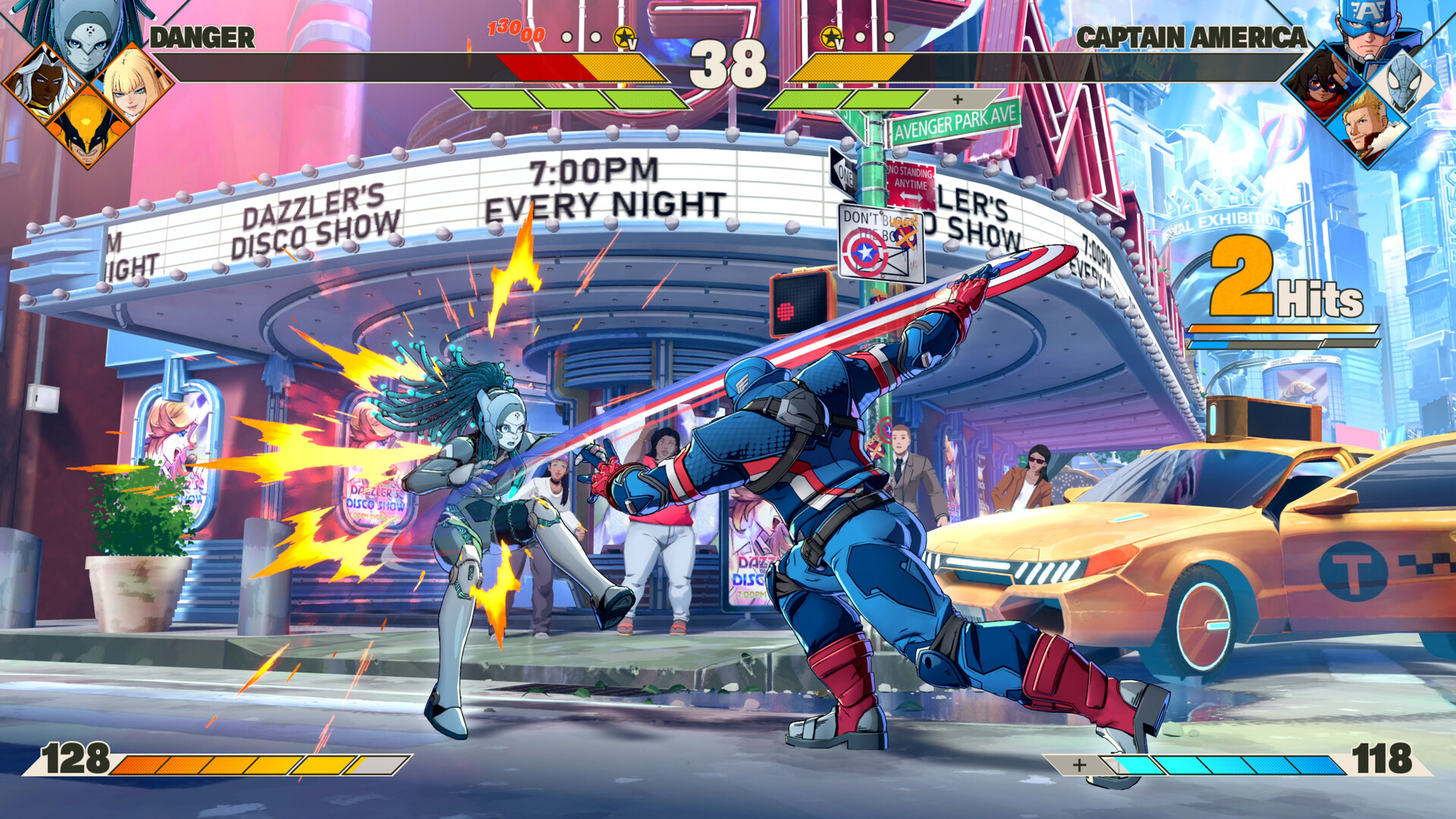
PlayStart with what works, because a lot of it does. The core is a tag fighter built around a squad of four, but you do not simply pick four and go. Matches begin with a single point character and one assist, and you earn access to your full lineup during the round by hitting mid-fight conditions, chiefly dealing damage and triggering Wall Breaks that punt the action out of the current stage and into an adjacent one. It is a clever way to pace a team fight: your options literally expand as you assert control, so a comeback feels like clawing your roster back into the fight rather than just chipping at a health bar.
The moment-to-moment combat carries the Arc System Works signature. Movement is quick and airborne-friendly, assists snap in to extend combos and cover your recovery, and the switch mechanics reward players who can think two characters ahead: tag out under pressure, catch the opponent with the incoming fighter, then keep the pressure rolling. The twenty-strong launch cast is spread deliberately across archetypes, from close-range brawlers and zoning projectile specialists to agile rushdown picks and heavier technical characters, so the team-building has real texture. Figuring out which four cover each other's weaknesses is where the game is at its best.
Accessibility of execution is handled with the modern fighting-game toolkit, with simplified input options sitting alongside traditional motions, which lowers the barrier for the enormous Marvel-curious audience this game is clearly courting. When it clicks, when the netcode holds and the frames are steady, the tag chaos is exactly the loud, readable spectacle the concept promises, and it is easy to see the tournament-viable game buried in here.
The problems are almost all structural rather than mechanical. The most cited is performance: PC players report the game struggling to hold a stable frame rate even on strong hardware, with configurations that should run this comfortably reportedly wrestling to stay smooth. For a genre where consistent frames are not a luxury but the entire foundation of fair play, that is close to disqualifying, and it colors every other complaint. A one-frame stutter in a single-player action game is an annoyance; in a fighting game it is a dropped combo and a lost round.
Then there is the lock-out. The game leans on Easy Anti-Cheat in a configuration that currently prevents it from launching on Linux and SteamOS devices at all, which means Steam Deck and the newer Steam hardware are simply off the table. Layered on top is a mandatory PlayStation Network account requirement to play on PC, the exact friction that triggered a review-bomb backlash against other PlayStation PC ports, and it has done the same here. Neither of these has anything to do with how the game plays, and both of them are the first thing a prospective buyer runs into.
Monetization is the final weight on the scale. This is a full-price release, listed around seventy euros, and the storefront around it is already lined with individually sold cosmetic DLC, from alternate costumes to color unlocks. None of that touches the balance of a match, and cosmetic shops are hardly new to the genre, but stacking an aggressive a la carte cosmetics model on top of a premium price and a rocky launch is precisely the kind of thing that turns a frustrated player into a negative review. As live-service fighters go the content cadence may well improve, but a review has to judge the thing in front of it, and the thing in front of players at launch asked a lot and delivered unevenly.
Art & atmosphere
CraftVisually, MARVEL Tōkon is the least compromised part of the whole package, and it is genuinely striking. Arc System Works has built its reputation on making 3D models read like hand-drawn comic panels, and that expertise is all over this cast. The characters have weight and snap, exaggerated key poses hold for just long enough to register before the animation whips into the next beat, and the Marvel source material lends itself beautifully to the studio's love of bold silhouettes and saturated color. Special moves land with the kind of screen-filling flourish that made DragonBall FighterZ such a joy to simply watch.
The Wall Break system is as much an aesthetic idea as a mechanical one. Punching an opponent clean through the boundary of a stage and into a new arena gives fights a cinematic sense of escalation, each transition a small set-piece that resets the visual stakes. It keeps the backgrounds active participants rather than static wallpaper, and it is the clearest expression of the game's core fantasy: these are titans, and the environment is disposable.
Where the presentation stumbles is, again, in delivery rather than design. The art direction is confident and the character work is excellent, but all of it is filtered through the same unstable performance that undermines the play, and a fighting game that cannot reliably show you its animation at a steady frame rate is not showing you its best work. The craft on display makes the technical state more frustrating, not less, because you can see exactly how good this is supposed to look when the hardware finally cooperates.
A genuinely excellent tag-fighting engine dragged down by a rough PC port, platform lockouts, an unpopular login wall and aggressive monetization at launch.
Pros & cons
The ledgerIn its favour
- Deep 4v4 tag combat with clever mid-match roster escalation
- Signature Arc System Works animation makes the Marvel cast pop
- Wall Breaks turn arena transitions into readable, cinematic set-pieces
- Twenty-strong launch roster spread thoughtfully across archetypes
- Simplified input options open the door to newcomers
- When frames hold, the tag chaos is exactly the spectacle it promises
Against it
- PC performance struggles even on hardware that should run it easily
- Anti-cheat setup blocks Linux and SteamOS, so no Steam Deck
- Mandatory PlayStation Network sign-in on PC has drawn heavy backlash
- Full price plus a storefront thick with paid cosmetic DLC
- Launch Steam reception sits at Mostly Negative for real reasons
Screens
Official media© PlayStation Publishing LLC. Official media via Steam.
The player verdict
Real reviews · Steam- Not recommended
“This game is aggressively hostile to Linux players for absolutely no reason. Not only is there a precedent of every (non riot) fighting game working on Linux, there is precedent of ArcSys games working great on Linux, as well as Sony…”
1,630 found helpfulvia Steam - Not recommended
“such a fun game. of course sony has to ruin everything. the pc port plays miserable. the settings don t even display correctly. either the netcode or the poor performance makes the online play very bad, with rollback spikes. there's also…”
1,400 found helpfulvia Steam - Not recommended
“ORIGINAL: I'd love to say this is an amazing Marvel game, but it does not work on my $2,200 Steam Machine, or anything Linux for that matter, so as sad as I am about doing it, I'm giving this game a negative review. Please, support SteamOS…”
981 found helpfulvia Steam - Not recommended
“Don't get things twisted, the game by itself is amazing! Biggest reason I cant recommend it as of now is due to the following... - PSN Account is required - 8 Instances of Sony's SDK will run in the background while playing - Unneeded…”
931 found helpfulvia Steam
Verdict
The callMARVEL Tōkon: Fighting Souls is the frustrating case of a strong game shipped inside a weak package. The fighting engine is the real thing, an ambitious 4v4 tag system with the studio's trademark polish, a smartly escalating roster mechanic, and a roster deep enough to reward serious study. If you judge it purely as a fighting game on a machine that runs it well, there is a lot here to love and a competitive future worth watching.
But you cannot review a fighting game in a vacuum, and the launch reality is that too many players cannot get to the good part. The PC performance issues undercut the one thing a fighter cannot afford to compromise, the Linux and SteamOS lockout shuts out an entire hardware audience, the PSN requirement adds friction nobody asked for, and the full price plus cosmetic storefront leaves a sour aftertaste. The Mostly Negative Steam verdict is not a mob overreacting; it is a fair reflection of the product as delivered.
Recommend it cautiously, and mostly to committed fighting-game players on a PC and account setup that clears every hurdle, or to anyone content to wait. Arc System Works has built something that could grow into one of the platform's best tag fighters. Right now it is a great engine wrapped in a launch that keeps tripping over itself, and the score reflects the package you actually buy today, not the one it might become.
Sources
Original review by Aymen Sakouhi from the licensed facts above. Score: 6.3/10.