Little Chef: Cozy Cooking Turns a Messy Kitchen Into the Most Relaxing Puzzle Box of the Month
Verdict: 7.8/10. A physics-based cooking sandbox with 300 recipes, three warm kitchens, and pure mess-around charm, short but genuinely lovely.
Aymen Sakouhi·Writer · Games Hobbyist//5 min read
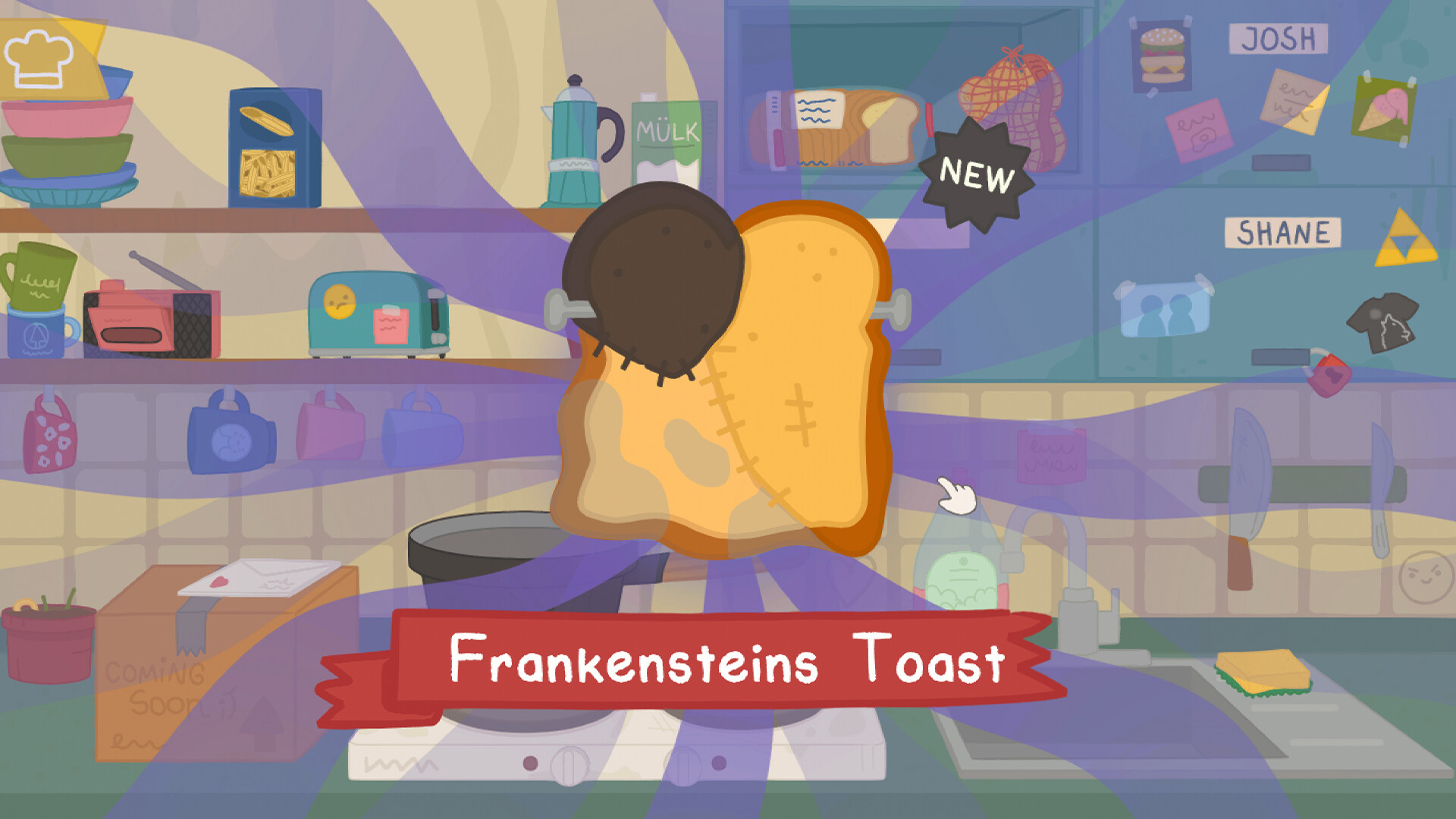
© julien & erika. Official media via Steam.
The pitch
OverviewLittle Chef: Cozy Cooking is a game about permission. Permission to drop the eggs, permission to throw the flour, permission to combine two things that should never meet and see what comes out. Where most cooking games are stopwatches with knives, timing your plating against an angry ticket rail, this one hands you a kitchen and simply asks what you feel like discovering. It is a physics sandbox dressed as a comfort blanket, and for the three or so hours it lasts, it is one of the most disarming small games on the calendar.
The premise is slight by design. You are a student learning to cook across the arc of a university life, and each of the game's three levels is a kitchen tied to a stage of that journey: a cramped dorm hot plate, a busy little cafe, and finally your grandmother's beloved bistro. There is no service to fail and no score attacking you. The goal is to fill a cookbook, unlocking more than three hundred recipes that range from the genuinely gourmet to the cheerfully gross, by dragging, tossing, and mashing ingredients together and watching the game react.
Released on August 26, 2026 as a 1.0 after a stretch in early access, it arrives with a Very Positive standing on Steam, 93 percent of nearly two hundred reviews, and it is easy to understand the affection. This is the work of a two-person studio, Julien and Erika, and it carries the specific warmth of a game made by people who wanted it to feel nice more than they wanted it to feel impressive. The result is small, focused, and almost entirely free of friction, which is both its greatest strength and the honest limit of what it is trying to be.
How it plays
PlayThe whole game runs on its physics. Ingredients have weight and wobble, pots can be filled or knocked over, and every action is a direct manipulation rather than a menu choice. You pick up a tomato and it is a tomato in your hand, subject to gravity and momentum, and whether you set it gently into a pan or fling it across the counter is entirely up to you. That tactility is the point. Cooking here is not a sequence of correct button presses but a series of little experiments, and the game is built to make the experiments feel good whether they succeed or dissolve into slapstick.
Progression is the cookbook. You are hunting recipes, and the loop is the pleasure of guessing what combines with what and being rewarded when a new dish reveals itself. Some are obvious, the sort of thing anyone who has stood in a kitchen would try. Others are deliberately strange, and stumbling onto one of the weirder three hundred entries carries a real little jolt of discovery. Across the three kitchens the ingredient list and the tools expand, so the space of possible experiments grows as you go, and the game paces its reveals well enough that you rarely feel like you have run dry.
Accessibility is baked in rather than bolted on. There is no fail state to punish a bad idea, no timer breathing down your neck, and no dexterity wall between you and the next recipe. That makes it genuinely broad in appeal, the kind of thing you can hand to someone who does not play many games and watch them immediately understand it. The flip side is that the challenge is entirely self-directed. The satisfaction comes from curiosity, not mastery, so if you need a game to test you, this will feel weightless.
The one recurring friction is discovery itself. Because so much of the joy is finding combinations, the more obscure recipes can become a guessing game with no signposting, and it is easy to hit a stretch where you are simply trying everything against everything hoping the cookbook fills in. A hint system, even a gentle one, would smooth that late-game wall, and its absence is the most common and fairest complaint. It never becomes frustrating enough to sour the mood, but it does expose how thin the structure underneath the charm really is.
Content volume is the other honest ceiling. Three levels and roughly three hours is a complete arc, not a shortcut, and the game is smart to end before the novelty thins. But there is not much reason to return once the cookbook is full, and players who want a cozy game they can sink weeks into should know going in that this is a lovely afternoon rather than a long-term home. What is here is polished and paced with care. There is simply, deliberately, not a great deal of it.
Art & atmosphere
CraftLittle Chef looks exactly as soft as it plays. The art is hand-drawn and cartoonish, all rounded edges and a warm, light palette that makes even a grimy dorm hot plate feel like somewhere you would want to spend an evening. The three kitchens are more than backdrops. Each one carries the character of its stage in the story, from the improvised scrappiness of student cooking to the settled comfort of a grandmother's bistro, and the environmental detail quietly does the narrative work that the game never spells out in words.
Sound is where the coziness is truly sealed. The soundtrack is a low, pleasant hum of a thing, the sort of music that keeps experimentation from ever tipping into stress, and the physical clatter of the kitchen, the plops and sizzles and thuds, gives every action a satisfying little acknowledgment. It is a game you could leave running just for the atmosphere, and the sound design is a large part of why the mess never reads as chaos so much as play.
As a piece of craft it wears its small scale as an identity rather than a limitation. There is no wasted spectacle and no filler, just a clear, consistent aesthetic applied evenly from the first pot to the last recipe. It feels handmade in the best sense, a game whose modest ambitions are matched exactly by its execution, and that coherence is a real achievement for a two-person team.
A warm, tactile physics-cooking sandbox with real charm, 300 recipes, and total relaxation, held back only by a short runtime, thin underlying structure, and the absence of any hint system for its more obscure combinations.
Pros & cons
The ledgerIn its favour
- Physics-driven cooking that makes every action tactile and forgiving
- Over 300 recipes to discover, from the gourmet to the enjoyably gross
- No timers or fail states, so the whole thing stays genuinely relaxing
- Warm hand-drawn art and three kitchens that carry the story without words
- A soundtrack and sound design that seal in the cozy, low-stress mood
- Broadly accessible, easy to hand to non-gamers, and cleanly paced
Against it
- Obscure recipe combinations lack any hint system and become guesswork
- Roughly three hours long with little reason to return once the cookbook fills
- Challenge is entirely self-directed, so it can feel weightless
- The structure under the charm is thin once the novelty settles
Screens
Official media© julien & erika. Official media via Steam.
The player verdict
Real reviews · Steam- Recommended
“Bought this game because of the cute art. The game is chill & easy you just mix around ingredients. Hope there will be more future content updates.”
5 found helpfulvia Steam - Not recommended
“this game is ok. reminds of this game i played on the Switch called, Cookulo. Which has the similar concept of putting random ingredients in a pot and seeing what you make. I just couldnt get into this one. either needs more hints of what…”
3 found helpfulvia Steam - Recommended
“This game is absolutely perfect. Fun cooking without the stress. No timers or customers, just simple recipes and even silly ones. 10/10 highly recommend if you want to truly chill and play a game.”
1 found helpfulvia Steam - Recommended
“I absolutely love this cute game, it's super chill and funny aswell with the silly things like the spongeman recipe and others like it xD It's a fair price for the game your getting in my opinion as it's still in early access, I'm excited…”
1 found helpfulvia Steam
Verdict
The callLittle Chef: Cozy Cooking is a small game with an exact idea of what it wants to be, and it hits that mark almost perfectly. It trades the stress of the cooking genre for the pleasure of a physics sandbox, and the swap works: dragging, tossing, and combining your way through three hundred recipes across three warmly drawn kitchens is a genuinely lovely way to spend an afternoon. The 93 percent of players who rate it highly are not wrong, and the two-person team's care is visible in every rounded corner and low, comforting note of the score.
The honest caveats are all about scope. This is three hours of gentle discovery, not a deep or lasting challenge, and the lack of any hint system for its stranger recipes exposes how light the structure beneath the charm really is. If you want a game to test you or hold you for weeks, look elsewhere. If you want something warm, tactile, and completely unhurried, it delivers exactly that with no filler.
At 7.8, Little Chef: Cozy Cooking is a small delight that knows its own limits and never overreaches them. It is easy to recommend to anyone who wants to cook without a clock, and easy to hand to someone who does not usually play games at all. For its price and its length, it is one of the most quietly pleasant things you can play this month.
Sources
Original review by Aymen Sakouhi from the licensed facts above. Score: 7.8/10.