Kokoro Kitchen Is a Cooking Sim With No Failure, and That Is Exactly the Point
Verdict: 7.4/10. Kokoro Kitchen is a gentle farm-to-table Japanese cooking sim with no fail states. Cozy and charming, if light on challenge.
Aymen Sakouhi·Writer · Games Hobbyist//4 min read
© Mango Leaf Games. Official media via Steam.
The pitch
OverviewMost restaurant games are stress simulators dressed up as comfort food. Orders pile up, timers scream, and a single late plate costs you a star. Kokoro Kitchen quietly refuses all of it. There are no penalties for being late or for handing someone the wrong dish, and once you understand that, the whole game relaxes into something rarer: a cooking sim you play to unwind rather than to sweat.
Developed and published by Mango Leaf Games as their debut title, Kokoro Kitchen released on October 17, 2025, and settled at Very Positive on Steam, around eighty-eight percent of its reviews. It is a farm-to-table loop set around a run-down Japanese restaurant you slowly restore: grow ingredients in a garden, prepare them through small minigames, and serve them to the locals who wander in. The scope is modest and honest about it.
What gives the game its shape is Alan, a grumpy little poultry-geist who haunts the place and guides you through its spirit-world story. He is the closest thing to a hook beyond the cooking itself, and the drip of restaurant backstory you unlock through regular customers gives the cozy loop a gentle reason to keep pulling the thread.
This is not a genre-redefining game, and it does not pretend to be. It is a small, warm, carefully made comfort object, and it should be judged as one. On those terms, it largely succeeds, with a couple of caveats that come straight from the same design choices that make it so calming.
How it plays
PlayThe loop splits cleanly in two: growing and cooking, then serving. In the garden you cultivate crops and tend animals, working through a spread of nine ingredients that feed into the kitchen. The preparation itself happens through small minigames, five of them, each themed to a real process: fermenting soybeans into soy sauce, drying green tea leaves into matcha powder, and so on. They are simple, tactile, and pleasant, the kind of busywork that soothes rather than tests.
Service is where the game makes its defining choice. You balance time and dish quality to satisfy customers and earn money, but the absence of penalties changes everything about how that feels. A late plate or a mistaken order does not punish you, so the pressure that usually defines the genre simply is not there. It turns cooking for a full room from a panic into a rhythm, and for the audience this game is chasing, that is a feature, not a shortfall.
Progression comes through spending what you earn. You unlock new plants, kitchen appliances, and decorations, gradually restoring the restaurant and expanding what you can make, with forty-two recipes to work toward across the run. It is steady, legible advancement, the satisfying kind where the space visibly improves as you invest in it, and the living quarters above the restaurant give you a little home to personalize alongside the business.
The story provides the pull that a pure sandbox would lack. Alan's presence and the spirit-world thread give the restoration a narrative spine, and regular customers come with challenges that, once met, unlock more of the building's history. It is light storytelling, but it is enough to make the daily loop feel like it is heading somewhere rather than simply repeating.
The limits are the natural cost of the comfort. With no fail states and forgiving systems, the challenge is minimal, and players who want the tension and mastery curve of a busier cooking game will find little friction to push against. The content is generous for its scale but still finite, and once the recipes and rooms are filled in, the loop is more about maintenance than discovery. This is a game you settle into, not one you are driven through.
Art & atmosphere
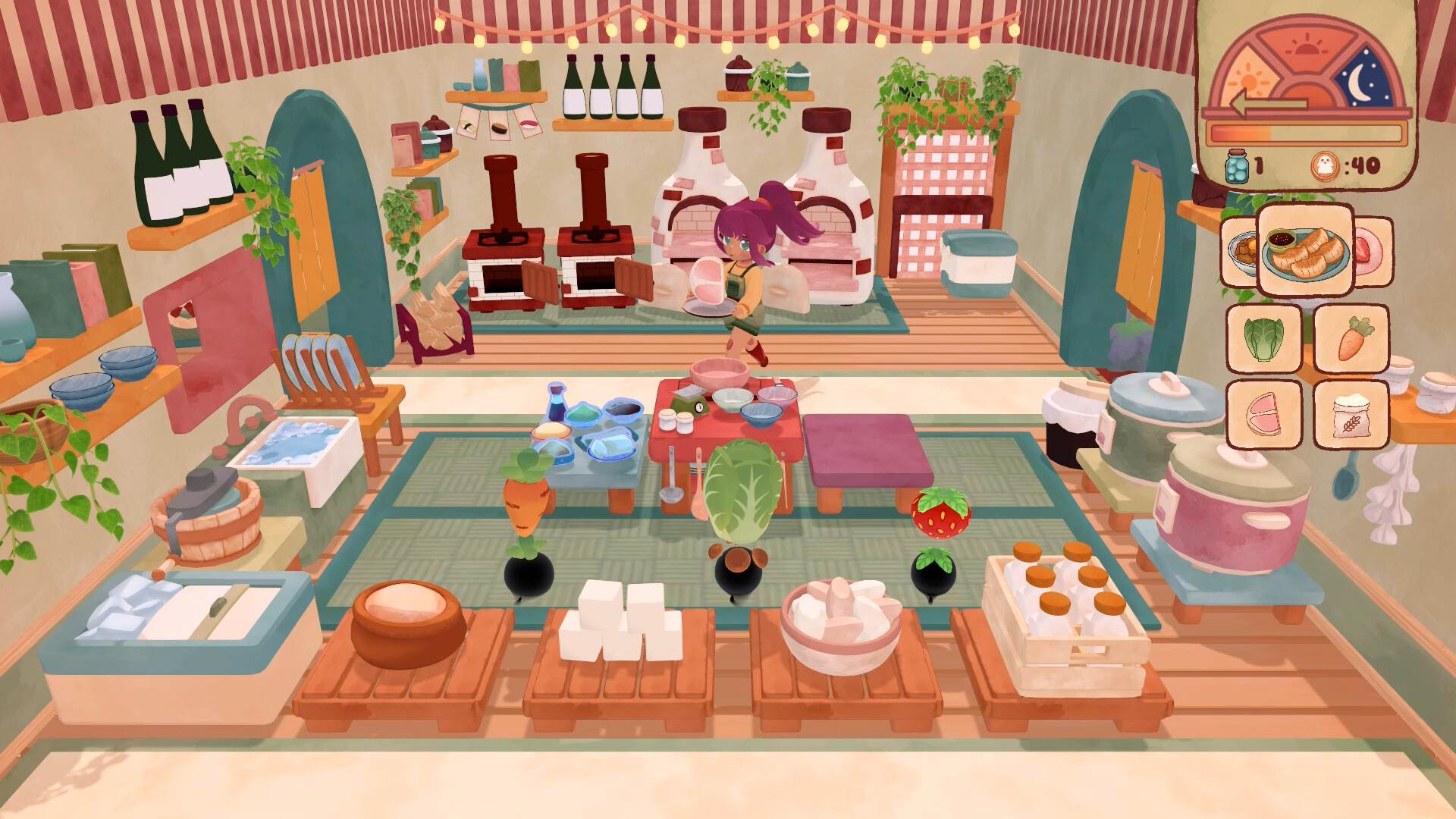
CraftKokoro Kitchen is built to relax you, and the presentation is where that intent is clearest. The visuals are colorful and cozy, the color palette soft and warm, and every screen is arranged to feel like a place you would happily linger in. The food illustrations and the little details of the restaurant and garden carry the charm; this is a game that wants you to enjoy looking at a finished plate as much as making it.
The audio matches the mood exactly. The soundtrack is gentle and unobtrusive, the kind of background warmth that makes an evening session slide by, and the whole sensory package is tuned toward calm rather than stimulation. Combined with a customizable character and the homey apartment above the shop, it builds a strong sense of a small world that is genuinely yours to tidy and grow.
None of it is technically ambitious, and it does not need to be. The craft here is in tone and consistency: every element, from the palette to the music to the absence of alarms, points in the same direction. For a debut cozy game, that unity of feel is the hardest thing to get right, and Kokoro Kitchen gets it right.
A warm, cohesive cozy cooking sim whose no-penalty design makes it genuinely relaxing, at the cost of challenge and staying power once its modest content is exhausted.
Pros & cons
The ledgerIn its favour
- No penalties for late or wrong orders, making it genuinely stress-free to play
- Charming farm-to-table loop with five tactile, themed preparation minigames
- Alan the poultry-geist and the spirit-world story give the cozy loop real pull
- Steady, legible progression across forty-two recipes, appliances, and decorations
- Warm, cohesive art and a gentle soundtrack tuned entirely for relaxation
- A customizable character and a personal living space above the restaurant
Against it
- With no fail states, the challenge is minimal and may feel too soft for some
- It does not reinvent the genre; the systems are familiar and light
- Content is generous for its scale but finite, and tapers into maintenance
- Players wanting the tension of a busy cooking game will find little friction
- The story is pleasant but slight, more flavor than substance
Screens
Official media© Mango Leaf Games. Official media via Steam.
The player verdict
Real reviews · Steam- Recommended
“This is a cute little restaurant management game. It works well on both PC and steam deck, I actually think it plays better on the steam deck. It's pretty low stakes and relaxing. I would've liked it to be a little more challenging, after…”
0 found helpfulvia Steam - Not recommended
“Maybe with some more polishing, the game would be a bit more fun to play but unfortunately at current, the game bugged out significantly in the tutorial. It was difficult to get through. I mistakenly thought that it would be kind of like…”
0 found helpfulvia Steam
Verdict
The callKokoro Kitchen knows exactly what it is and refuses to be anything else. By stripping out the fail states that define most restaurant games, Mango Leaf Games traded challenge for calm, and for the cozy audience that trade is the entire appeal. This is a game to play with a warm drink at the end of a long day, not one to master or race, and it is quietly excellent at being that.
The cost of that focus is real. There is little friction, the systems are familiar and light, and once you have filled in the recipes and rooms the loop settles into gentle upkeep rather than fresh discovery. Anyone hoping for the demanding, time-pressured cooking games this genre is known for should look elsewhere, and go in clear-eyed about the modest scope.
At 7.4, Kokoro Kitchen is a warm, well-crafted debut that earns its Very Positive reception without overreaching. If you want a farm-to-table cooking sim that soothes instead of stresses, with a grumpy ghost bird for company and a run-down restaurant to lovingly restore, it delivers precisely that. Judge it as comfort food, because that is what it set out to be, and it is a good, satisfying serving of it.
Sources
Original review by Aymen Sakouhi from the licensed facts above. Score: 7.4/10.