Kingdom Come: Deliverance II Is a Bigger, Bolder, Better Medieval Epic
A huge, grounded, engrossing medieval RPG that refines the first game and dwarfs it, over some jank. Our verdict: 9.0/10.
Aymen Sakouhi·Writer · Games Hobbyist//6 min read
© Deep Silver. Official media via Steam.
The pitch
OverviewKingdom Come: Deliverance II is what happens when a studio takes the most stubborn, uncompromising RPG of its generation and does it all again, bigger and better. The 2018 original was a divisive cult hit: a historically grounded medieval RPG with no dragons, no magic, and a famously punishing commitment to realism that players either bounced off or fell completely in love with. This sequel from Warhorse Studios, published by Deep Silver, keeps every ounce of that ambition and sands down enough of the rough edges to reach a far wider audience. It launched on 4 February 2025 at around sixty euros, and it is one of the most acclaimed RPGs of its year.
You are once again Henry, a blacksmith's son swept up in the wars of early 15th century Bohemia, and the story continues directly from the first game while remaining playable for newcomers. What follows is a sprawling, character-driven journey through a meticulously recreated medieval world, where you can be a knight, a thief, a drunk, a diplomat, or a barefoot nobody getting beaten up by peasants, often in the same afternoon. If you played the first game, you know the shape: deep systems, real consequences, and a world that treats you like an ordinary person rather than a chosen hero. If you did not, this is a bigger and more welcoming place to start.
The reception has been excellent. On Steam the reviews are Very Positive, with roughly 93 percent of more than eighty thousand reviews positive, and it holds a strong critical aggregate of 89 on Metacritic. The most common praise is that Warhorse delivered a true sequel: everything the first game did, expanded and refined, with a better story, a bigger world, and systems that finally deliver on the original's promise without quite so much friction. Many players call it one of the best non-fantasy RPGs ever made.
The honest caveats are familiar ones. This is still a demanding, systems-heavy game that asks patience and rewards commitment, it launched with the kind of bugs and jank that follow ambitious open worlds, and its hardcore leanings, from combat to the save system, will not suit players who want a smoother, more forgiving RPG. None of that stops it being what the reviews describe: a huge, absorbing, remarkably confident medieval epic that improves on its cult predecessor in almost every way.
How it plays
PlayAt its core this is a systems-driven, historically grounded RPG, and its ambition is the whole point. Almost everything is simulated: Henry gets hungry, tired, and dirty, weapons and clothes wear out, skills improve only through use, and the world reacts to how you look, smell, and behave. The result is a game where you feel less like a superhero and more like a real, fallible person clawing his way up in a hard world, and that grounded quality is exactly what its fans adore. The sequel keeps all of this while smoothing the sharpest of the first game's edges, so the simulation feels rich rather than merely punishing.
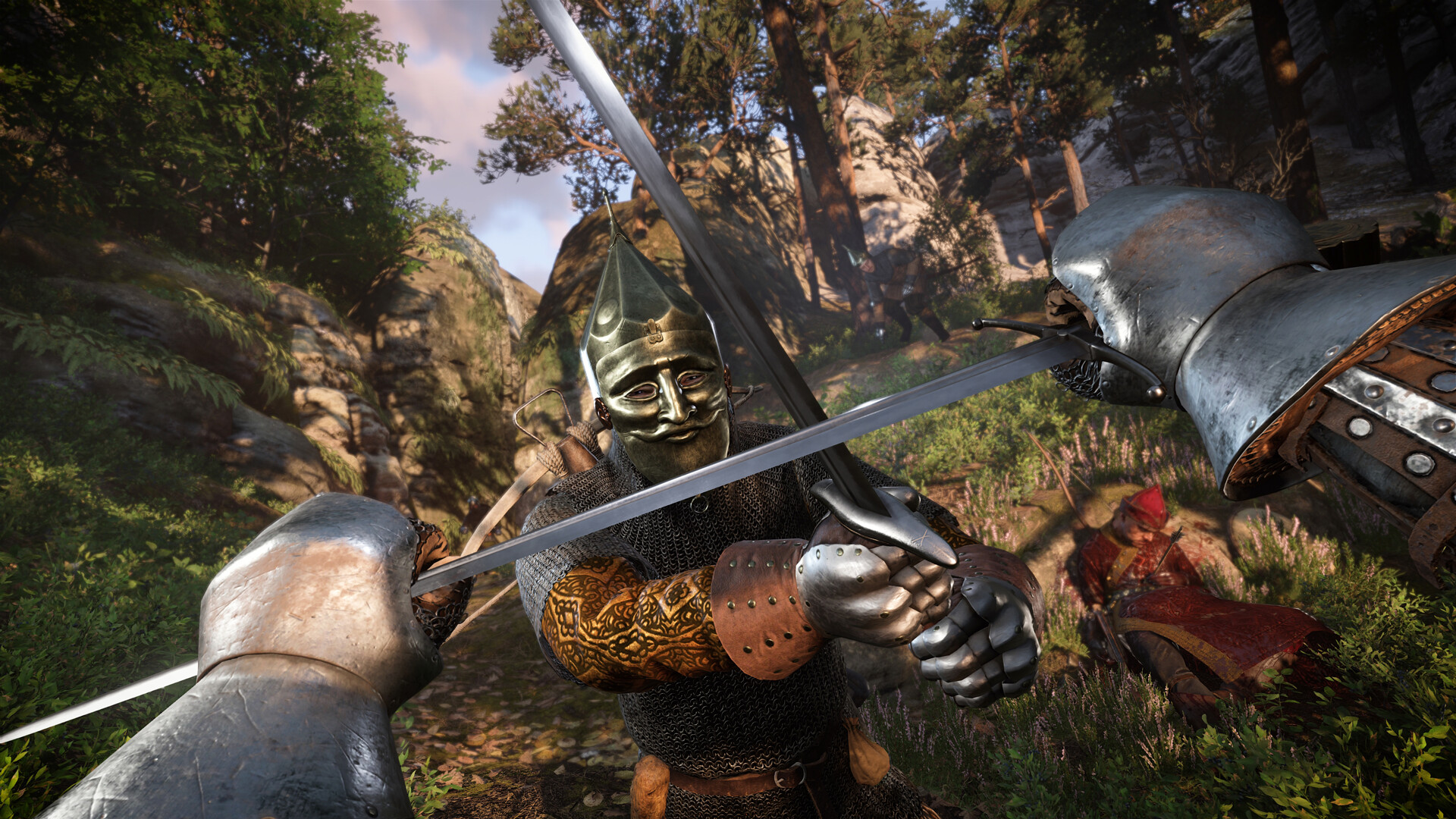
Combat remains distinctive and divisive. It is a deliberate, physical, first-person melee system built around directional strikes, timing, and stamina, and it is closer to a tense duel than the button-mashing of most RPGs. Against a single opponent, mastering it is enormously satisfying; against several, it can still descend into chaos, and it demands real practice before it clicks. The sequel improves readability and flow, but it never turns Henry into an untouchable action hero, and getting jumped by a few armed peasants is still a genuine threat. Whether that is a feature or a frustration depends entirely on what you want from a fight.
Where the sequel most clearly earns its existence is scope and story. The world is large, varied, and dense with detail, from bustling towns to quiet countryside, and it is stuffed with quests that branch on your choices and reward creative, unscripted solutions. The writing and characters are a step up, giving Henry's continuing journey more weight and more memorable company, and the freedom to approach situations as a fighter, a sneak, a talker, or a schemer makes the open world feel genuinely reactive. Players consistently describe getting pulled in for hundreds of hours, chasing side stories and simply living in the world.
The honest friction is jank and demands. Like most big, ambitious open worlds, it launched with bugs, and while patches have helped, the sheer number of interacting systems means the occasional glitch is part of the experience. The save system is more restrictive than many modern RPGs, in keeping with the game's realism, and can frustrate players used to saving anywhere. And the overall commitment level is high: this is a slow, deliberate, deeply systemic game that asks you to learn its rules and buy into its rhythm rather than one that hands you constant, frictionless reward.
Those caveats aside, the core experience is remarkable. This is one of the most convincing recreations of a historical world in any game, backed by systems deep enough to generate stories no script could plan. For players willing to meet it on its terms, it delivers an RPG of rare texture and consequence, and it is a far more polished and welcoming version of the vision the first game only partly realized.
Art & atmosphere
CraftVisually, Kingdom Come: Deliverance II trades fantasy spectacle for grounded authenticity, and it is striking for it. The recreated medieval Bohemia is beautiful in a naturalistic way: rolling countryside, muddy villages, candlelit interiors, and towns that feel lived-in rather than staged. The attention to historical detail in architecture, clothing, and daily life gives the world a texture that few games attempt, and the shift from grand vistas to intimate, believable places is a deliberate and effective choice. It looks less like a fantasy and more like a window onto the past.
The art direction is all in service of immersion. Light, weather, and the passage of day and night matter both mechanically and atmospherically, and the world feels like a real place operating on its own schedule rather than a stage set waiting for the player. It is not chasing the loudest possible spectacle; it is building somewhere you can believe in and lose yourself.
Sound reinforces that grounding. The period-appropriate music, the ambient bustle of towns, the clatter of combat, and the fully voiced characters all pull you deeper into 15th century Bohemia, and the audio design does a great deal to sell the world's authenticity. Between the naturalistic visuals and the immersive soundscape, the presentation is impressively cohesive, and it is a big part of why players describe simply wanting to exist in this world.
A vast, grounded, deeply systemic medieval RPG that improves on its cult predecessor in nearly every way, held short of the top by launch jank, a demanding save and mastery model, and combat that remains an acquired taste.
Pros & cons
The ledgerIn its favour
- A vast, dense, meticulously recreated medieval world that feels genuinely alive
- Deep, simulated systems that make you feel like a real person, not a superhero
- A stronger story and better characters than the acclaimed original
- Reactive quests that reward creative, unscripted approaches across many playstyles
- Hundreds of hours of absorbing, consequence-driven RPG for the committed
- A more polished, welcoming realization of the first game's bold vision
Against it
- Distinctive melee combat is satisfying solo but still chaotic against groups
- Launched with the bugs and jank typical of huge, ambitious open worlds
- A restrictive save system and high system-mastery demands will deter some
- A slow, deliberate, deeply systemic game that asks real patience and commitment
Screens
Official media© Deep Silver. Official media via Steam.
The player verdict
Real reviews · Steam- Recommended
“I had open heart surgery on the 10th of March 2025, which required weeks of recovery in the hospital and at home. I bought this game specifically for that reason, and it was pretty much all I played on my Steam Deck, while I was…”
90 found helpfulvia Steam - Recommended
“I remember booting up KCD2 expecting a bigger, prettier version of the first game. What I got was something that pulled me in and did not let go. One moment I am riding through the countryside just to see what is over the next hill, and…”
33 found helpfulvia Steam - Recommended
“I got jumped by three barefoot peasants with sticks. 10/10. Other RPGs: "You are the Chosen One, savior of the universe, slayer of gods!" Kingdom Come Deliverance 2: "You smell like a sewer, you don't know how to read, and the local baker…”
29 found helpfulvia Steam - Recommended
“Excellent development of Henry's story and hands down one of the best non-fantasy RPGs to date. KCD2 has all the necessary elements in place - impressive world, captivating story, likable characters, and a ton things to do. Core mechanics…”
13 found helpfulvia Steam
Verdict
The callKingdom Come: Deliverance II is the rare sequel that takes a divisive cult favorite and delivers, unambiguously, on its promise. Warhorse Studios kept everything that made the first game special, the historical grounding, the deep simulation, the sense of being an ordinary person in a hard and reactive world, and expanded it into something bigger, better-written, and more polished. For fans of the original it is a dream realized; for newcomers it is a far more welcoming door into one of gaming's most distinctive RPG worlds.
The honest reservations are the same ones that have always come with this series. The combat is an acquired taste, especially against several foes at once, the game launched with the jank that stalks ambitious open worlds, and its realism, from the save system to the steep learning curve, demands patience that not every player will want to give. This is not a smooth, frictionless RPG, and it does not try to be.
But for anyone willing to meet it halfway, it is a triumph: a huge, absorbing, deeply textured medieval epic that generates stories no script could write and rewards commitment with real depth. It stands among the best non-fantasy RPGs ever made, and it is a landmark of its year. If you want a world to genuinely live in rather than merely conquer, Kingdom Come: Deliverance II is essential.
Sources
Original review by Aymen Sakouhi from the licensed facts above. Score: 9.0/10.