Hogwarts Legacy Nails the Castle and Forgets to Finish the Story
Hogwarts Legacy review: a lovingly built castle and clever spell-chaining nearly outrun open-world filler and a main story that fizzles.
Aymen Sakouhi·Writer · Games Hobbyist//6 min read
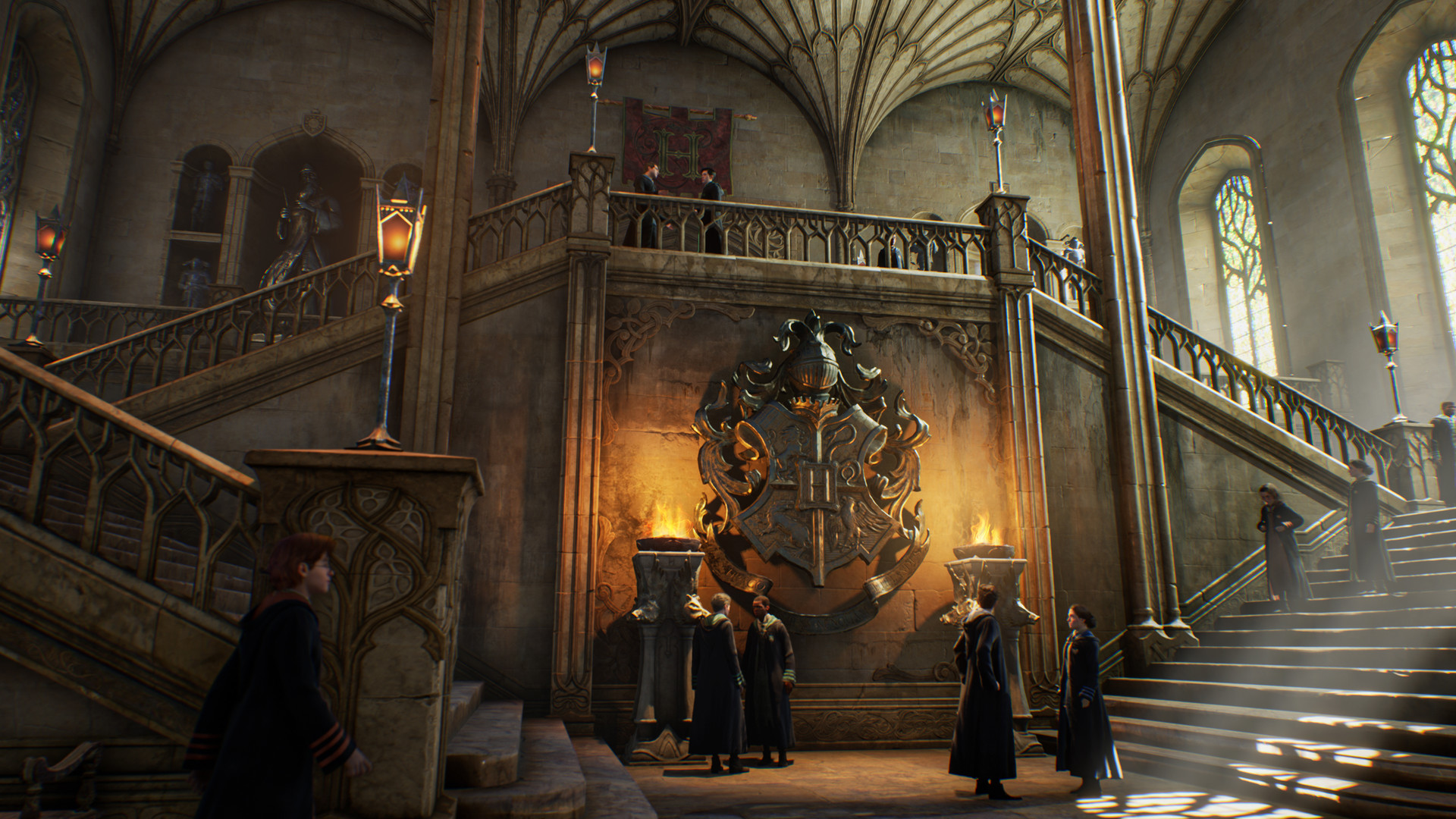
© Warner Bros. Games. Official media via Steam.
The pitch
OverviewEvery wizarding-world fantasy ever sold has been quietly promising the same thing: that you could stop reading about the castle and simply live inside it. Hogwarts Legacy understands that promise better than the story it is wrapped around. As a student arriving improbably late, in your fifth year, you attend lessons, learn spells, brew in the potions classroom, and wander a school so lovingly reconstructed that the finest thing the game offers is the freedom to get thoroughly lost in it.
Avalanche sets you in the late 1800s, a comfortable century before the books, which neatly frees the studio from canon while keeping every recognizable beam and bannister in place. You are sorted, handed a wand, and almost immediately marked as unusual, able to see and channel a strand of ancient magic that the plot then fusses over for thirty-odd hours. Around that runs a full open-world action RPG, complete with talent trees, loot, a base to decorate, and a map bristling with icons.
The game is at its most self-assured whenever it leans on the pure fantasy of attendance: a night flight over the Highlands, a descent into a forgotten vault, a companion's quiet personal crisis. It is on markedly shakier ground the instant it recalls that it is also obliged to be a hundred-hour open-world product, with every scrap of checklist bloat that particular ambition drags in behind it.
That tension defines the whole thing. Hogwarts Legacy was an enormous commercial success, among the best-selling games of its year, precisely because the setting does so much of the heavy lifting on its own. Whether it fully earns that success depends almost entirely on how badly you wanted to be a student rather than a chosen one.
How it plays
PlayCombat is the genuine surprise, and it is far better than a licensed tie-in has any right to be. Spells slot onto a wheel in sets you can expand and swap on the fly, and the pleasure lives in chaining them: tear an enemy's guard away with Accio, hoist the body skyward with Levioso, then slam it back into a clustered group with a well-timed Depulso. Later fights become real juggling acts of color-coded defenses, where a yellow shield only yields to a yellow spell and a purple one demands its own answer, and the freedom to blend control, force, and raw damage lends encounters a texture the marketing never bothered to advertise. Ancient magic charges as you fight and then unleashes flashy, screen-clearing finishers, and the higher difficulties force you to genuinely respect the shield colors rather than button-mash through them, giving the system considerably more teeth than its opening hours suggest.
Spells arrive through classes and assignments, a steady drip of new verbs that keeps the toolkit growing well past the opening hours, while a talent tree lets you specialize into stealth, beast handling, or ever-flashier offense. The game even hands you the Unforgivable Curses, Avada Kedavra included, with a shrug and no meaningful consequence, which is either liberating or a squandered thematic opportunity depending on your temperament. Gear is the weakest strand by some distance: a thin river of stat-bearing robes and hats sorted into rarity tiers, redeemed mostly by a transmog option that lets you keep the numbers while hiding the frequently ridiculous outfits underneath.
The Room of Requirement folds in a surprising amount of soft base-building. You conjure furniture and crafting stations, grow potion and plant ingredients, and rescue magical beasts into a Vivarium where they can be groomed and bred for materials that upgrade your gear. It is cozy, low-stakes busywork, and it mostly earns its keep by giving the endless collecting an actual downstream purpose beyond a number ticking upward in a menu.
The trouble is the open world bolted around all of it. The Highlands are gorgeous and enormous and stuffed with the familiar diet of collectibles: Merlin Trials that recycle the same small handful of environmental puzzles, Field Guide pages, Demiguise statues, collection chests, and bandit and poacher camps that quietly stop earning the detour well before you have finished clearing the map. Traversal fights you here too, since the fast-travel network of Floo Flames never feels quite dense enough for a map this large, and a great deal of your time simply evaporates into getting from one marker to the next. The mounts and broom help, and soaring over the Highlands at dusk is a real pleasure, but it is telling that the traversal is most enjoyable precisely when you have stopped chasing objectives and started simply sightseeing.
The story splits cleanly down the middle. The main quest, built around ancient magic and Ranrok's goblin rebellion, has strong individual missions, whether a vault dive, a memory sequence, or a spectacular set-piece flight, yet it never builds much urgency and arrives at an ending noticeably lighter than its buildup implied. The companion questlines fare better, and Sebastian Sallow's slow descent toward the Dark Arts is comfortably the best-written thread in the game, a genuinely uneasy study of temptation the central plot could have used a great deal more of.
As an RPG it is welcoming rather than demanding; the difficulty options are generous, the combat forgives sloppy play on lower settings, and there is a solid suite of accessibility tools underneath. What is conspicuously absent stings more than what is present. There is no Quidditch, the one activity every fan expected to find, and the world's many systems rarely talk to one another, so the school that looks so vividly alive turns out to be a beautiful stage set you mostly pass through on the way to the next icon.
Art & atmosphere
CraftHogwarts Legacy spends most of its considerable budget on a single building and very nearly gets away with it. The castle is a real feat of environment art: candlelit corridors, staircases that rearrange themselves, stained glass throwing colored light across ancient stone, portraits that mutter and squint as you pass, all rendered with a density that rewards standing still and simply looking up. It is the rare game world where the intended pastime, wandering with no particular purpose, is also the thing it does best.
Beyond the walls the craft holds, if a little less astonishingly. The Highlands unroll in painterly mist and seasonal gold, Hogsmeade's crooked snow-dusted rooftops earn their postcard, and the coastal caves and forests stay handsome even when the content packed inside them repeats. Character faces are expressive if occasionally stiff in conversation, and the beasts are animated with unmistakable affection. The day-night cycle and shifting weather do a great deal of quiet work, turning the same courtyard into a dozen different moods across a single play session.
As for the music, it knows exactly which nostalgia it is quietly borrowing, and it stops just short of actually quoting the tune everyone is waiting to hear. There is a glint of that famous celesta shimmer, but the score soon settles into a sweeping orchestral register of its own for broomstick flight and dueling, cresting right on cue as you sail over a ridge at dusk. Casting a spell lands with a pleasing physicality, a crackle and a concussive thump each time a combination connects, and the constant low hum of a school full of chattering students gives the place a warmth and a sense of routine that the plot, for all its effort, never earns.
An irresistible setting and genuinely enjoyable spellcasting held back by open-world filler and a deflating main plot.
Pros & cons
The ledgerIn its favour
- A castle that is a genuine, layered joy to explore and re-explore
- Spell-chaining combat with real depth and color-coded tactics
- Room of Requirement and beast-rearing give the collecting an actual purpose
- Sebastian Sallow's questline is a standout study of temptation
- Dense, atmospheric world-building for fans and newcomers alike
- Generous difficulty settings and a solid accessibility suite
Against it
- An open world drowning in repetitive collectibles and recycled Merlin Trials
- A central story that fizzles out rather than climaxes
- A thin gear system and Unforgivable Curses with no real consequence
- Fast-travel and traversal friction across a sprawling map
- No Quidditch, the single activity fans most expected to play
Screens
Official media© Warner Bros. Games. Official media via Steam.
The player verdict
Real reviews · Steam- Not recommended
“It is painfully clear this game was made by Americans. An extraordinary effort was made to ensure a racially diverse cast of characters. This is no bad thing (although somewhat anachronistic), but it has come at the expense of the…”
72 found helpfulvia Steam - Recommended
“Recommended (under protest.) Hogwarts Legacy is one of the most frustrating games I have ever enjoyed. It is simultaneously one of the best and one of the most exasperating adaptations of an existing universe I've played, because every…”
22 found helpfulvia Steam - Recommended
“This game is awesome! it's so fun, I have had it for quite some time on my PS5 , can't believe i didn't get sucked into it on there. It feels like I am playing in a Potter novel or movie, can get very dark at some points and funny and…”
13 found helpfulvia Steam - Recommended
“Epic Technical Witch/Wizard of Eternal Bugs... + great cinematic scenes + deep and epic OST + fluid gameplay in 4k (without modding) + much to explore + funny scenes and bits of humour, saw a Knight armor clobbering his Armor Colleague…”
10 found helpfulvia Steam
Verdict
The callHogwarts Legacy is a devoted fan's daydream realized with real, visible care, then bolted onto a designer's open-world checklist that keeps tugging in the opposite direction. When you are roaming the castle after dark, winning a duel with a clever combination, or coaxing a rescued beast into the Vivarium, it is completely clear why the game captivated so many millions of players. When you are hoovering up your ninetieth collectible marker in an empty field, the seams show badly.
Come to it hunting for mood rather than a tightly wound plot, and it makes good on the specific dream it is selling. The minute-to-minute magic of being a student is realized with a devotion the storytelling simply never matches.
It is easiest to recommend to the wizarding-world faithful and to anyone who prizes place over plot, and hardest to sell to players who need a strong narrative spine and tightly curated design. Just do not walk in expecting the story to rise to the level of its own setting, because it plainly, repeatedly does not.
Sources
Original review by Aymen Sakouhi from the licensed facts above. Score: 7.7/10.