Gothic 1 Remake Nails the Misery, Fumbles the Polish
Alkimia's remake rebuilds Khorinis beautifully in Unreal Engine 5, but rampant bugs and stiff combat test the patience of even devoted Gothic fans.
Aymen Sakouhi·Writer · Games Hobbyist//6 min read
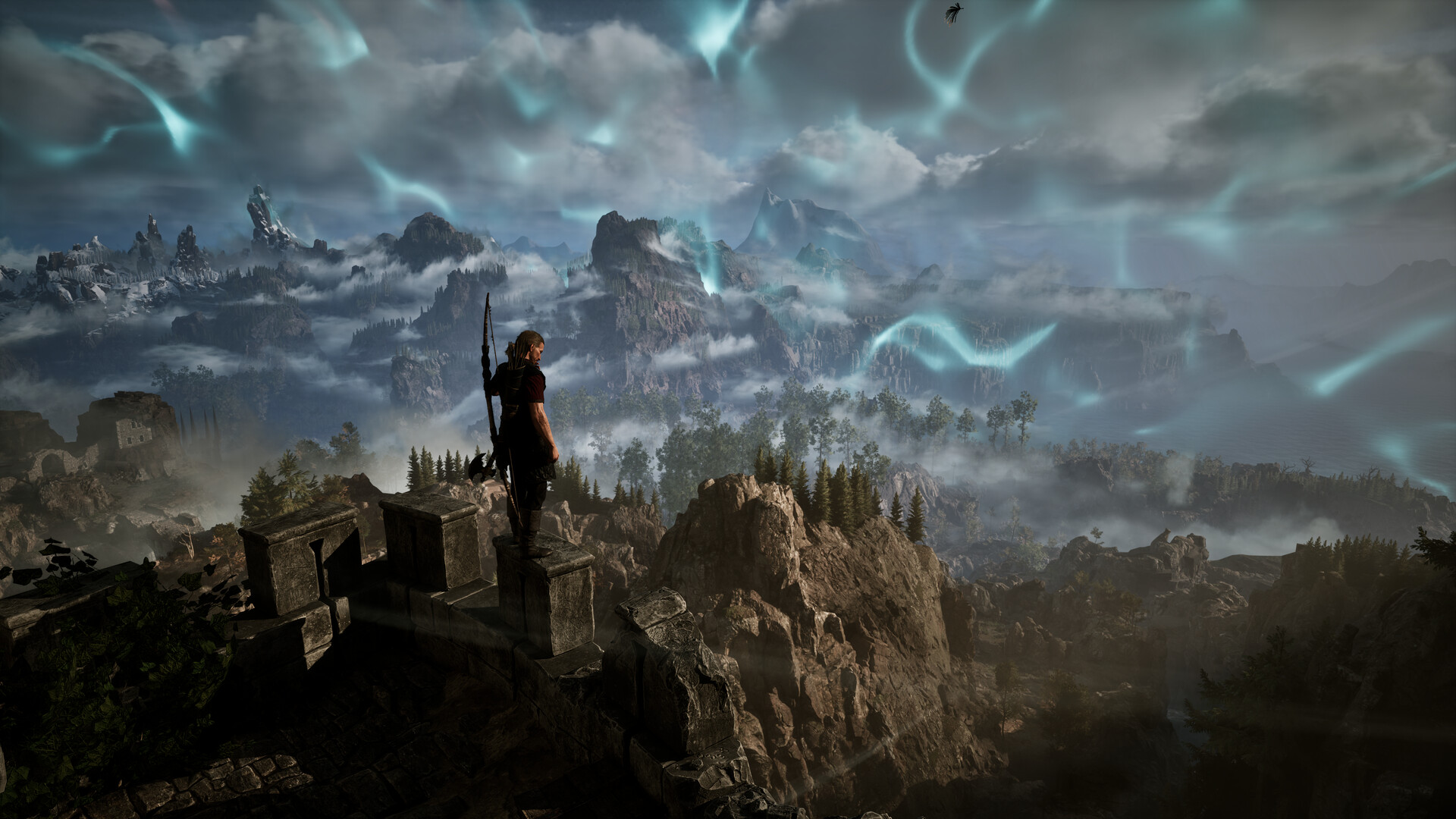
© Alkimia Interactive. Official media via Steam.
The pitch
OverviewKhorinis' Valley of Mines is a graveyard for good intentions, and Alkimia Interactive's remake understands that better than almost anyone. Gothic 1 Remake rebuilds Piranha Bytes' 2001 cult classic in Unreal Engine 5, dropping a nameless prisoner back into a walled penal colony ruled by three warring camps, a malevolent magic barrier, and rules nobody bothers explaining to you. The pitch printed on the store page — a faithful remake of the genre-defining original — is not marketing spin. It is, almost to a fault, exactly what it says it is.
That fidelity is both the draw and the friction point. Alkimia has rebuilt the world stone by stone rather than reinventing it, and the result splits critics right down the middle: RPG Site called it an 8/10 return to form, CGMagazine landed at 6/10 citing dated design choices that show through modern graphics, and Push Square's PS5 verdict dropped to 5/10 largely over performance. Steam's own community, by contrast, sits at "Very Positive," with 85% of roughly 9,700 reviews in favor — a crowd that mostly knew the reputation it was buying into.
The gap between those numbers tells the real story here: a genuinely faithful, well-observed remake of a beloved RPG, released into the wild in a rougher technical state than a 2026 AAA launch should be. Commercially, that faithfulness paid off — reports pegged the remake at roughly 500,000 copies sold in its launch week alone, a strong result for a deliberately uncompromising RPG going up against far bigger marketing budgets. Everything that made the 2001 original a formative game for a generation of PC players is present and accounted for here. So, unfortunately, is a launch window's worth of jank.
How it plays
PlayKhorinis itself is worth re-establishing for anyone coming to this cold. The Colony is a mining prison sealed off from the outside world by a magic barrier, its inmates split into three factions who've built entire micro-societies out of forced labor and ore quotas rather than any hope of rescue. There's no king's law here, no guards to appeal to — just whichever camp you throw in with, and the reputation you build inside it. Alkimia's remake keeps that premise completely intact, right down to the low-key horror of realizing, hours in, that nobody is coming to let you out. Combat is the clearest evolution from the original. The nameless hero starts pathetically weak, barely able to land a clean hit, and stays that way until Learning Points earned through quests and exploration are spent with the right trainer, scattered across the three camps. Once invested, combat opens into four distinct attack types that chain into combos, backed by directional blocks, timed parries, and dodge rolls. It rewards patience and punishes mashing, and multiple reviewers singled it out as a genuine step up from the stiff, one-note swordplay longtime fans remember.
The choice of camp still matters, and still locks doors behind you. Old Camp, New Camp, and Swamp Camp remain distinct factions with their own economies, training options, and outlook on the ore-mining slave colony you're trapped inside, and picking one still means turning your back on the others in classic Gothic fashion. CGMagazine noted the moral ambiguity holds up well, though the consequences of that choice don't always ripple forward as visibly as they should once later chapters begin — a soft spot rather than a broken system.
Exploration is where the remake is most stubbornly, deliberately old-school, and where it will win or lose players fastest. There's no quest marker, no map handed to you for free, and no fast travel for a meaningful stretch of the early game — you learn Khorinis by walking it, listening to NPCs, and remembering landmarks the way you would a real place. A new Scavenger-riding mount eventually eases the backtracking, and a day-night cycle changes who's around and what's safe to attempt, but until that mount unlocks, repeat trips across the valley wear thin fast, especially on a second or third playthrough.
Quest design shows the same tension between authenticity and rough edges. Dialogue occasionally fails to acknowledge quest items the player has already found, punishing exploration instead of rewarding it, and NPCs who are supposed to follow the player after certain triggers sometimes simply don't, leaving quests stuck until a reload. The protagonist himself remains a near-silent blank slate with little dialogue agency — a deliberate design choice inherited from the original rather than an oversight, but one that will read as flat to players expecting a modern RPG's branching conversations. The Steam reviews tell a consistent, if divided, story along the same lines. A recurring positive thread comes from players who'd never touched the original and went in expecting a modern RPG's comforts, only to find themselves hooked by the opposite — no map unless you buy one in-game, no quest markers, no fast travel, a world that expects you to pay attention. A recurring negative thread comes from longtime fans who love that same design but hit gamebreaking bugs badly enough to restart entire playthroughs over something as small as a mistimed conversation. Both camps, notably, are often the same people on different days.
What undercuts all of it, consistently, is the state the game shipped in. Community and critic reports overlap heavily here: NPCs vanishing mid-quest, key enemies that can't be looted, trigger events that silently fail to fire, friendly NPCs turning hostile without provocation, weapons that won't swing after certain animations, input that occasionally stops responding, and — on PS5 Pro specifically — frame rates that struggle to hold 30fps and can stutter into single digits in crowded areas like the Old Camp. CGMagazine's 45-hour playthrough logged two to three crashes on its own; several Steam reviewers describe restarting the game entirely after quest-breaking softlocks caused by something as mundane as talking to the wrong NPC at the wrong time.
Art & atmosphere
CraftVisually, this is an unambiguous win. Unreal Engine 5 gives Khorinis a density and grime the 2001 engine could never manage — sunlight cutting through mine dust, rot creeping along the barrier's edges, the Old Camp's improvised shantytown packed with detail that rewards just standing still and looking around. Interior lighting swings the other way; several reviewers flagged dungeons and camp interiors as frustratingly dark, more atmospheric accident than deliberate mood-setting, to the point of needing a torch indoors where none should be necessary. The audio-visual seams show elsewhere, too. Voice performances are inconsistent — strong and grounded in key story beats, flatter or oddly paced in incidental NPC chatter — and animation quality wobbles alongside it, with reports of characters holding invisible tools mid-cutscene, stiff, underwater-feeling traversal, and combat hit-reactions that don't always register even when a blow clearly connects. None of it undoes the world's atmosphere, which remains genuinely strong, but it chips steadily at the immersion the remake is otherwise built to deliver.
Credit where it's due on accessibility, an area Alkimia clearly took seriously even while keeping the core design brutal: adjustable difficulty, camera comfort options, custom volume controls, and full support for both DualSense and DualShock controllers are all built in from launch, alongside options that let players skip timed-input sequences entirely. It's a modern layer of consideration wrapped around a design philosophy that otherwise refuses to compromise on much else.
Critic scores split from 5 to 8 and Steam sits at 85% positive — a genuinely well-built, faithful remake dragged down by a rough, bug-heavy launch state.
Pros & cons
The ledgerIn its favour
- Combat finally has depth: four attack types, combos, blocks, parries, and dodge rolls replace the original's stiff swordplay
- Old Camp, New Camp, and Swamp Camp remain distinct, mutually exclusive factions with real moral shading
- Unreal Engine 5 rebuilds Khorinis with genuine density and outdoor atmosphere
- No quest markers and minimal fast travel — exploration and memory are rewarded the old-school way
- Learning Points and skill trainers make character growth feel earned rather than automatic
- Strong accessibility options, including adjustable difficulty and full DualSense/DualShock support
Against it
- Frequent bugs: vanishing NPCs, failed quest triggers, unresponsive combat input, and occasional softlocks
- Performance is inconsistent, with PS5 Pro struggling to hold 30fps in crowded areas
- Animation and voice work are uneven, undercutting otherwise strong scenes
- Lack of early fast travel turns backtracking into genuine tedium
- Dark interior lighting and inconsistent enemy hit-reactions make combat feel occasionally unfair
Screens
Official media© Alkimia Interactive. Official media via Steam.
The player verdict
Real reviews · Steam- Recommended
“Truth Disclosure : Never played the original. That being said, I was interested in all the hype for a completely old school non-hand-holding adventure game with no map unless you buy one, no quest markers, no fast travel, where you are…”
148 found helpfulvia Steam - Not recommended
“I genuinely love the game and appreciate the work Alkimia has put into this, but the amount of gamebreaking bugs occuring during gameplay is out of hand. I had to start the game over twice, because of trivial things like talking to an NPC…”
141 found helpfulvia Steam - Not recommended
“One of the most addictive games I’ve played in a long time. I’m a very big fan of this sort of minimal handholding and genuine discovery. However, I have not played a game in ages with this many game breaking/progress halting bugs. Seems…”
107 found helpfulvia Steam - Recommended
“First of all, I'm a hardcore Gothic fan. Gothic was the game of my childhood and is still my most-played game of all time. This was only the second game I've ever preordered, and I've been waiting for it since the playable teaser was…”
99 found helpfulvia Steam
Verdict
The callGothic 1 Remake succeeds at the hardest part of any remake: it understands why the original mattered and refuses to sand off the edges that made it distinctive. No hand-holding, three factions with real teeth, a training-gated combat system that makes growth feel earned rather than given — that skeleton is genuinely well-built, and Unreal Engine 5 finally gives Khorinis the visual upgrade it always deserved.
But a launch is judged on the state it launches in, and this one arrived with enough bugs, crashes, and inconsistent performance — especially on console — that even critics who clearly liked the game's bones couldn't look past the cracks. At its €49.99 asking price, that's a harder pill to swallow than it should be for a studio with this many years in development behind it. This is a strong recommendation for patient Gothic loyalists willing to ride out a few rounds of post-launch patches, and for anyone who has genuinely missed being dropped into a world with no map, no markers, and no mercy. It's a harder sell for players who just want a clean, frictionless RPG on day one — for them, waiting a patch cycle or two is the smarter move.
Sources
Original review by Aymen Sakouhi from the licensed facts above. Score: 7.0/10.