God of War Review: A Brutal Franchise Grows Up Without Going Soft
God of War review: Santa Monica reinvents Kratos as a weary father in a tense, single-take Norse epic that hits harder for its restraint.
Aymen Sakouhi·Writer · Games Hobbyist//6 min read
© PlayStation Publishing LLC. Official media via Steam.
The pitch
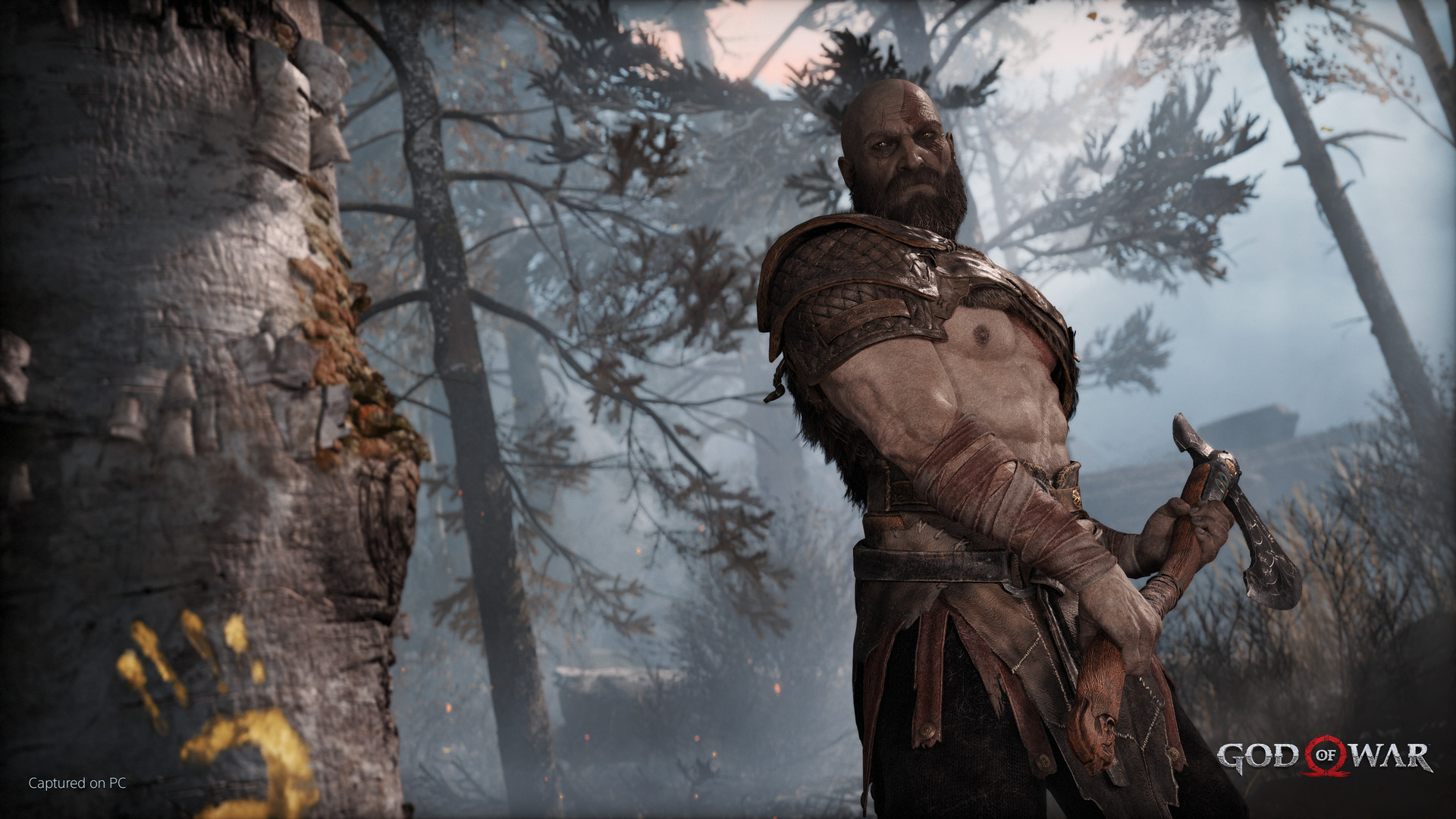
OverviewThe 2018 God of War set itself a nearly impossible task: take the angriest man in games, a walking grudge who spent three whole games ripping the Greek pantheon apart with his bare hands, and turn him into someone you would willingly follow for forty hours. It succeeds because Santa Monica Studio did not so much soften Kratos as age him, remaking him as a father quietly terrified that his son will grow up into exactly what he once was.
This is a slower, heavier, more deliberate action game than the trilogy that spawned it. The premise sounds almost mundane set against that legacy: a man and his boy carry the ashes of a dead wife and mother toward the highest peak in the realms, learning, haltingly and often badly, how to speak to one another along the way. The mythology is Norse now, the rage is banked rather than spent, and the whole thing is quieter and markedly better for it.
The PC edition carries that reinvention over intact and then sharpens its edges, with an unlocked frame rate, ultrawide support, and the usual suite of modern upscaling and fidelity options. It is comfortably the best-performing way to make this particular journey, provided you keep a controller within reach, since the combat was clearly designed with sticks and triggers in mind rather than a mouse.
Big-budget reinventions this thorough are rare, and rarer still are the ones that manage to keep whatever made the original worth reinventing in the first place. God of War belongs on the short shelf beside them. It honors its own loud, faintly ludicrous history while reaching for something close to tender, and it does so without ever pretending its protagonist was anything other than a monster first.
How it plays
PlayCombat is the most obvious departure. Gone are the fixed camera and the crowd-clearing spectacle of the old games; in their place sit an intimate over-the-shoulder view and the Leviathan Axe, a frost weapon you hurl at an enemy and then recall to your palm with a satisfying, physical thunk. The entire system is built around that recall, freezing a foe solid, juggling threats across a crowded room, choosing to brawl bare-fisted while the axe is still buried in something twenty feet away. A rising Spartan Rage meter lets Kratos drop the weapon entirely and pummel a room bare-handed to buy himself breathing space, and the Guardian Shield doubles as a parry tool precise enough to reward anyone willing to learn each enemy's tell. Later you reclaim a second weapon that reframes the whole system again, and the interplay between the two is where the combat quietly finds its ceiling.
Structurally, the game unfolds as one long unbroken shot. There are no hard cuts, and the camera never once leaves Kratos, a technical conceit that does remarkable quiet work keeping you tethered to the relationship at the story's core. Atreus fights beside you throughout, tagging enemies with arrows, translating runes you cannot read, and growing visibly more capable as his relationship with his father shifts and hardens across the journey. The trek is paced by talk as much as by combat, with long stretches on foot or by boat where the writing does its quietest and best work: Mimir reciting Norse myth from his perch at Kratos's hip, the dwarven smiths Brok and Sindri needling each other between upgrades, Atreus filling the silences his father refuses to.
There is a light role-playing skeleton beneath the spectacle. Kratos and Atreus both carry gear, runic attacks, enchantments, and skill trees, and you will spend real time in menus weighing stats before a difficult fight. It adds welcome depth and a concrete reason to explore, though the numbers occasionally sit at odds with the grounded, mournful tone, a legendary god-killer pausing to compare the frost resistance of two shoulder pauldrons.
The world is a hub-and-spoke design centered on a great lake that drains and refills to reveal new paths, ringed by optional realms with challenges of their own. There is far more here than the critical path: side realms, hidden bosses, collectibles that actually pay off in the story, and a set of nine Valkyrie duels that rank among the most demanding optional encounters the genre has produced. Their queen in particular is a genuine wall for anyone chasing full completion. Beyond the Valkyries lie combat trials in the fire realm of Muspelheim and a foggy, roguelike gauntlet in Niflheim, optional arenas built purely to test a loadout you have spent the whole game assembling. Four difficulty settings frame all of it, from a story-first stroll to a punishing mode where a single troll can end you, and the game lets you change your mind partway through rather than locking you into an early choice.
It is not flawless. The enemy variety is thin for a game this long, so you will trade blows with the same handful of trolls and draugr a few too many times before the credits roll. Some of the backtracking across that central lake drags once the novelty of its shifting geography wears off. But the moment-to-moment fighting almost never stops being good, and the axe never once stops being a joy to throw and call back. The story also closes on a deliberately unresolved note, more sequel hook than ending, which lands rather differently now that the follow-up exists than it did on release. It is the rare cliffhanger that improves in hindsight, quietly recasting earlier scenes as setup, even if on its own terms the adventure can feel like it stops just as its mythology finally opens all the way up.
Art & atmosphere
CraftGod of War stakes everything on that single unbroken camera, and its craft has to follow the decision everywhere. Because there are no cuts to hide the seams, every location has to flow into the next, the frostbitten crags of Midgard, the amber wilds, the fungal glow of the dwarven realms, the firelight catching old scars across Kratos's back, and it all holds together, carried by a painterly restraint that pointedly refuses the series' former excess. The palette runs muted and earthy, broken only occasionally by the cold blue-white bite of the axe.
McCreary's music is the second half of that reinvention, and arguably the more important one. The old Greek games roared without pause; this score broods instead, a plaintive vocal motif, low Nordic drums, an adult grief that swells only once the game has earned the right to it. The sound design carries the weight of everything, the brittle crunch of frozen ground underfoot, the guttural bellow of a troll winding up, the low, level authority in a father's voice telling his boy, again, to be better than he was.
Together they pull off the game's central trick, making restraint feel like the loudest choice in the room. This is a series that built its name on excess, and here the deliberate hush, the held note, the unbroken take, communicates menace and grief more effectively than any amount of the old carnage ever managed.
A confident, tactile reinvention with a genuinely moving core, let down only by repetitive enemies and some mild padding.
Pros & cons
The ledgerIn its favour
- The Leviathan Axe and its recall make combat consistently tactile and satisfying
- The single-shot camera keeps the father-son story front and center throughout
- Strong PC port with an unlocked frame rate and modern fidelity options
- Optional Valkyrie fights offer a real, punishing test for completionists
- Bear McCreary's brooding score reinvents the sound of the series entirely
- A grounded, genuinely moving story built on an old monster growing up
Against it
- Thin enemy variety across a long runtime wears out its welcome
- Backtracking through the central lake hub drags once the novelty fades
- The RPG stat layer sometimes clashes with the grounded, mournful tone
- Needs a controller to feel right, mouse and keyboard is an afterthought
Screens
Official media© PlayStation Publishing LLC. Official media via Steam.
The player verdict
Real reviews · Steam- Recommended
“A great modern classic, a blast to play in PC. Sony, please don-t stop bringing games to PC.”
33 found helpfulvia Steam - Recommended
“One of the best games I've ever played. The story is emotional and keeps you invested from beginning to end. The combat feels smooth and satisfying, the graphics are stunning, and the soundtrack fits every moment perfectly. Kratos and…”
21 found helpfulvia Steam - Recommended
“God of War ( I could talk about the game, but I chose to go beyond that... since everyone already knows that GOW 2018 is amazing !) THE FUTURE OF GOD OF WAR 🔥 The franchise isn’t slowing down anytime soon. Multiple God of War projects are…”
17 found helpfulvia Steam - Recommended
“An absolute masterpiece. The story is awesome, the graphics hold up well, the combat is stellar. Exploration is fun, but not overwhelming. Collectibles have value. Bosses are challenging but can be mastered by learning their moves, no RNG.…”
11 found helpfulvia Steam
Verdict
The callGod of War is that rare big-budget reinvention that keeps what actually worked, the heavy, tactile, deeply satisfying violence, while finding something genuinely new to say around it. It is a study in restraint, told through a man who spent three games without a shred of it, and the friction between those two facts gives the whole thing a weight the series never previously earned.
On PC it is the best-performing version of an already superb game, and the added fidelity flatters a world that was always its strongest argument. A few repetitive stretches, thin enemy variety and some listless backtracking, keep it a step short of perfection, but this is blockbuster action design operating very near its peak.
It is an easy recommendation for anyone with a controller and a free weekend, and a particularly easy one for lapsed fans who once wrote the series off as noise. Whether you turn up for the combat or stay for the father and son at its center, it delivers on both, which is more than most games at this scale even attempt.
Sources
Original review by Aymen Sakouhi from the licensed facts above. Score: 9.1/10.