Frostpunk 2 Trades Intimacy for Scale, and Not Everyone Will Follow
11 bit's sequel scales the frozen city-builder up into brutal politics, but loses some of the original's intimacy. Our verdict: 8.0/10.
Aymen Sakouhi·Writer · Games Hobbyist//4 min read
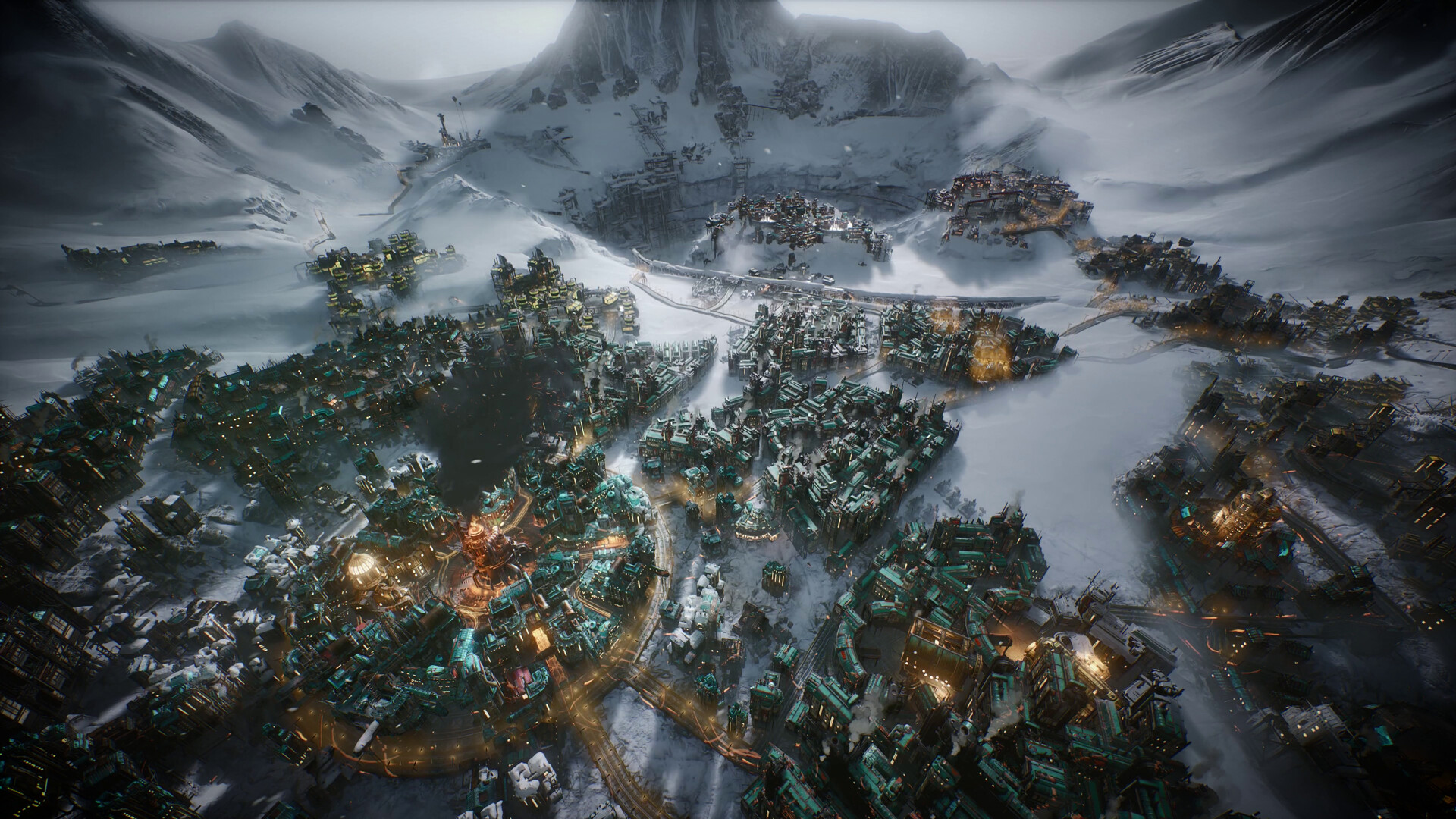
© 11 bit studios. Official media via Steam.
The pitch
OverviewThe original Frostpunk was a masterclass in cruelty by numbers. It put a single dying city, one great generator, and a handful of impossible choices in your frozen hands, and it made you feel every death. Frostpunk 2, from developer and publisher 11 bit studios, is a much bigger machine, and the tension of this sequel is baked right into that word: bigger. It is a more ambitious, more sophisticated survival strategy game than its predecessor, and it is also a more distant one.
Set 30 years after the endless blizzard first froze the world, Frostpunk 2 hands you not a settlement but a sprawling metropolis, and not a population but factions, each watching your every move and ready to turn on you. The scale jumps from managing individuals to steering a society, from stoking a furnace to brokering and breaking political coalitions. It is a genuinely clever evolution, and critics largely embraced it: the game holds a Metacritic score in the mid-80s, generally favorable, with reviewers praising how tightly it links its emotional narrative to its systems.
Players have been more divided. On Steam the sequel sits at Mostly Positive, a notably cooler reception than the critical consensus, and the gap between those two verdicts is the most interesting thing about Frostpunk 2. This is a very good strategy game that a meaningful slice of the original's fans do not love as much, and understanding why is the whole review.
We went in expecting the follow-up to a favorite. What we found was a smart, harsh game that asks you to care about a spreadsheet as much as you once cared about a family.
How it plays
PlayThe core loop moves up a level of abstraction. Instead of placing individual buildings and rationing individual workers, you develop, expand, and advance your city district by district, balancing heat, resources, workforce, and, above all, the demands of the factions who share your frozen home. Survival is still the frame, but the real game is politics: passing laws through a council, managing the fallout of every decision, and holding a fracturing society together as its groups pull in opposite directions.
That political layer is Frostpunk 2's best idea. Factions have ideologies, grudges, and red lines, and steering them requires bargaining, bluffing, and the occasional betrayal. Every law you push through the council buys one group's loyalty at another's expense, and the game is at its sharpest when a vote you thought was routine detonates into a crisis. The blend of survival management and moral, emotional storytelling is where reviewers rightly single it out, because the systems and the narrative genuinely feed each other.
The trouble is what the scale costs. In the first game, a decision to work children or freeze the sick landed because you could see the individuals it touched. Here, the district-and-society scale can make the survival math feel too comfortable, and some players report that the wider view drains the desperation that made the original so gripping. The number-focused, top-down perspective is intellectually satisfying, but it can hold you at arm's length from the human stakes that were once the whole point.
There is a lot of system to learn, and the early hours can feel like drinking from a firehose of overlapping meters and council mechanics. Once it clicks, the strategic depth is real and rewarding, with multiple scenarios and a sandbox-style Utopia Builder mode plus Steam Workshop support extending the life well past the campaign. But the on-ramp is steep, and the game does not always do a great job of teaching itself.
It is worth noting, in fairness to the divided reception, that some of the launch backlash centered on off-screen issues rather than the game itself, including a data-collection clause in the end-user agreement that drew real anger from players. Those concerns are legitimate to weigh, but they are separate from the quality of the strategy game underneath, which is considerable.
Art & atmosphere
CraftFrostpunk 2 keeps the series' unmistakable visual identity: a beautiful, oppressive world of steel and ice, of orange furnace glow against endless grey-white cold. Zooming out to survey a whole frozen metropolis sprawling around its heat source is genuinely striking, and the art direction sells the scale of what you are now responsible for. This is a world that looks as heavy as the decisions it asks of you.
The sound design and score carry the same bleak grandeur, all groaning machinery, howling wind, and swelling strings when a crisis tips toward catastrophe. 11 bit studios has always understood atmosphere as a mechanic, a way of making you feel the weight of survival, and that craft is fully intact here. The mood is immaculate.
If anything, the presentation is so accomplished that it sharpens the central tension: everything about how Frostpunk 2 looks and sounds promises intimacy and dread, and then the systems occasionally hold you too far back to feel them as keenly as you want to.
A smart, atmospheric strategy sequel with a superb political layer and huge depth, held back for some by a jump in scale that trades the original's intimate desperation for distance.
Pros & cons
The ledgerIn its favour
- A brilliant political layer of factions, councils, and hard votes
- Systems and narrative that genuinely feed into each other
- Enormous strategic depth once the mechanics finally click
- A striking, oppressive frozen world with immaculate atmosphere
- Strong replay value via multiple scenarios, sandbox mode, and Workshop
Against it
- The society-scale view dilutes the original's intimate desperation
- Survival math can feel too comfortable next to the first game
- A steep, firehose learning curve that teaches itself poorly
- Launch drew real player backlash, including over its data-collection EULA
- Fans of the original's personal stakes may feel held at arm's length
Screens
Official media© 11 bit studios. Official media via Steam.
The player verdict
Real reviews · Steam- Not recommended
“The EULA states that they collect you personal information and IP address in order to profile you, and they can share that profile data with whoever they want. I recommend you avoid this title and everything else by 11bit going forward, I…”
167 found helpfulvia Steam - Not recommended
“This isn't a frostpunk. It's a strategy game, sure, a city builder, sure, but not frostpunk. Probably the only actual good addition to the game is the parliament system. It can be interesting to balance the factions and so on. But for the…”
31 found helpfulvia Steam - Recommended
“Hot take, but... I love this one I get it that it's a sequel and it's trying to be more than its predecessor, which could occasionally misfire and harm its identity, but I feel like they handled it pretty well Some people fail to see that,…”
18 found helpfulvia Steam - Recommended
“Let's get the obvious out of the way, this is different enough from Frostpunk one to be a deal breaker. If you can get behind a big scale high stakes colony builder / survival sim, frost punk 2 is one of the best. The drama has been scaled…”
17 found helpfulvia Steam
Verdict
The callFrostpunk 2 is an ambitious, intelligent sequel that grows the series into something grander and more politically complex, and mostly pulls it off. The faction system is a superb idea, the writing and systems are locked together tightly, and the strategic depth rewards the players who push through its demanding opening. On the critics' terms, this is one of the better strategy games of its year, and that reputation is earned.
The honest catch is the thing it traded away. By zooming out from a struggling settlement to a fractious society, Frostpunk 2 gained scope but softened the intimate, gut-level dread that made the first game unforgettable. That is why the reception splits: it is a great strategy game and a slightly lesser Frostpunk at the same time, and which of those matters more to you will decide how you feel about it.
If you want a deep, punishing city-builder with real political teeth, this is an easy recommendation. If you came back specifically for the personal, agonizing survival of the original, go in knowing that this sequel plays a colder, larger, more calculating game.
Sources
Original review by Aymen Sakouhi from the licensed facts above. Score: 8.0/10.