Echoes of Aincrad Finally Lets You Be a Nobody in the Death Game
Our Echoes of Aincrad review: a Sword Art Online RPG with a great hook and a lovely world, worn thin by repetition, invisible walls, and a mute hero.
Aymen Sakouhi·Writer · Games Hobbyist//5 min read
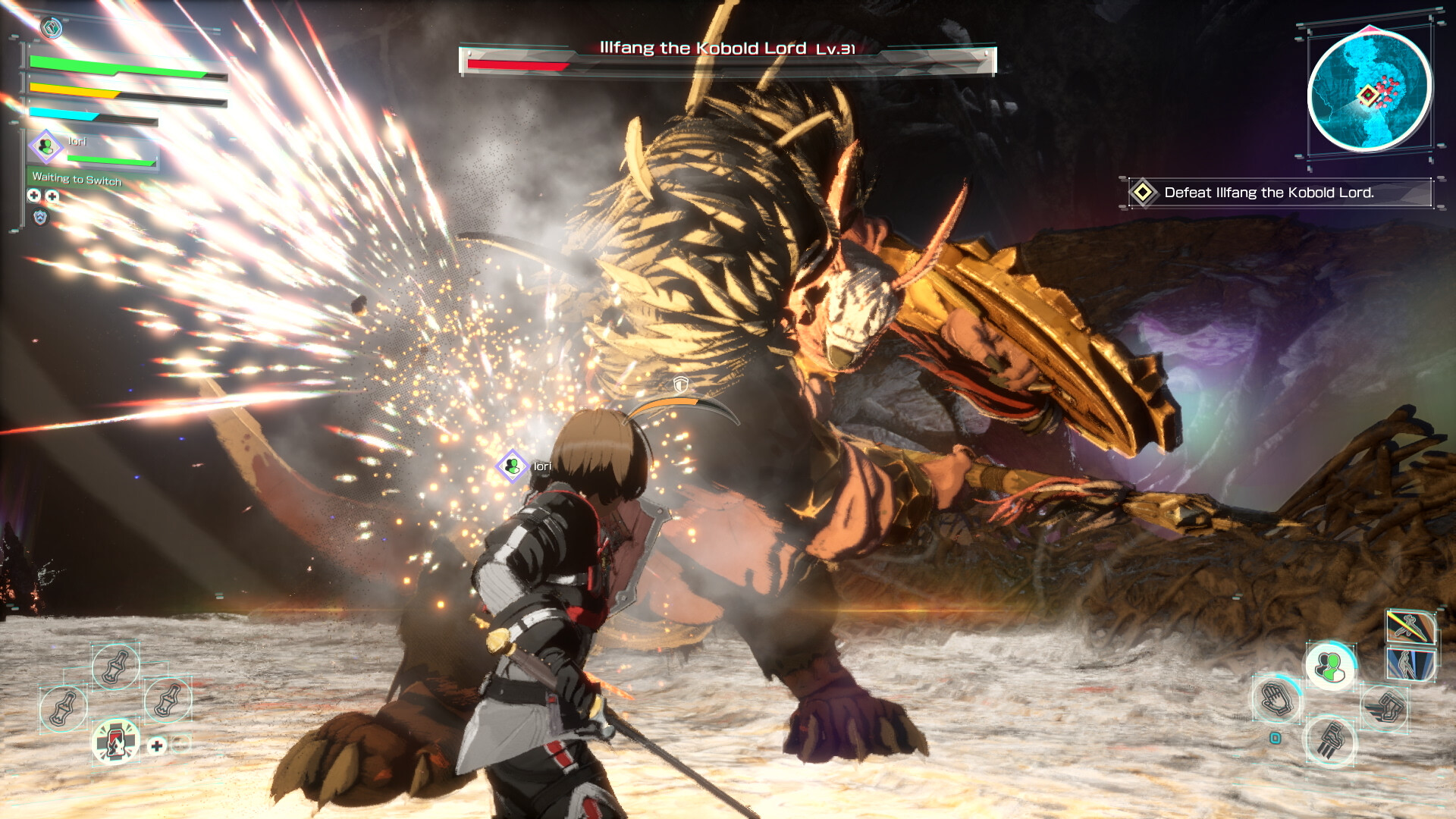
© Bandai Namco Entertainment Inc.. Official media via Steam.
The pitch
OverviewFor nearly fifteen years, Sword Art Online games have handed you Kirito, the black-clad hero who always wins, and asked you to relive his greatest hits. Echoes of Aincrad tries something the license has mostly avoided: it makes you a nobody. You create an ordinary player trapped in the same death game, one of the thousands whose names never made the light novels, and you fight to survive on the margins of a story you do not control. It is the most interesting premise the franchise has attached to a game in a decade, and the game around it cannot quite live up to it.
This is an action RPG set on the floating castle of Aincrad, built by Game Studio Inc. and published by Bandai Namco. It reaches for the fantasy the anime always sold and rarely delivered in game form: a real virtual world where every fight could be your last, where you grind, craft, and level alongside a partner you learn to trust. When it clicks, it feels like the SAO game fans have wanted. When it does not, it feels like a competent but dated MMORPG missing the other players.
The reception has split cleanly down that line. Critics landed it in the mid-60s on Metacritic, a mixed verdict, with individual scores ranging from generous to genuinely harsh. Longtime fans of the series call it the best SAO game in years and mean it. Action-RPG players with no attachment to the license tend to see a good idea buried under repetition and rough edges. Both camps are describing the same game accurately; they are just weighing its ambitions against very different expectations.
How it plays
PlayThe combat is the best argument for the game, and it is a real one. Attacks land with weight, each swing carries follow-through, and the system is built around a partner mechanic that keeps encounters from collapsing into button-mashing. You bring an NPC companion into the field and set their behavior: Free Mode lets them fight autonomously while a stamina meter drains, or Switch Mode aims their help where you point it. A clean dodge frees your partner to strike a target you designate, and a well-timed parry triggers a counter. At its best this creates a genuine back-and-forth rhythm, a call-and-response between you and an ally that rewards reading the fight instead of mashing through it.
The trouble is what surrounds that rhythm. Enemies are spongy, hitboxes are not always legible, and the lack of crisp hit feedback means a good exchange can feel muddier than it should. Worse, you fight the same handful of enemy types for hours, and bosses are frequently reskins of earlier bosses with a new color and a bigger health bar. A combat system this deliberate deserves a bestiary that pushes back on it, and Aincrad simply does not have enough variety to keep the system honest across a long game.
Exploration is the sharpest disappointment, because Aincrad should be a place you want to get lost in. Instead of an interconnected world, the game runs on a hub-and-spoke loop: you queue for a quest from a central town, teleport into a semi-open zone or dungeon, complete it, and return. The zones look open but are fenced by arbitrary invisible walls that stop you the moment you wander off the intended path, and the sense of a living virtual world evaporates every time you hit one. For a franchise whose entire fantasy is freedom inside a game world, that friction cuts especially deep.
Quest design compounds the problem. Missions lean heavily on fetch-and-return structures and railroaded objectives, and the rewards rarely feel proportional to the effort or add much to the world's lore. You accept a quest, you fight familiar enemies down a linear corridor, you turn it in, you repeat. The loop is functional and occasionally satisfying when the combat sings, but it grinds down over the length of a full RPG, and the tedium is the single most common complaint from players and critics alike.
The systems underneath are more encouraging. Weapon proficiency and a broad skill set give you room to specialize, and the crafting is functional and rewarding enough to justify the grind for players who enjoy that treadmill. The problem is that these are MMORPG bones without the massively-multiplayer body: this is a single-player game wearing the shape of an online one, and much of what makes that structure fun in an MMO, other people, does not exist here.
The story sits in a strange place. The premise, being an ordinary trapped player rather than the hero, is the game's best idea, but the execution undercuts it. Your custom character is voiceless and largely without agency, Kirito looms over the narrative as the person who actually matters, and the plot proceeds down a rigidly linear path that leaves you feeling less like a survivor writing your own story and more like a sidelined extra in someone else's. The concept promises the road not taken; the game keeps steering you back onto the main highway.
Art & atmosphere
CraftWhere Echoes of Aincrad is least conflicted is in how it looks. The world is genuinely lovely: the floating castle's towns and villages are warm, detailed, and inviting, and there is a real sense of place in the lantern-lit streets and open fields that the anime fans came here to inhabit. When the game slows down and lets you stand in one of its settlements, it delivers the postcard version of Aincrad that the license has always promised. It is a beautiful shell.
That beauty makes the invisible walls sting more, because the art direction is constantly writing checks the level design cannot cash. You see a distant ridge or a side path and the world tells you to explore it; the collision tells you no. The combat, at least, is served well by its presentation, with weapon skills that flash and land with visual punch even when the enemies absorbing them refuse to react convincingly.
The overall craft is solid rather than exceptional, the work of a team that clearly cares about the source material's atmosphere but is working with a structure a generation behind the action RPGs it will be measured against. It is a game that is easy to like the look of and harder to love the feel of, and that gap between surface and substance is the review in miniature.
A great Sword Art Online hook and a beautiful world worn down by repetition, invisible walls, and dated design, landing exactly where the mixed mid-60s critical consensus puts it.
Pros & cons
The ledgerIn its favour
- The premise, playing an ordinary trapped player instead of the hero, is the franchise's best idea in years
- Weighty combat with a partner mechanic that rewards dodging and parrying over button-mashing
- The floating world of Aincrad is warm, detailed, and genuinely lovely to stand in
- Deep weapon proficiency, skills, and functional crafting for players who enjoy the grind
- For dedicated fans, arguably the most faithful SAO game experience to date
Against it
- Heavy repetition: recycled enemy types and boss reskins across a long campaign
- Invisible walls and hub-and-spoke design gut the fantasy of exploring a virtual world
- Fetch-heavy, railroaded quests with rewards that rarely feel worth the effort
- Spongy enemies and weak hit feedback undercut the otherwise satisfying combat
- A voiceless, agency-less hero in a story that keeps deferring to Kirito
Screens
Official media© Bandai Namco Entertainment Inc.. Official media via Steam.
The player verdict
Real reviews · Steam- Not recommended
“I absolutely HATE seeing "leaving quest area" and being teleported back into a zone. This is supposedly a game that "encourages exploration", however you cant leave the town without being on a quest, you cant walk outside of the quest…”
5,979 found helpfulvia Steam - Not recommended
“Echoes of Aincrad A $30 game wearing a $70 price tag. How do you take one of the most iconic settings in anime—a 100-floor death game where every floor is a new world waiting to be explored—and somehow make it feel boring? That's Echoes of…”
2,513 found helpfulvia Steam - Not recommended
“Another overpriced polished turd by bandai namco, yet again. The game prologue is just long enough and filled with filler to prevent you to ask for a refund. And then after that you realized that the game is the equivalent of a bad indie…”
1,383 found helpfulvia Steam - Not recommended
“Enter the sword art online world, be introduced to the plot, then...proceed to never be bothered with the actual plot again. Run around vast stretches of land with nothing that happens within them, ever. Be completely inconsequential and…”
1,259 found helpfulvia Steam
Verdict
The callEchoes of Aincrad is a game at war with its own best idea. Letting you play an anonymous survivor in the death game, rather than the hero who was always going to win, is the smartest thing a Sword Art Online game has done in years, and the combat's partner rhythm and the world's postcard beauty occasionally make good on the promise. There is a genuinely good game flickering inside this one.
But it is buried under repetition that a long RPG cannot afford: the same enemies and reskinned bosses, fetch quests down linear corridors, invisible walls that shatter the fantasy of freedom, and a mute protagonist who never gets to matter in a story that keeps handing the spotlight back to Kirito. The MMORPG structure without the other players leaves a hollow at the center, and the rough hit feedback and dated design keep pulling you out of the fights the game does best.
Who is it for? If you love Sword Art Online, this is likely the closest a game has come to the fantasy, and you will forgive a great deal to live in Aincrad; the enthusiasm from the fanbase is real and earned on its own terms. If you are an action-RPG player with no attachment to the anime, you will see the good ideas clearly and feel every one of the rough edges dragging on them. It is a mixed game in the truest sense, worth it for the faithful, a hard sell for everyone else.
Sources
Original review by Aymen Sakouhi from the licensed facts above. Score: 6.0/10.