City States: Medieval Squeezes a City-Builder, a Trade Empire, and a Siege Defense Into One Loop
Reverie World's mix of city-building, trade, and real-time siege defense hits 1.0 with rough charm. Our City States: Medieval verdict: 7/10.
Aymen Sakouhi·Writer · Games Hobbyist//5 min read
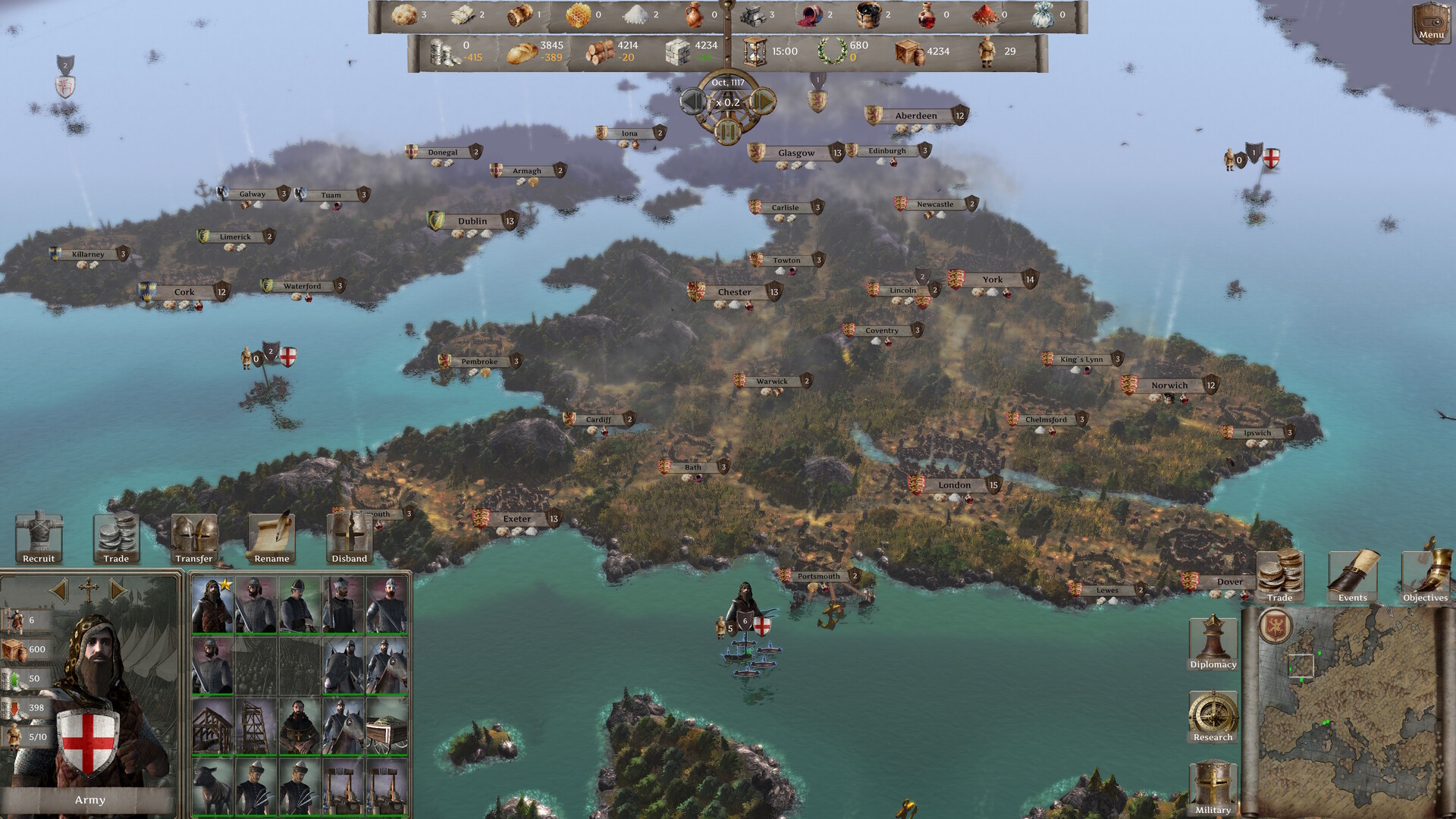
© indie.io. Official media via Steam.
The pitch
OverviewMost medieval strategy games hand you an empire and ask you to paint the map. City States: Medieval starts from the opposite premise. You are not the empire. You are the small, precarious thing surviving between empires, a single city-state in high medieval Europe trying to grow, trade, and hold its ground while larger powers loom on every border.
That framing is the reason to pay attention. Developed by Reverie World Studios, a small team with a long and famously bumpy history in fantasy strategy, and published by indie.io, this is a game that threads three different genres through one loop. It is a city-builder, a trade-management sim, and a real-time siege defense, and its ambition is to make those three things feed each other rather than sit in separate menus.
The pitch, in practice, is a chain of consequences. You raise a city through economy, faith, and building chains. That city needs trade to survive, so you push routes out across a known world of Europe, North Africa, and the Middle East. And because those routes are wealth, rivals come for them, which is where the tower-defense-flavored combat arrives. Cut any link and the others wobble. It is a genuinely tidy design idea for a game at this scale.
This review lands as the game reaches its 1.0 release after a stretch in early access, and both facts matter. The reception is real but modest, a mostly positive verdict from a small pool of players who tend to describe it as a relaxing, surprisingly satisfying builder rather than a genre landmark. Treat this as an honest look at an ambitious small-studio strategy game that reaches further than its budget, and mostly holds the throw.
How it plays
PlayThe heart of the game is the builder, and it is the part players warm to fastest. You grow a city-state through interlocking systems: economy, military, faith, trade, and the building chains that connect them. The pleasure here is the classic one of watching a settlement thicken from a few structures into a working medieval town, with each new building unlocking the next link in a production chain. Reviews consistently land on the same word for this layer, relaxing, and that is a real achievement for a game that also wants to be about warfare.
Trade is the connective system, and the design leans on it hard. Your city-state is not meant to be self-sufficient; it is meant to be plugged into a wider world, running goods along routes that stretch across three regions. This is where the game earns its title, because a city-state historically lived and died on commerce, and here the fiction and the mechanics agree. Lose your trade and, as the game is happy to demonstrate, your city-state is sunk. It gives the building a purpose beyond aesthetics: you are not decorating, you are keeping a lifeline open.
Combat is where the three genres collide, and it is the most divisive third. Sieges blend real-time strategy with tower-defense structure, and players describe them as heavy, chaotic, and satisfying when they land. Crucially, the game resists the cheese that sinks a lot of RTS builders: you cannot simply mass one overpowered unit and autowin, which forces you to actually engage with defense rather than brute-force it. When a rival comes for your trade routes and you have to hold, the stakes the economy has been quietly building suddenly become concrete.
What holds the whole thing back is polish, and it would be dishonest to skip past it. This is a small studio building something well above its weight class, and the seams show. The developers have been actively patching, and the nature of those patches is telling: reducing citizen counts to claw back performance, fixing crashes that struck during combat, and addressing graphics issues serious enough to include hardware overheating. That is the profile of a technically ambitious game that shipped a little ahead of its stability, and while a mostly positive verdict says the fixes are landing, it also signals that your mileage will depend on your patience for rough edges.
The honest read is that the systems design outruns the technical execution. The loop of build, trade, and defend is smart and the individual layers are enjoyable, but this is not the frictionless, deeply balanced strategy machine that a bigger studio might have shipped. It is a promising, playable, occasionally janky realization of a very good idea.
Art & atmosphere
CraftAs a presentation, City States: Medieval reaches for a grounded, lived-in medieval look rather than a stylized fantasy one, and players single out a few specific strengths. The castle and city designs draw genuine praise, which matters in a builder, since the reward for all that economic layering is watching a believable medieval settlement take shape on the map. When the thing you are constructing looks the part, the loop of growth feels more rewarding.
The voice acting also gets called out as a highlight, which is not a given at this budget. Strong readings do a lot of quiet work in a strategy game, framing events and giving a world of spreadsheets and supply lines a human texture. It is the kind of production value that a small team does not have to invest in, so its presence signals real care about atmosphere over raw scope.
That said, the craft is uneven in exactly the way the technical troubles imply. A game that had to trim its citizen counts for performance and patch out overheating is one whose visual ambition is bumping against its optimization, and the atmosphere is strongest when the game is running smoothly enough to let you sink into it. The aesthetic reference point players keep reaching for is old-school Age of Empires, and that is a fair frame: this is craft in the honest, functional, slightly rough tradition of a classic builder, not the polished spectacle of a modern blockbuster. Judged as an object, it is characterful and clearly made with affection, and also visibly straining at the edges of what its budget can render cleanly.
A clever, genuinely satisfying build-trade-defend loop from an ambitious small studio, dragged down from something higher by technical rough edges and balance that trail its design.
Pros & cons
The ledgerIn its favour
- A smart core loop where city-building, global trade, and siege defense genuinely feed each other
- The builder layer is relaxing and satisfying, with production chains that pull you forward
- Trade is meaningfully load-bearing, giving your city a purpose beyond decoration
- Sieges resist one-unit cheese, forcing real defensive engagement
- Castle and city designs plus solid voice work show real care at a small budget
Against it
- Technical rough edges, including patched crashes, overheating, and performance-driven citizen limits
- Polish and balance trail well behind the ambition of the systems
- A small review pool means the mostly positive verdict rests on limited data
- The three-genre blend can feel like it is stretching a modest budget thin
- Presentation leans old-school and functional rather than modern and refined
Screens
Official media© indie.io. Official media via Steam.
The player verdict
Real reviews · Steam- Not recommended
“I bought this game to warn other users. This developer publishes the same game every year to scam people. They've never fixed the game, the barely put in effort to make it run year over year. Check out their published games and feast your…”
208 found helpfulvia Steam - Not recommended
“Looks decent. If only it wouldn't crash every time I'm slightly in the tutorial. I'd save your money as it does it every time for me.”
22 found helpfulvia Steam
Verdict
The callCity States: Medieval is the kind of game that is easy to root for and impossible to oversell. Its central idea, that a city-state is defined by the trade it must protect, ties city-building, commerce, and defense into a single dependent loop, and that idea is genuinely clever. When the town is growing, the routes are flowing, and a siege forces you to defend everything you have built, the fusion clicks and you understand what Reverie World was reaching for.
The reach exceeds the grasp in the usual small-studio ways. This is a technically ambitious game that arrived at 1.0 still smoothing out crashes, performance, and balance, and the mostly positive reception is best read literally: more people are glad they played it than not, from a small pool, with clear caveats. It is not a landmark strategy game and it does not pretend to be.
Who should buy it comes down to temperament. If you like old-school builders, if you find a relaxing economy loop with real stakes more appealing than cutting-edge polish, and if you can forgive some jank in exchange for a fresh structural idea, this is an easy recommendation and a fair price for the hours it holds. If you need your strategy games tightly balanced and technically spotless, give it a few more patches. Either way, it is a small game swinging at a big idea, and it connects more often than it misses.
Sources
Original review by Aymen Sakouhi from the licensed facts above. Score: 7.0/10.