MECCHA CHAMELEON Review: A Two-Person Hide-and-Seek Sensation With Rough Edges to Match
MECCHA CHAMELEON review: a brilliant paint-and-hide multiplayer idea and a genuine viral hit, wrapped in a rough, friend-dependent package.
Aymen Sakouhi·Writer · Games Hobbyist//5 min read
© lemorion_1224. Official media via Steam.
The pitch
OverviewEvery so often a game arrives from nowhere, made by almost nobody, and briefly takes over Steam through sheer word of mouth. MECCHA CHAMELEON is that game for the summer of 2026. Built by a tiny Japanese team credited as lemorion_1224, it turned a single silly premise, chameleons that paint themselves to disappear, into one of the most talked-about multiplayer parties of the year, reportedly moving well over fifteen million copies and peaking in the hundreds of thousands of concurrent players within weeks of release.
The pitch is instantly legible, which is half the reason it spread so fast. It is hide-and-seek, but the hiders are chameleons who can literally paint their plain white bodies to match the wall, the floor, or the pile of props they are pressed against, then freeze into a convincing pose and pray the seeker walks past. It costs almost nothing, it plays in a browser-tab-sized attention span, and it produces the kind of clips that sell themselves.
What is genuinely impressive is how much creative depth hides inside that simple loop. Blending is not a toggle, it is a skill: you are matching color, reading sightlines, choosing a silhouette that sells the lie, and committing to stillness while a hunter's footsteps close in. When it clicks with the right group, it produces the specific, giddy tension that only the best social games manage, and it is easy to see why the community fell for it.
It is also, unmistakably, the work of two people under enormous sudden demand. The core idea is a small stroke of genius. The package around it is rough, patchy, and at times actively frustrating, and any honest look at MECCHA CHAMELEON has to hold both of those truths at once.
How it plays
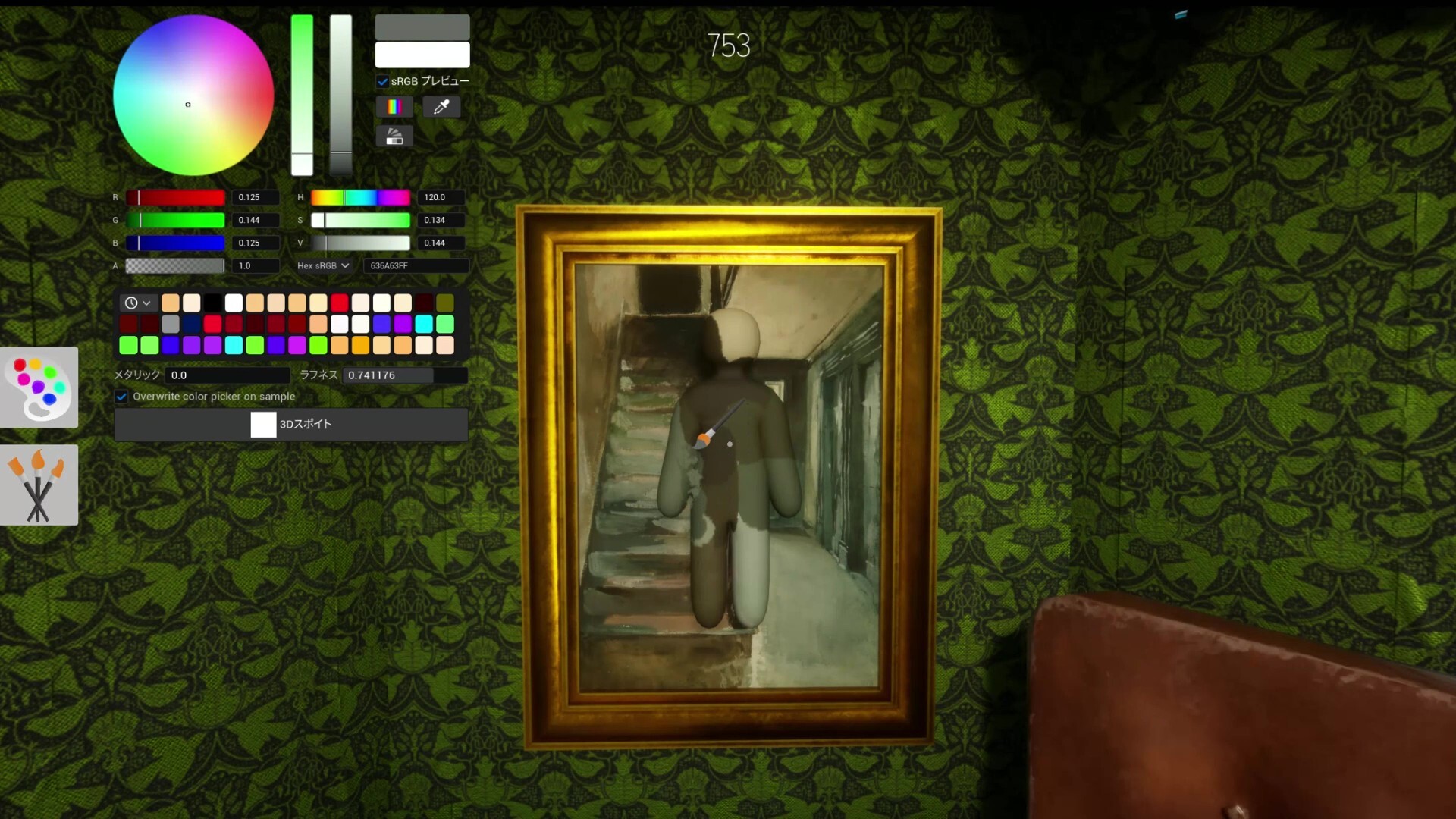
PlayThe round structure is classic asymmetric hide-and-seek with one clever wrinkle. A group splits into chameleons and seekers, the chameleons scatter across a stage full of surfaces and clutter, and a timer starts. Seekers have to find every chameleon before it runs out; chameleons just have to survive it. The twist is the painting: your chameleon starts as a conspicuous white figure and you actively daub color onto your own body to match whatever you are hiding against, then hold a pose that reads as scenery rather than a crouching player. Spot the right hiding place, paint the right pattern, strike the right pose, and a good chameleon becomes genuinely invisible in plain sight.
That active-camouflage layer is what separates the game from the prop-hunt lineage it clearly grew out of. In most hide-the-object games your disguise is picked from a list; here you are effectively airbrushing yourself, and the skill ceiling comes from how well you blend edges, break up your outline, and sell the stillness. Reading the stage becomes its own craft, learning which corners have believable cover, which props your silhouette can melt into, and when a bolder, hide-in-the-open bluff will fool a rushing seeker better than a timid corner ever could.
The game supports large lobbies, up to fourteen players in a standard match and more in its bigger configurations, across four distinct modes that vary the hunter-to-hider balance and the win conditions. That scale is where the chaos lives. A packed lobby of painted chameleons scattered across a cluttered room, with seekers frantically poking at every suspicious lump, is the game at its funniest, and the spectating and streaming features are clearly built with that shareable energy in mind.
Steam Workshop is the other pillar, and honestly the load-bearing one. The base game ships with only a handful of maps, around five, and their novelty fades faster than a game this reliant on surprise can afford. The Workshop is what turns MECCHA CHAMELEON from a fun weekend into the 'forever game' its fans describe, feeding it a constant supply of community stages that keep the hiding spots fresh. The flip side is uncomfortable: strip the Workshop away and you are left with a thin content package that leans hard on players to supply what the developers had no time to.
The seeker experience is where the rough edges bite hardest. Hunting can be great, the slow creep of scanning a room and the payoff of spotting a badly blended toe, but it is also the seat most exposed to the game's bugs. Reviewers repeatedly flagged glitches and confusing visual oddities on the seeker side, moments where a chameleon reads wrong, where the hit feedback is murky, or where you are left unsure whether you actually failed or the game did. In a competitive round that ambiguity stings.
And then there is the part that undercuts the whole premise: getting your friends into a game with you. For a title whose entire reason to exist is goofing off with people you know, MECCHA CHAMELEON makes grouping up far harder than it should be. Steam invitations do not reliably arrive, the join-friend path fails silently more often than it should, and the menus and matchmaking around all of it feel unfinished. When it works, it is a delight; the trouble is how much friction sits between you and 'it works.'
Art & atmosphere
CraftThere is no getting around it: MECCHA CHAMELEON looks like exactly what it is, an early viral indie built at speed. The visuals are plain, the interface is basic, and the presentation has the unmistakable homemade quality of a project that blew up before its makers could polish it. If you come expecting a slick, produced party game in the mold of the genre's big names, the first impression is underwhelming.
But the art has one thing that matters more than fidelity, and that is legibility in service of the mechanic. The whole game hinges on you being able to read surfaces, judge color matches, and evaluate whether a shape belongs, so the deliberately clean, uncluttered look is doing real work. The plain white default body is a canvas by design, and the simplicity of the stages is what makes the act of painting yourself into them satisfying rather than muddled. It is not beautiful, but it is functional in a way that the game genuinely needs.
The tone is the real draw. This is a goofy, good-natured game about deception and panic, and the comedy comes almost entirely from player behavior rather than authored content: the chameleon holding impossibly still while a seeker leans in, the last-second dash for a new hiding spot, the collective groan when someone's paint job gives them away. The presentation is thin, but the game is smart enough to know that its funniest moments are the ones its players create, and it mostly just gets out of the way and lets them happen.
A genuinely brilliant, inventive multiplayer concept and a deserved viral hit, dragged down from greatness by buggy seeker rounds, thin base content, and connection problems that undermine its own social pitch.
Pros & cons
The ledgerIn its favour
- A genuinely inventive twist on hide-and-seek: you paint your own body to blend into the stage
- High skill ceiling in blending color, breaking your silhouette, and selling a frozen pose
- Large lobbies and four modes make for chaotic, highly shareable multiplayer
- Steam Workshop support gives it near-endless community maps and real longevity
- Cheap and instantly understandable, an easy, low-risk buy to gift a group of friends
- At its best it hits the giddy social tension only the top party games reach
Against it
- Grouping up with friends is unreliable: Steam invites and join-friend often fail silently
- The seeker role is buggy, with glitches and confusing visual feedback in rounds
- Only around five base maps; without the Workshop the content runs thin fast
- Almost no single-player, so a poor connection or empty friends list leaves little to do
- Rough, unfinished presentation: plain visuals, thin onboarding, and messy menus and servers
Screens
Official media© lemorion_1224. Official media via Steam.
The player verdict
Real reviews · Steam- Not recommended
“It really pains me to say this because I adore this game and its concept. However, I cannot in good conscience recommend the game in its current state. If you're going to be playing with a private group of friends, then by all means, this…”
1,108 found helpfulvia Steam - Recommended
“What a fun game, devs have been relentless with the updates as well, have already improved so much. There isnt a more worthy game at this price range atm at all! 100% recommend”
744 found helpfulvia Steam - Recommended
“very fun game no wonder why its so popular. i just wish their were a better way to play public lobbies with friends”
311 found helpfulvia Steam
Verdict
The callMECCHA CHAMELEON is one of the purest 'great idea, unfinished game' stories in recent memory. The central conceit, hide-and-seek where you literally paint yourself into the scenery, is a small stroke of genius, and when a match comes together with a good group it produces laughter and tension in equal measure. Its viral success is not a fluke; the core is that good.
The trouble is everything wrapped around that core. This is visibly the work of a two-person team overwhelmed by its own success, and it shows in the buggy seeker rounds, the thin base content, the barebones presentation, and above all the maddening friction of simply getting your friends into a lobby with you. Those are not cosmetic gripes; for a game that lives or dies on playing with people you know, the connection problems undercut the entire pitch.
Buy it for the concept, the price, and the community maps, and go in knowing the caveats. If you have a group ready to wrestle past the rough edges, MECCHA CHAMELEON can absolutely become the running joke your friends keep coming back to. If you want something polished and self-sufficient out of the box, this is not yet that game. It is a brilliant toy in a box that still needs finishing, and worth playing anyway with your eyes open.
Sources
Original review by Aymen Sakouhi from the licensed facts above. Score: 7.5/10.