Ledgerbound Turns Insurance Paperwork Into a Tactical RPG, and the Joke Somehow Holds for Hours
Verdict: 8.0/10. Ledgerbound is a sharp, funny tactical RPG where you deny heroes' insurance claims. Strong combat and writing, polarizing humor.
Aymen Sakouhi·Writer · Games Hobbyist//4 min read
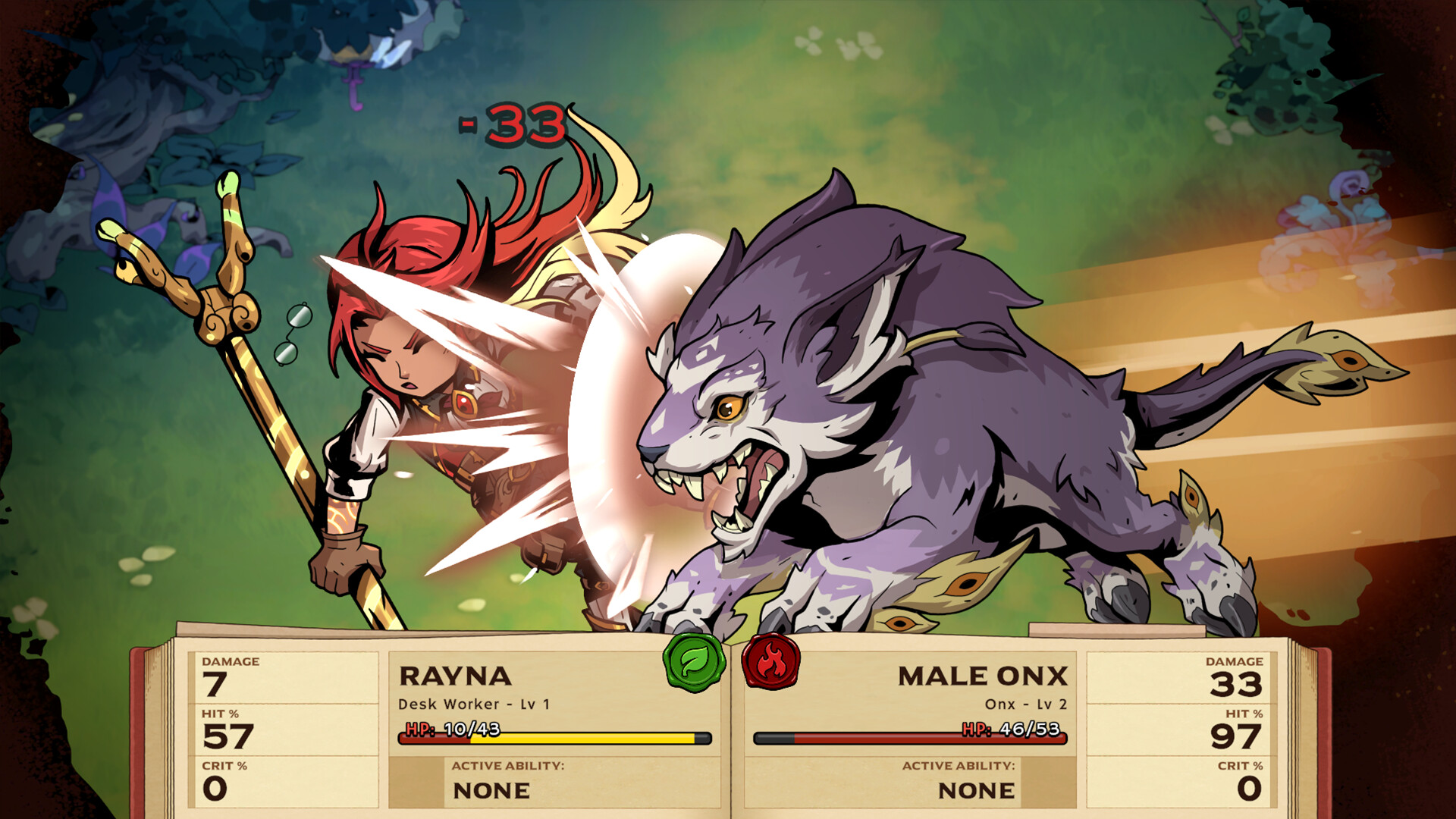
© OmniMegaSuperCorp. Official media via Steam.
The pitch
OverviewLedgerbound opens with a premise that sounds like a punchline and then refuses to let go of it: you are an insurance adjuster, and your job is to investigate why the realm's legendary heroes died so your company can deny their life-insurance claims. That corporate-fantasy collision, epic swords-and-sorcery run through the logic of an HR department, is the engine of the whole game, and the remarkable thing is how long it keeps running.
Developed and published by OmniMegaSuperCorp, Ledgerbound launched on August 13, 2026, and quickly settled at Very Positive on Steam, around ninety-two percent across more than five hundred reviews. The pedigree is not incidental: the game's director and lead writer previously worked as a lead writer and production director on Helldivers 2, and that comic-satirical instinct, the workplace turned into a battlefield, is all over this project.
Underneath the office comedy is a genuine turn-based tactics game, not a visual novel with token fights. You play as Rayna, a workaholic adjuster who accidentally comes into ancient magic and ends up leading an eccentric party across grid battlefields while filing paperwork on the side. It is a strange machine, part Fire Emblem, part dating sim, part corporate satire, and it works far better than a description can make it sound.
Whether it works for you specifically will come down to one thing: your tolerance for its humor. Ledgerbound is loud, raunchy, and profane, and it commits to the bit completely. If that lands, this is one of the funniest and most surprising tactical RPGs of the year. If it does not, the jokes will wear where the mechanics never do.
How it plays
PlayThe combat is honest, well-built grid tactics. You move characters across a battlefield of elemental tiles, and both your units and the terrain carry affinities that strengthen or weaken attacks, so positioning is a real decision rather than a formality. Different job classes bring different ranges and skill sets, and the missions rarely settle for kill-everything objectives: you are asked to reach a location, hold a condition, or keep specific allies alive, which forces you to actually engage with the map instead of grinding through it.
The paperwork is not a metaphor, it is a mechanic. When a party member falls in battle, you have to complete their injury HR form back at camp before the story moves on, a small, deadpan piece of friction that ties the bureaucratic joke directly to the consequences of your play. It is the kind of idea that could have been a one-line gag, and instead it is threaded through the loop, so the satire and the systems reinforce each other rather than sitting in separate boxes.
Between battles, camp is where the RPG becomes a relationship game. Talking to your party consumes time and raises Rayna's burnout meter, so you are budgeting attention the way an overworked adjuster actually would, choosing who to invest in and what to let slide. The relationships themselves are more nuanced than the raunchy exterior suggests, spanning romance, platonic bonds, and a slow-burn enemies-to-lovers arc between Rayna and a party member named Cazian that the writing genuinely earns.
The party carries a lot of the charm. Your crew includes a dragon HR representative, a feline prince, an anxious fire mage, and other oddities, and they are voiced with real commitment, the voice acting is a highlight, with the narrator in particular drawing praise. Diego Chi's score sits comfortably under the tone, and the whole production feels more confident and polished than a debut of this scale usually manages.
The friction is real, though. Autosaving means some choices, and some optional story scenes, are locked in the moment you make them, so a wrong turn or a missed conversation can be permanent in a way that will frustrate completionists. The difficulty of optional objectives can also swing unevenly, with some side goals noticeably harder or softer than the main path around them. These are rough edges rather than deep flaws, but they are the kind you feel across a full playthrough.
Art & atmosphere
CraftLedgerbound looks exactly as bright and busy as its premise demands. The art is colorful and expressive, the character designs lean hard into their one-joke concepts and then find room to grow past them, and the whole presentation carries the confident, slightly chaotic energy of a workplace comedy that knows its own rhythm. It is not a technical showcase, but it has a strong, consistent identity, which matters more.
Where the craft really shows is in performance. The voice acting elevates material that could easily have curdled into try-hard edginess, selling both the absurd corporate gags and the quieter relationship beats with the same conviction. A joke about denying a hero's claim only works if the delivery commits, and this cast commits, which is a large part of why the humor sustains across a long game rather than burning out in the first act.
Diego Chi's soundtrack does the connective work, shifting between the mock-epic and the mundane to keep the two halves of the game, high fantasy and office drudgery, feeling like one coherent world. It is the audio equivalent of the game's central joke: treating the heroic and the bureaucratic with exactly the same straight face, and letting the gap between them do the comedy.
A sharp, well-built tactical RPG whose corporate-fantasy premise is threaded all the way through its systems, held back only by polarizing humor, autosave permanence, and some uneven optional content.
Pros & cons
The ledgerIn its favour
- A genuinely original premise, epic fantasy run through corporate insurance logic, that sustains for hours
- Solid grid tactics with elemental terrain, varied classes, and objective-driven maps
- The injury-paperwork mechanic ties the central joke directly into the gameplay loop
- Nuanced relationship writing, including a well-earned slow-burn romance
- Phenomenal voice acting, with a standout narrator, and a fitting Diego Chi score
- A confident, polished package with a strong, consistent comic identity
Against it
- The raunchy, profane humor is polarizing and central; if it misses, so does a lot of the game
- Autosaving makes some choices and optional scenes permanent, frustrating completionists
- Optional-objective difficulty can swing unevenly against the main path
- The tactics, while solid, are more sturdy than genre-redefining
- The one-joke character concepts will not land for everyone
Screens
Official media© OmniMegaSuperCorp. Official media via Steam.
The player verdict
Real reviews · Steam- Not recommended
“UPDATE: They have added a toggle to the game that turns off the time management (I would somewhat prefer more levers to fine tune the time management, such as turning off the costs for failure and changing equipment while retaining the…”
263 found helpfulvia Steam - Not recommended
“In my opinion, a game has to earn an auto-save feature by either making failure as interesting as success or by making reruns fun. Is failure interesting in this game? No. You miss out on stories and you get punished with stat debuffs…”
76 found helpfulvia Steam - Not recommended
“If you're just here for the visual novel/romance elements then my review is not relevant to you and you should definitely buy the game <3 I want to love this game so badly. It conceptually is exactly what I want from games. Charming…”
75 found helpfulvia Steam - Recommended
“I'm not sure I'd recommend Ledgerbound to everyone, but I think my experience is going to be more positive than negative. I'm going to lay out the rest of my thoughts as "Pros" and "Cons", but I think it's all very subjective, and clearly…”
62 found helpfulvia Steam
Verdict
The callLedgerbound had every chance to be a premise in search of a game, a funny Steam-page hook with nothing underneath. Instead it is a real tactical RPG with a real relationship layer, wrapped around one of the most committed comic conceits in the genre. The insurance-adjuster framing is not a coat of paint; it shapes the missions, the camp scenes, and even the death penalty, and that follow-through is what makes the joke last.
The caveats are mostly about taste and polish. The humor is loud and crude by design, so this is emphatically not a tactics game for everyone, and the autosave-driven permanence plus some uneven optional content will nag at players who like to see everything. None of that undercuts the strong combat, the sharp writing, or the excellent performances holding it together.
At 8.0, Ledgerbound is a confident, genuinely funny debut that earns its Very Positive standing. If a Fire Emblem-style tactics game about denying heroes their death benefits sounds like your kind of absurd, and you can roll with humor that does not hold back, this is an easy recommendation and one of the more memorable RPGs of the year. Go in for the joke; stay for a surprisingly heartfelt game about burnout, paperwork, and the people you put up with at work.
Sources
Original review by Aymen Sakouhi from the licensed facts above. Score: 8.0/10.