Garden of Witches Is a Storybook Roguelike With a Cozy Face and a Dark Heart
Verdict: 7.8/10. A gorgeous hand-drawn action roguelike with a charming dark fairy tale, a satisfying loop, and knockout art and music. Just a little short.
Aymen Sakouhi·Writer · Games Hobbyist//6 min read
© Team Tapas. Official media via Steam.
The pitch
OverviewThere is a specific pleasure in a game that looks like a picture book and plays like a knife fight, and Garden of Witches understands it completely. This is an action roguelike from Team Tapas, a South Korean indie studio, and it dresses a genuinely sharp combat loop in some of the loveliest hand-drawn art the genre has produced this year. It left early access and hit its 1.0 release on August 28, 2026, on PC, at a budget price, and it is exactly the kind of small, confident, rankable indie that rewards a look past the cute exterior.
You play as Sil, the Thread Witch, and the setup is a dark fairy tale wearing a warm coat. Sil is racing against time to round up her unruly fellow witches for the annual Tea Party, a ritual the Garden needs to survive, and the witches are not exactly cooperating. It is a premise that gives the game its structure and its personality at once: a cozy-sounding errand that keeps sending you into grotesque, dangerous places to persuade increasingly monstrous magic-users to come home. The tone sits somewhere between a children's storybook and something with teeth, and it holds that balance with real charm across five chapters and a three-part epilogue.
The combat is closer to Hades than to the survivors-likes the cute art might suggest. This is a top-down action roguelike built on melee and spells, room by room, not a bullet-heaven auto-shooter. Sil fights with a pair of giant scissors that reward consecutive strikes with guaranteed crits, dodges through danger with an invincibility dash, and carries two spells chosen at the start of each run and rerollable on the fly. You clear encounters, collect passive buffs and upgrades, and fight a boss at the end of each stage, chasing a build that clicks. The Hades comparison is earned, and so is the one to Cult of the Lamb for its feel and perspective.
What you get, across a compact runtime, is a stylish, satisfying roguelike with an unusually strong sense of identity. It is not a genre-redefining giant, and it does not try to be. It is a beautifully made, charming, mechanically solid take on the action-roguelike formula, and for its price it is very easy to recommend, with only a couple of honest caveats about length and combat feel keeping it from the top of the pile.
How it plays
PlayThe run structure is classic action roguelike, tuned for readability and momentum. You move through rooms clearing enemies, picking up passive buffs and skill upgrades along the way, and cap each stage with a boss. The 1.0 release rebuilt the build system around four pillars, your Scissors, Spells, Imprints, and Relics, and layered in new mechanics like Charge, Combo, and Channeling, so assembling a run is a matter of stacking those pieces into something that snowballs. The dice-reroll on your starting spells adds a welcome dose of agency to the randomness, letting you steer toward a build rather than simply accept what you are dealt.
The scissors are the signature, and they set the rhythm. Landing consecutive hits builds toward guaranteed critical strikes, which encourages an aggressive, stay-in-the-fight cadence, and the invincibility dash is your pressure valve for weaving through boss patterns. Spells provide the range and the spectacle, from thrown cat dolls to fireballs to sweeping area slashes and counters, and the interplay between reliable melee and flashier magic is where the moment-to-moment satisfaction lives. When a build comes together, the loop has a real snap to it.
The bosses are the best idea in the game, because the bosses are the witches. Rather than playable characters or collectible allies, Sil's wayward sisters appear as distinct boss encounters, each with her own personality, transformations, and attack patterns, and rounding them up for the Tea Party is woven directly into the roguelike loop. It gives the fights narrative weight that most roguelikes cannot match, turning each stage's climax into a character beat as much as a mechanical test, and it is the clearest sign of a studio that thought about why you are fighting, not just how.
Meta-progression is handled through Sil's diary, where you spend the spoils of failed runs on permanent stat upgrades, mostly to attack power. It is the familiar roguelike safety net, letting persistent players gradually brute-force past a wall that pure skill has not yet cleared, and it keeps the difficulty welcoming rather than punishing. Combined with the 1.0 additions of default keyboard-and-mouse support and Japanese voice acting through the fifth chapter, it is a package that feels polished and considerate rather than raw.
The honest weaknesses are two. First, the melee can feel less satisfying than the magic, with some players finding the scissors the weaker half of the combat next to the flashier, more impactful spells, though the 1.0 overhaul reworked these systems and softened the earlier complaints. Second, and more simply, it is short: the story runs in the region of a handful of hours, and there is not a great deal to do outside the roguelike runs themselves, so players who want a sprawling content buffet or a lot of downtime interaction between fights will find it lean. What is here is very good. There is just not an enormous amount of it.
Art & atmosphere
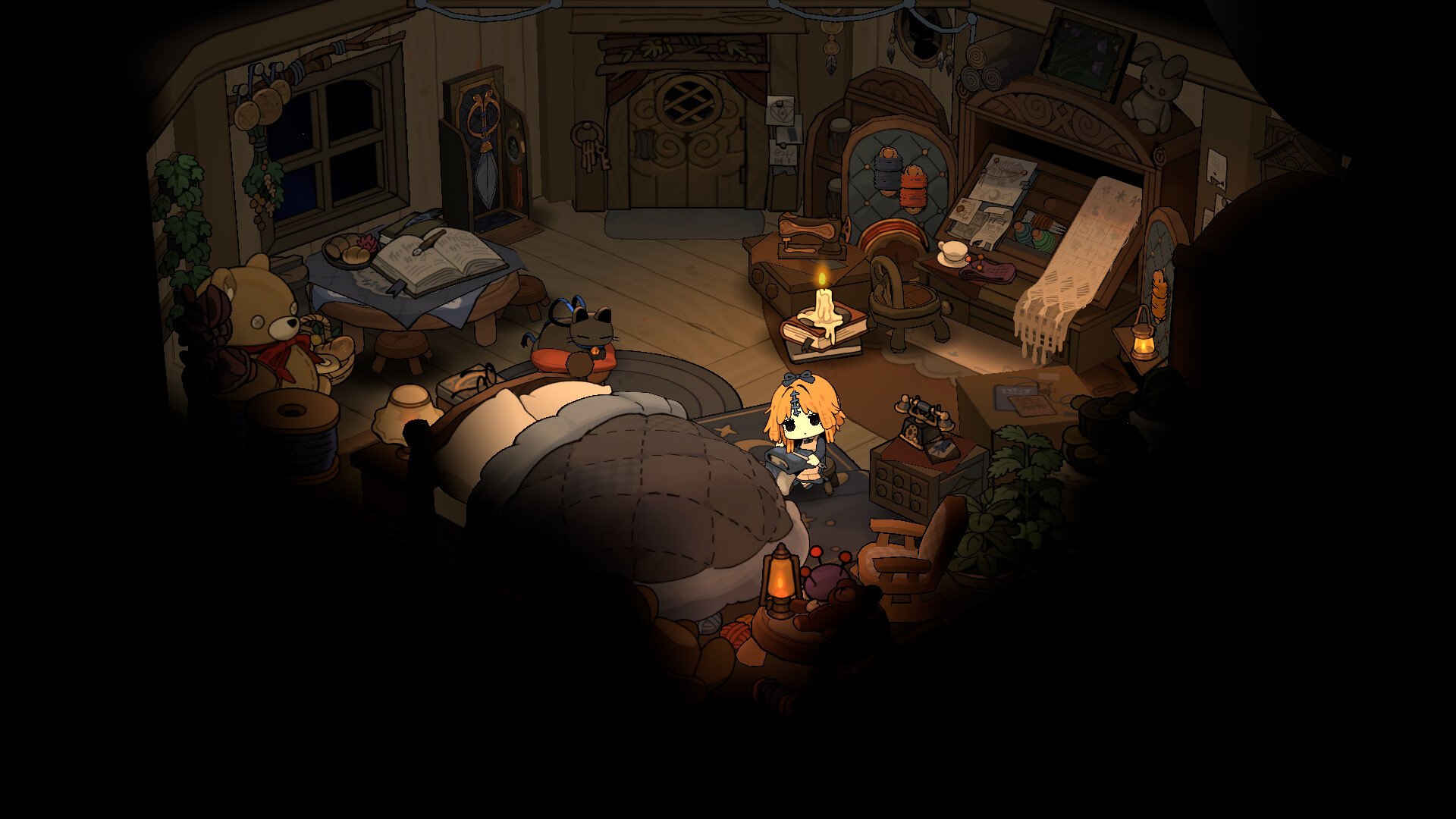
CraftThe presentation is the headline, and it deserves to be. Garden of Witches is hand-drawn in a storybook, illustrated style, all dreamlike backdrops and expressive character portraits, and it is consistently singled out as the game's high point for good reason. The dark-fairy-tale tone lets the art swing between genuinely cozy and quietly unsettling, often in the same room, and the witches themselves are the showcase, each redesigned into a memorable monstrous form for her boss fight. It is a small game that looks like a labor of love, and that care is visible in every frame.
The soundtrack matches it and then some. A cozy, jazz-leaning score sets the between-fights mood and then ramps up smartly when combat begins, and like the art it is one of the things players reach for first when they explain why they like the game. Together the audio and visual identity do a lot of the work of making a mechanically familiar roguelike feel like its own distinct place, and they are the strongest argument for the game beyond the loop itself.
As a piece of craft, Garden of Witches is the confident work of a studio that knew exactly what it wanted to feel like. Team Tapas built a roguelike that is legible and satisfying to play and wrapped it in presentation well above its weight class, and the priorities show: this is a game that spent its resources on charm, character, and mood, and it is richer for it. The result punches above a budget indie's expected reach on style alone.
A charming, beautifully hand-drawn action roguelike with a satisfying Hades-style loop and a clever twist of making its runaway witches into characterful bosses, polished by a considerate 1.0 release; held just short of the top tier by a short runtime, thin content outside the runs, and melee that still trails the spells.
Pros & cons
The ledgerIn its favour
- Gorgeous hand-drawn, storybook art that is a highlight from the first room
- A cozy, jazz-leaning soundtrack that ramps up beautifully in combat
- A satisfying Hades-style action loop with real build variety and agency
- The witches as characterful bosses give the runs genuine narrative weight
- A charming dark fairy tale, polished by a considerate 1.0 release
- A lot of style and personality for a budget price
Against it
- Short overall, with a story that runs only a handful of hours
- Limited to do outside the roguelike runs themselves
- The melee scissors can feel less satisfying than the flashier spells
- The dash cooldown can feel unforgiving against some later bosses
- It refines the action-roguelike formula rather than reinventing it
Screens
Official media© Team Tapas. Official media via Steam.
The player verdict
Real reviews · Steam- Recommended
“TLDR: Story: 8/10 Gameplay: 9/10 Acessibility: 8/10 Art: 10/10 Overall: 9/10 Story: The story is plain, though good, I hope that new things come in the official launch. Gameplay: Feels great to play, only strange thing is that the…”
10 found helpfulvia Steam - Recommended
“I've had a good time with this so far, 2.5hr logged love the art style, reminds me of Cult of the Lamb, but with fairy tale witches and no annoying (to me) base management, I don't like taking care of all the villagers in that game, so I…”
8 found helpfulvia Steam - Recommended
“Game is aesthetically pleasing and gameplay is fun. It gets surprisingly hard the deeper you go into the chapters.”
4 found helpfulvia Steam - Recommended
“I would like to start this review by stating something, This game is phenomenal with lots of charm and I would recommend this game for story alone. It is filled with soo many fleshed out characters as well as constant change ups in fights…”
3 found helpfulvia Steam
Verdict
The callGarden of Witches is a small game that gets the important things right. It pairs a satisfying, Hades-adjacent action-roguelike loop with presentation that belongs in a much pricier production, and it ties the whole thing together with one genuinely clever idea: making the runaway witches you are chasing into the bosses you fight, so every stage climax is a story beat as well as a skill check. The hand-drawn art and the jazzy soundtrack are the kind of craft that makes a familiar genre feel personal, and the 1.0 release arrives polished, considerate, and full of charm.
What holds it back is scope rather than quality. The campaign is short, there is not much to do between runs, and the melee, while improved, still plays second fiddle to the spells for some players. These are the limits of a lean budget roguelike, not failures of craft, and they are worth knowing going in so you can meet the game on its own modest terms.
At 7.8, Garden of Witches is a lovely, confident, easy-to-recommend roguelike for anyone who wants a stylish few evenings rather than a hundred-hour obsession. It is one of the more charming small games of the year, it costs very little, and it leaves you wanting slightly more of it, which is a far better problem for a game to have than the reverse. If the storybook art catches your eye, trust the instinct.
Sources
Original review by Aymen Sakouhi from the licensed facts above. Score: 7.8/10.