Fractured Worlds Bolts Dark Souls Invasions Onto Old-School Diablo, and the Idea Sings
Verdict: 7.5/10. A veteran-led dark fantasy ARPG that fuses classic Diablo loot with Souls-style invasions across shattered realms. Ambitious, rough.
Aymen Sakouhi·Writer · Games Hobbyist//5 min read
© Laser Guided Games, LLC. Official media via Steam.
The pitch
OverviewFractured Worlds wants to answer a question most action RPGs never ask: what if the strangers who wander into your game were not always friends? Developer Laser Guided Games, led by industry veteran Matt Oelfke of Gears of War and Unreal Tournament, has built a dark fantasy loot-grinder in the classic Diablo mold and then run a current of FromSoftware through it. Realities occasionally overlap, another player bleeds into your world, and what happens next is up to both of you. You can cooperate, share loot, or turn on them entirely. That single idea is what separates this from the crowded field it is entering.
The setup is old-school in the best sense. A reality has been shattered by the ambition of its inhabitants, and a mysterious voice guides you through the fragments that remain, hunting lost memories and the figures responsible for the cataclysm. Those fragments are the game's variety engine: procedurally arranged medieval dungeons, enchanted forests, volcanic wastelands, and grinding industrial cities, all threaded back to a cosmic core. It is a deliberately eclectic canvas, and it gives the loot chase somewhere genuinely different to go every few hours.
Released in version 1.0 on August 26, 2026 across PlayStation 5, Steam, the Epic Games Store, and Nintendo Switch, after most of a year in early access on Epic, Fractured Worlds arrives as a finished, cross-platform product rather than a promise. It is an indie swinging at a genre defined by giants, and it does not have their budget or their polish. What it has instead is a real point of view, and in a space thick with competent Diablo clones, a point of view counts for a great deal.
How it plays
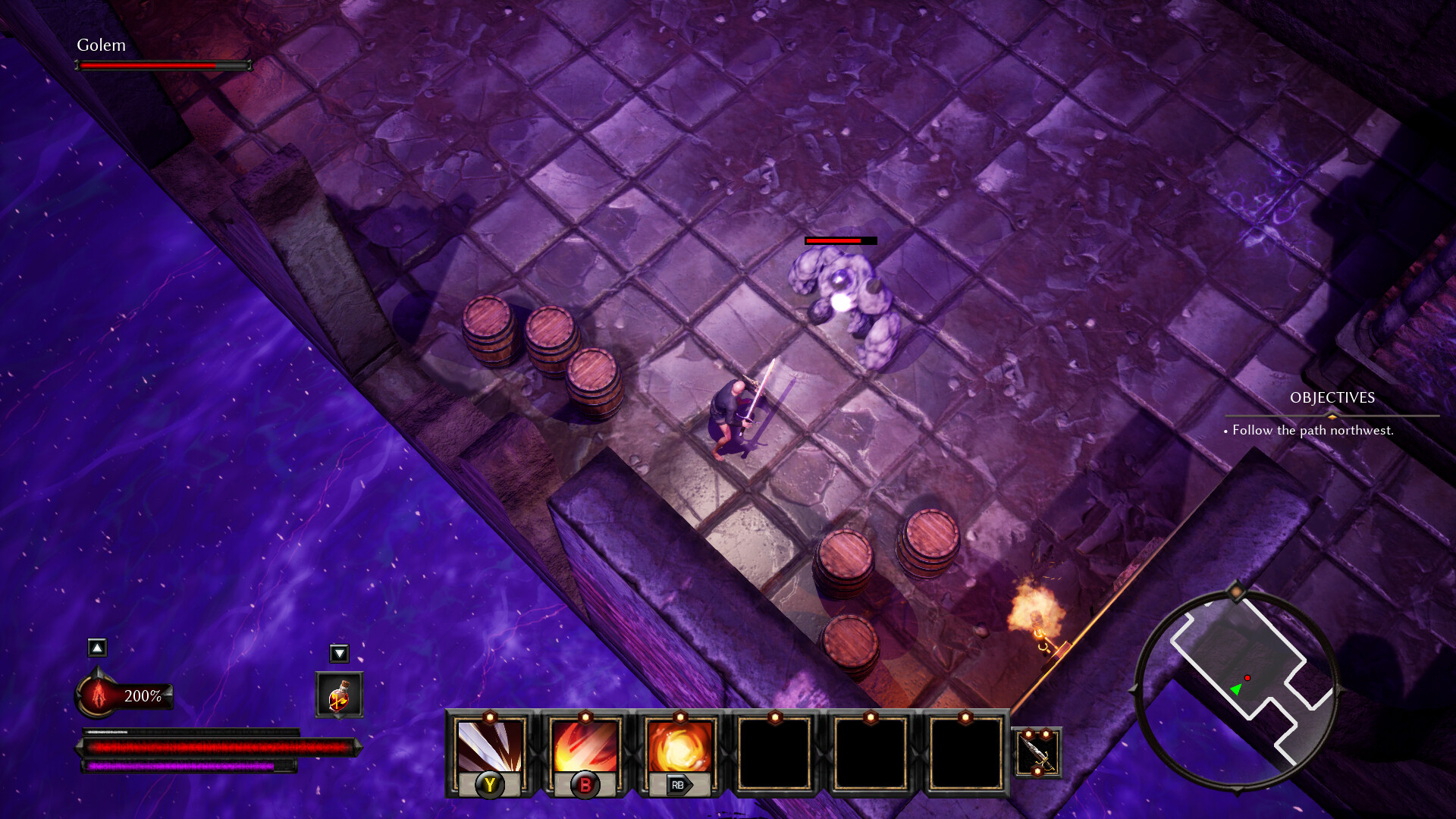
PlayCombat is the foundation, and it is built to feel weighty rather than frantic. Every weapon archetype carries its own rhythm, from the slow, committed arc of a two-handed mace to the reach and poke of a spear to the ranged crackle of an Aether-infused wand, and the game asks you to learn each one's timing rather than mashing through. It is closer to the deliberate, readable combat of a soulslike than the click-storm of a pure Diablo descendant, which suits the emphasis on player-versus-player encounters where positioning and patience actually matter.
Progression is classless, and it is the system the game is most confident in. Rather than locking you into an archetype at the start, it lets you build across weapon types and respec freely, so a Legendary drop can genuinely redirect your character instead of being wasted on the wrong class. That flexibility encourages experimentation, and it dovetails with the loot chase: you find something powerful, you reshape yourself around it, and the classless frame means nothing about that reshaping feels punishing. For a genre that often makes you commit early and regret it later, this is a smart, player-friendly spine.
The invasion system is the headline and the gamble. Borrowing the logic of Souls-style invasions, it lets other players' worlds drift into yours across all platforms, turning the usual solitary grind into something unpredictable. You are free to assist a stranger through a hard fragment, ally with them for loot, or invade and deceive, even setting traps for the unwary. When it works, it produces the kind of emergent story no scripted encounter can, a tense standoff with a real person in a genre that usually reduces other players to lobby names. It is the clearest reason to pick this over its competitors.
It is also where the risk lives. Systems built on emergent player interaction live or die on their population and their balance, and an indie ARPG cannot guarantee either the way a giant can. Whether invasions feel like a thrilling wildcard or an occasional annoyance will depend heavily on how many people are in the worlds beside you and how carefully the give-and-take of assist, invade, and betray is tuned over time. It is a genuinely novel idea, and novel ideas in multiplayer are the hardest kind to get consistently right.
The procedural fragments are the other double edge. The variety of biomes, from dungeon to forest to volcanic waste to industrial sprawl, keeps the moment-to-moment scenery fresher than most loot games manage, and it gives the memory-hunting structure a reason to keep pushing forward. But procedural generation is a trade, and it tends to buy variety at the cost of the handcrafted memorability that the very best in the genre trade on. Expect a canvas that stays visually interesting long after a fixed map would have gone stale, with the understanding that few individual rooms will lodge in your memory the way an authored dungeon might.
Art & atmosphere
CraftFractured Worlds leans hard into old-school dark fantasy, and the shattered-reality premise gives its art direction license to roam. Because the world is a collage of broken fragments, the game can put a medieval dungeon next to an enchanted forest next to a volcanic wasteland next to a steampunk-tinged industrial city without any of it feeling incoherent, since incoherence is the literal fiction. It is a clever way for an indie to get aesthetic range out of a limited budget, and the cosmic core that ties the fragments together lends the whole thing a faintly mythic frame.
The tone is grim and deliberate rather than flashy, in keeping with the weighty, readable combat. This is a game that wants you to feel the heft of a mace connecting and the tension of a stranger appearing at the edge of a ruined hall, and the presentation is tuned for atmosphere over spectacle. It will not out-dazzle the AAA loot machines on raw fidelity, and it does not try to. It reaches instead for mood, for the specific loneliness of picking through a dead reality guided only by a voice you are not sure you trust.
As a production it is unmistakably the work of a smaller team, and its craft is best measured against that scale rather than against the genre's biggest names. The pedigree behind it shows in the confidence of the combat feel and the coherence of the whole, even where the budget shows in the edges. It is an aesthetic object with a clear identity, which is more than many of its better-funded rivals can claim.
A veteran-led dark fantasy ARPG with a genuinely novel Souls-invasion hook and a smart classless build system, held back by the population and balance risks of emergent multiplayer, procedural level design, and indie-scale polish.
Pros & cons
The ledgerIn its favour
- Souls-style cross-platform invasions bring real, emergent player tension to an ARPG
- Classless progression with free respecs makes every Legendary drop meaningful
- Weighty, readable combat where each weapon archetype has a distinct rhythm
- Shattered-reality premise justifies a genuinely varied set of biomes
- A finished 1.0 with a clear point of view, led by a veteran designer
Against it
- The invasion system's payoff depends on population and long-term balance an indie cannot guarantee
- Procedural fragments buy variety at the cost of handcrafted, memorable level design
- Presentation and polish trail the AAA loot games it competes against
- Emergent multiplayer can swing from thrilling to annoying depending on who drops in
- Newcomers wanting a solved, frictionless grind may find it rough at the edges
Screens
Official media© Laser Guided Games, LLC. Official media via Steam.
Verdict
The callFractured Worlds is the rare loot game with an idea worth arguing about. By fusing classic Diablo-style progression with Souls-style invasions, it turns the usually solitary grind into something social and unpredictable, and the classless build system underneath it is one of the more player-friendly spines the genre has produced. Led by a designer with real pedigree, it enters a field of giants with something none of them quite offer, and that alone makes it worth a look for anyone tired of clicking through the same competent clone.
The caveats are the caveats of ambition on an indie budget. The invasion system that makes it special is also the part most exposed to population and balance problems, procedural generation trades memorability for variety, and the presentation cannot match the money behind its rivals. This is a game to buy for its ideas and its feel, with clear eyes about the rough edges that come with a smaller team reaching this far.
At 7.5, Fractured Worlds is a confident, distinctive ARPG that earns its place through a genuinely novel hook rather than raw polish. If the invasion fantasy of a stranger who might be friend or foe excites you, this is the game built around exactly that, and it is the reason to give this one your time over a safer, glossier alternative.
Sources
Original review by Aymen Sakouhi from the licensed facts above. Score: 7.5/10.