Dragon Quest VII Reimagined Rescues a Sprawling JRPG Classic From Its Own Pacing
Our Dragon Quest VII Reimagined review: Square Enix rebuilds one of the longest, slowest JRPG classics into a more inviting, still-enormous adventure.
Aymen Sakouhi·Writer · Games Hobbyist//3 min read
© Square Enix. Official media via Steam.
The pitch
OverviewDragon Quest VII has always been a game more admired than actually finished. The 2000 original was one of the longest, densest JRPGs ever made, and it famously buried its brilliance behind hours of talking before you drew a single sword. Dragon Quest VII Reimagined is Square Enix's attempt to fix that, rebuilding the classic with modern visuals, streamlined pacing, and enough quality-of-life care to finally make its enormous adventure inviting, and Steam players have responded warmly.
The premise remains one of the series' most quietly special. You live on the only island in a world that is otherwise empty sea, and you slowly discover that other lands once existed, sealed away in the past. By assembling fragments of ancient stone tablets, you travel back in time to lift the curses that erased them, restoring the world one region at a time and watching your present fill in as you go. It is a structure built out of dozens of self-contained stories, and the cumulative sense of bringing a dead world back to life is genuinely moving.
What matters most about the Reimagined version is how much friendlier it is on the way in. The original's notoriously glacial opening has been reworked, the presentation is transformed, and the whole thing is far more welcoming without losing the scale and heart that made the game a cult classic in the first place.
How it plays
PlayAt its core this is classic, turn-based Dragon Quest, and that traditionalism is a feature, not a bug. Battles are menu-driven, readable, and steadily satisfying, and the series' famous approachability means anyone can pick it up. The depth comes from the vocation system, which lets your characters learn and combine an enormous range of classes, from basic warriors and mages up to elaborate advanced and monster vocations, building custom party members with wildly varied abilities over the long haul.
The island-restoration loop gives the whole game its distinctive rhythm. You find tablet fragments, travel to a cursed land in the past, resolve its self-contained story, and return to see that region restored in the present, often with new towns, people, and opportunities. It turns an epic into a series of shorter, satisfying arcs, and the constant sense of tangible progress, of a world visibly healing, is the adventure's real hook.
The Reimagined edition's improvements are felt most in pacing and comfort. The interminable original opening is tightened, movement and menus are modernized, and the friction that turned so many players away decades ago is largely gone. It is still, however, a very long and very traditional JRPG. Players hoping for a radical mechanical overhaul or a faster, flashier combat system should know this is a faithful modernization, not a reinvention, and its sheer length remains a serious commitment.
Art & atmosphere
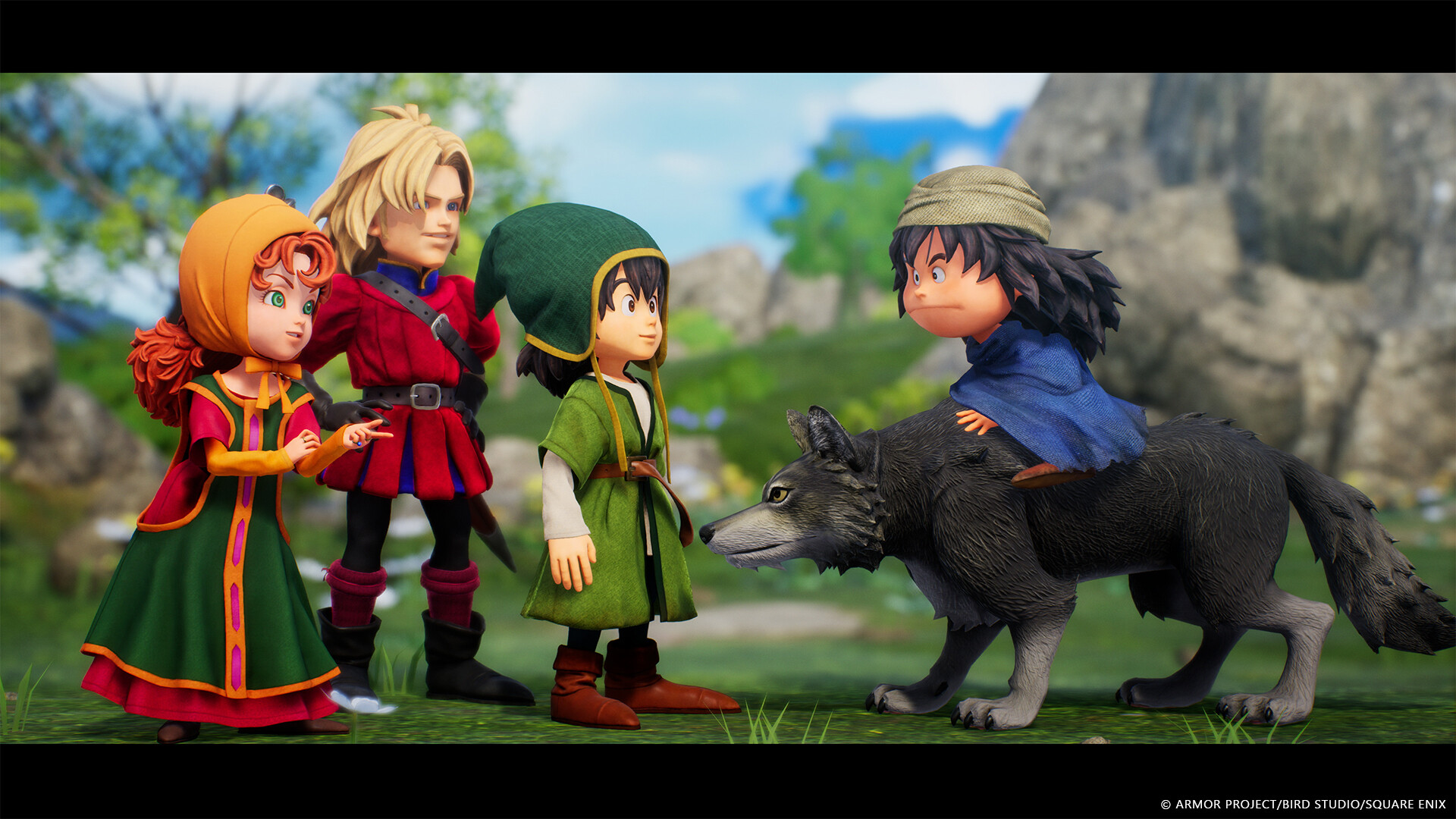
CraftThe most immediately striking thing about Reimagined is how it looks. The blocky charm of the original has been replaced with a warm, storybook art style built on the unmistakable character designs of the late Akira Toriyama, and the world of towns, monsters, and restored lands is rendered with the polish of modern Dragon Quest. Watching a barren present fill with life as you heal the past has never looked this good.
The monster designs remain a highlight, as ever in this series, all personality and playful menace, and the towns you rescue each have their own visual character that makes the act of restoration feel worthwhile. It is a bright, inviting, deeply charming presentation that suits the game's fundamentally hopeful story.
Koichi Sugiyama's classic score returns in fuller arrangements, and the series' warm, orchestral sound does an enormous amount to sell the sense of a grand, old-fashioned adventure. It is a presentation that honours the original while making it far more pleasant to spend a hundred hours inside.
A loving, much-needed remake that rescues a sprawling JRPG classic from its own pacing, held back only by the sheer length and traditionalism it deliberately preserves.
Pros & cons
The ledgerIn its favour
- The pacing fixes finally make an intimidating classic inviting
- A gorgeous storybook overhaul of Toriyama's world
- The deep, flexible vocation (class) system
- The uniquely moving loop of restoring a dead world to life
Against it
- Still an enormous, very traditional time commitment
- A faithful modernization, not a mechanical reinvention
Screens
Official media© Square Enix. Official media via Steam.
The player verdict
Real reviews · Steam- Not recommended
“Buying this game was a huge mistake. Missing the refund window was an even bigger one. The whole game feels like it was made for preschoolers. Even the worst mobile games are miles ahead of this mess in terms of complexity. The characters,…”
24 found helpfulvia Steam - Not recommended
“Not particularly fun or engaging as DQ11. Characters are bland, story is bland and the job system is mid.”
3 found helpfulvia Steam - Not recommended
“Good old game. BUT The Company think we customer are braindead? Where QoL? This is 2026 Japan game UX,UI are are still full of lazy trash?”
3 found helpfulvia Steam - Recommended
“I said this on the last DQ game I reviewed, but I really need a "thumbs in the middle" rating. Like, this game is good. It's certainly worth your time, the problem is it's...good. The combat? Good. Characters? Good. Story? Good. None of it…”
2 found helpfulvia Steam
Verdict
The callDragon Quest VII Reimagined is exactly the remake this game needed. By tackling the pacing problems that kept the 2000 classic at arm's length and rebuilding its presentation from the ground up, Square Enix has made one of the most ambitious and heartfelt JRPGs ever finally accessible, without sacrificing the scale and warmth that earned it a devoted following. Its Very Positive reception is well earned.
It is still a colossal, traditional, turn-based commitment, and anyone hoping for a sweeping mechanical reinvention should temper their expectations; this is a loving modernization, not a reimagining of what the game is. But for JRPG fans, and for anyone who bounced off the original's slow start, this is the best possible way to finally experience one of the genre's great hidden epics. A world worth saving, at last made easy to love.
Sources
Original review by Aymen Sakouhi from the licensed facts above. Score: 8.3/10.