Tears of Metal: Scottish Warriors, Roguelike Bones, and a Whole Lot of Blood
Paper Cult fuses Dynasty Warriors hordes with roguelike runs and gorgeous comic art, over a brutal early grind. Our early-access verdict: 7.4/10.
Aymen Sakouhi·Writer · Games Hobbyist//5 min read
© Paper Cult. Official media via Steam.
The pitch
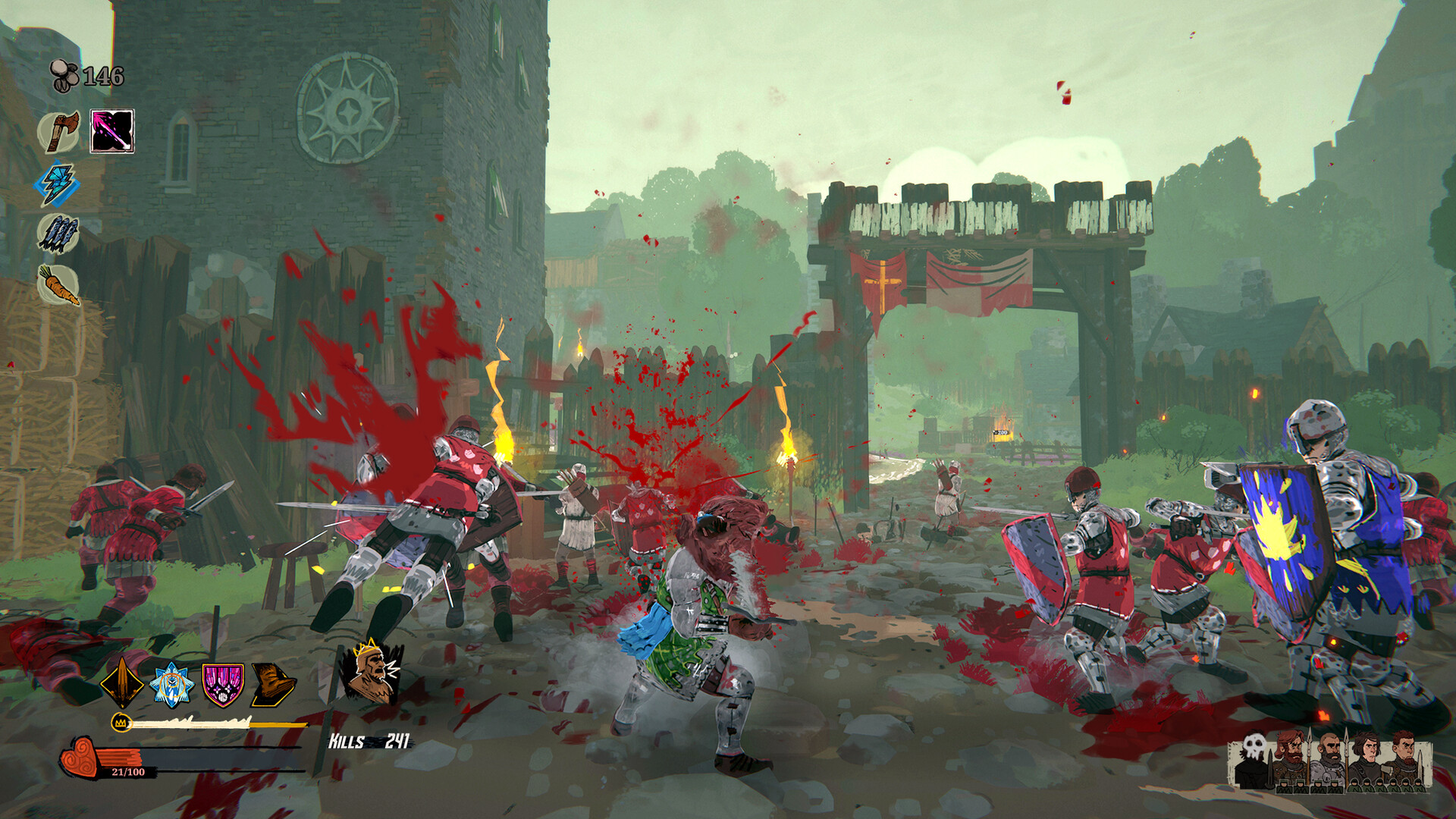
OverviewTears of Metal opens with a simple, appealing premise: you are a warrior of a stylized medieval Scotland, your island has been invaded, and an occupier is carving into something called the Mother Stone to drain its power. Your answer to this is not diplomacy. It is a battalion, a very sharp weapon, and a screen that fills with enemies until the frame rate practically begs for mercy. Paper Cult clearly knows what it wants to be, and it wastes little time getting you swinging.
The elevator pitch that has followed this game around, Scottish Dynasty Warriors crossed with a roguelike, is accurate enough that it barely counts as a joke. You wade into crowds of soldiers, thin them out in great satisfying arcs, and chase a build across a run that can be over in well under an hour if your loadout comes together. It is a co-op game first, playable with up to four, and a solo grind second, and the difference in feel between those two modes is one of the most important things to understand before you buy in.
This is an Early Access release, and it is worth taking that label seriously here rather than treating it as a formality. What is present is a confident, good-looking, mechanically legible action game with a real sense of style. What is missing, mostly, is variety: the roguelike scaffolding is standing, but the rooms it is supposed to fill are still sparsely furnished. Whether that trade is worth twenty-odd dollars right now depends heavily on how much you enjoy the swing itself, because you will be doing a great deal of it.
The good news is that the swing is genuinely good. The less good news is that Tears of Metal has not yet solved the oldest problem in its genre, which is giving you enough reasons to keep swinging once the novelty of the carnage wears thin.
How it plays
PlayAt the moment-to-moment level, Tears of Metal is a horde brawler with more structure than its Dynasty Warriors lineage usually bothers with. You have basic strikes, a heavier attack, a dodge, a guard, and special moves fed by a meter that fills as you fight. Characters are not interchangeable: one hero leans on commanding archers to soften a crowd before you reach it, another is built around close hand-to-hand pressure, and learning what each one actually wants to do is a real part of the early hours.
Runs are built across three acts, and the structure has a genuinely smart wrinkle. Individual levels come with mini-objectives, capturing a point or tearing down a structure, and each one you clear feeds a rising penalty bar. Push through more levels and you gain more rewards, but you also stack the deck against yourself, salting the final encounter with archer towers and extra elite enemies. It turns the usual roguelike question of how far do I push into a concrete, legible dial: speed versus power, with the boss getting meaner the greedier you are.
Builds come from pledging yourself to clans, which hand you randomized skill options as you go: smiting strikes, beams of light, poison, orbiting orbs of damage that do the fighting for you. When a run clicks, the power curve is enormously satisfying, the kind of snowball where you go from carefully spacing dodges to simply walking through a battlefield while your accumulated nonsense clears it for you. Battles are short, often only a few minutes, so a hot run has a lovely, brisk rhythm to it.
Co-op is where the game is clearly happiest. With friends, the pacing debate baked into that penalty bar becomes an actual argument, one player itching to rush the boss while another wants one more level for another upgrade, and the bloody-minded chaos of four people carving through a horde together papers over a lot of the repetition. It is loud, silly, and a good hang. This is the mode Paper Cult has tuned around, and it shows.
Solo is a harder sell, and this is the honest caveat. Alone, the early game is brutal in ways that read more as friction than challenge. Healing is scarce and fiddly, bosses hit like the game forgot you do not have three friends soaking damage, and the meta-progression that is supposed to smooth this out unlocks at a crawl. You can feel the shape of a good solo balance pass in the future, but it is not here yet, and grinding toward slow permanent upgrades on your own is the least flattering way to spend time with this game.
The deeper structural problem, the one experienced roguelike players will notice fastest, is variety. The clan skills and characters give you levers to pull, but runs start to rhyme sooner than they should. There simply are not yet enough distinct enemies, encounter types, events, or build-defining items to make the twentieth run feel meaningfully different from the fifth. The bones of replayability are here, the risk-reward pacing especially, but the content that would give those bones weight is still on the roadmap rather than in the build.
Art & atmosphere
CraftWhere Tears of Metal never falters is presentation. The art direction is a bold, cartoony comic-book style, all thick shapes and high contrast, and it reads beautifully even when the screen is a churning mass of bodies. Blood is deployed with gleeful excess, spraying in stylized sheets that turn a chaotic melee into something closer to a moving woodcut than a realistic battlefield. It is a game that looks good in motion and, crucially, stays readable in motion, which is not a given for a genre built on drowning you in enemies.
The soundtrack is the standout, and it is not close. The music leans into a driving, heavy register that matches the violence swing for swing, and it does a huge amount of the emotional lifting, turning a routine skirmish into something that feels like a set piece. When a run is going well and the score is hammering along underneath you, Tears of Metal achieves a kind of gorgeous, brainless momentum that is genuinely hard to put down.
The whole package has a coherent identity, a specific vision of mythic, blood-soaked Scotland rendered as a stylish comic rather than a grimdark simulation. That confidence of voice is the strongest argument for taking the game seriously through Early Access. The craft on the surface suggests a team that knows exactly what it is making, which makes the thinness underneath feel less like a lack of talent and more like a matter of time.
A gorgeous, great-feeling co-op horde-slasher with smart pacing, held back for now by thin run variety and a rough solo grind that Early Access still has to fix.
Pros & cons
The ledgerIn its favour
- Combat is weighty and readable, with a satisfying build-snowball when a run comes together
- The penalty bar turns risk-versus-reward pacing into a concrete, clever decision
- Bold comic-book art direction stays gorgeous and legible even in the thickest crowds
- The soundtrack is a genuine highlight that elevates every fight
- Four-player co-op is a loud, chaotic, thoroughly enjoyable hang
Against it
- Runs start rhyming too soon; there is not yet enough variety for deep replayability
- Meta-progression unlocks at a crawl, especially punishing solo
- The early game is harshly balanced solo, with scarce, fiddly healing
- Bosses can feel tuned for a full co-op party rather than a lone player
- Clearly an Early Access foundation: the systems are in, the content to fill them is not
Screens
Official media© Paper Cult. Official media via Steam.
The player verdict
Real reviews · Steam- Recommended
“Put ~100 hours into the private playtest before release. Which means I can confidently say: this game is incredibly special. The theme is amazing. The soundtrack elevates the theme to insane heights. Dynasty Warriors but in scotland is…”
86 found helpfulvia Steam - Recommended
“This game is actually super sick! I highly suggest it if you want to hack and slash for a good time!”
31 found helpfulvia Steam - Recommended
“Dynasty Warriors: Scotland is the gameplay. Its just well done hack and slash, with some Risk of Rain 2 elements to boot. Co-op takes the game to ascended territory. The Roguelite elements are there in the overworld map and they are apart…”
13 found helpfulvia Steam - Recommended
“Tears of Metal is a fantastic hack-and-slash with a unique Scottish medieval setting. The art style looks great, the battles are absolutely insane, and unlocking new upgrades keeps every run exciting. I also love that you can recruit and…”
7 found helpfulvia Steam
Verdict
The callTears of Metal is a stylish, confident, genuinely fun horde-slasher that has nailed the hardest part first: it feels great to play, it looks fantastic, and it sounds even better. The core combat and that clever risk-reward pacing bar are the work of a team that understands its genre, and in four-player co-op it is one of the more purely enjoyable ways to spend an evening making a mess of a battlefield.
The honest reservation is that this is Early Access in the fullest sense. The replayability that a roguelike lives or dies on is not yet here, runs blur together faster than they should, and the solo experience in particular is a grind that the slow meta-progression does little to soften. What you are buying today is a strong foundation and a promise, not a finished game, and the price asks you to take some of that promise on faith.
If you have friends to play with and you love the swing of a good crowd-clearer, this is an easy recommendation to jump in now and grow with. If you are a solo player or someone who needs deep, varied runs to stay hooked, it is worth wishlisting and watching the roadmap. There is a very good game in here already, and a potentially excellent one waiting on content that has yet to arrive.
Sources
Original review by Aymen Sakouhi from the licensed facts above. Score: 7.4/10.