Rhythm Heaven Groove: A Decade Away, and the Beat Never Missed a Step
Our Rhythm Heaven Groove review: Nintendo's cult rhythm series returns after ten years with 80 solo games, brutal timing, and a soundtrack you cannot shake.
Aymen Sakouhi·Writer · Games Hobbyist//5 min read
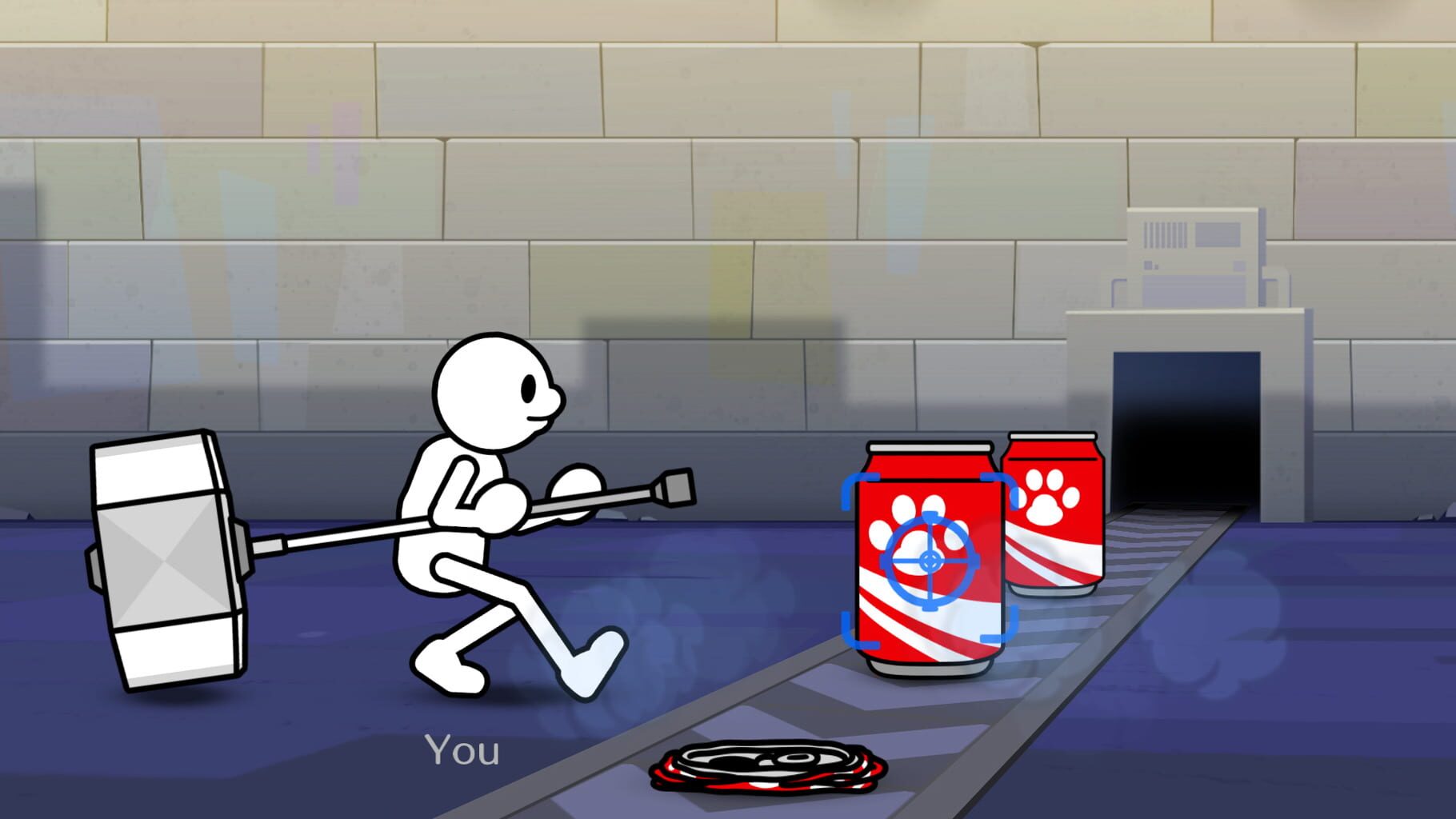
© Nintendo. Media via IGDB.
The pitch
OverviewRhythm Heaven has always trusted your ears over your eyes, and Rhythm Heaven Groove opens by testing exactly how much you trust them back. A cartoon appears, a jingle starts, and the game asks you to tap in time with a beat you can feel but cannot quite see coming. Get it right and the animation snaps into place with a satisfying click. Get it wrong and the whole bit falls apart in front of you, deadpan and a little embarrassing, which is somehow the funnier outcome.
This is the first mainline entry in the series in over a decade, arriving after 2015's Megamix left the franchise dormant on the 3DS. Nintendo hands development to a coalition of studios, with Nintendo EPD, TNX, and Intelligent Systems all credited, and longtime composer Tsunku back in the producer's chair where the series has always needed him. On paper that is a lot of cooks. In practice Groove feels startlingly of a piece, a series picking up a conversation it paused ten years ago as if no time had passed.
The structure is the same one that hooked people in the first place: dozens of tiny, self-contained rhythm games, each with its own gag, its own art style, and its own single demand on your sense of timing. You are not managing a note highway or chasing a combo meter. You are learning the internal logic of one silly premise, whether that is flicking a beetle off a branch or bouncing a ball between two cheerful robots, and then executing it clean while the music carries you.
What makes the series special, and what Groove understands completely, is that the comedy and the challenge are the same thing. The joke only lands if your timing is precise, and precise timing is only possible if you have surrendered to the beat rather than staring at the screen. It is a strange, specific pleasure, and after ten years away it turns out nobody else really made anything to scratch the same itch.
How it plays
PlayThe core loop is unchanged and all the better for it. Groove serves up 80 single-player rhythm games organized into sixteen sets of five, where each set stacks four fresh minigames and then closes with a Remix that blends their mechanics into one continuous medley. That Remix structure is the series at its most devious: you spend twenty minutes internalizing four separate rhythms, then the game shuffles them together and dares you to switch between them on the fly without dropping the beat.
Control is deliberately minimal. Most games run on a tap and a flick, occasionally a hold, and the entire challenge lives in when you press rather than what you press. That simplicity is a trap in the best sense, because it strips away every excuse. There is no fumbled input to blame, only the gap between the beat in your head and the beat in the song, and Groove is unusually good at teaching you to close that gap through feel rather than memorization.
The difficulty is the honest sticking point, and reviewers have flagged it. Behind the pastel presentation the timing windows can be genuinely brutal, and the game grades you from a curt Try Again up through Superb, with the higher medals gating bonus content behind performances that demand near-perfect consistency. Some players will bounce off a single game for a frustrating stretch before the rhythm finally clicks into place. When it does click, though, the release is real, and the game is careful to let you retry immediately rather than dragging you back through menus.
Groove also adds a few new wrinkles to justify its return. Beatspell is an RPG-flavored mode where you cast attacks and heals by hitting buttons in time to defeat enemies through a dungeon, an interesting stretch of the formula that, by most accounts including its own moments here, does not quite reach the highs of the standard minigames. More successful is Night Mode, unlocked after three consecutive Perfect runs, which strips the visuals away entirely and forces you to play on audio alone. It is the purest expression of what the series has always been about, and it is thrilling in a slightly terrifying way.
Multiplayer is a genuine expansion this time rather than an afterthought, with over 30 rhythm games built for co-op and competitive play. Sharing a rhythm game with another person changes its texture completely, turning private concentration into something closer to a duet or a duel, and it is the clearest sign that Groove wants to be a game you pull out at a table rather than only a solo obsession.
Rounding it out is a real commitment to accessibility, including text-to-speech narration aimed at visually impaired players, which fits a game that already leans on sound as its primary language. Perfect Run challenges, three-attempt gauntlets that reward flawless play with bonus comics and short stories, give the completionists a reason to keep grinding well past the point where the credits roll.
Art & atmosphere
CraftThere is no single house style here, and that is the point. Groove hops between wildly different visual registers from one game to the next, a flat pop-art robot factory giving way to a soft hand-drawn pastoral scene giving way to something gleefully ugly and rubber-limbed, each look tailored to sell its particular gag. The through line is confidence and clarity: every animation reads instantly, every character telegraphs the beat with its body, and the humor lives in the timing of a blink or a bounce as much as in any punchline.
The soundtrack is the reason people fall for this series, and it is where Groove is least willing to compromise. Tsunku's return anchors a set of original songs that burrow in and refuse to leave, aided by guest vocalists including Ado and Yui Sakurai, and critics have singled out the music as the game's standout across the board. These are not backing tracks you tolerate while you play. They are the actual content, catchy to the point of distraction, and the best of them will be stuck in your head long after you put the controller down.
What ties the whole package together is tone. Groove is warm, silly, and completely unbothered by the fact that it is asking real precision of you under all that cartoon gloss. The presentation never breaks character, even when the timing is punishing you, and that gap between how cuddly it looks and how exacting it plays is the exact joke the series has been telling for twenty years, told here as well as it ever has been.
A confident, joyful return that nails the series' timing-first charm and soundtrack, held back only by a punishing difficulty spike and a Beatspell mode that underdelivers.
Pros & cons
The ledgerIn its favour
- 80 single-player games plus a devious Remix in every set keep the ideas coming
- Timing-first design rewards playing by feel rather than memorizing patterns
- Tsunku's soundtrack is a genuine highlight, catchy and endlessly hummable
- Over 30 co-op and competitive games make it a real multiplayer pick
- Night Mode's audio-only challenge distills the series to its purest form
- Thoughtful accessibility, including text-to-speech narration for low-vision play
Against it
- Timing windows can be brutal, and some games gate you until the rhythm clicks
- The RPG-styled Beatspell mode does not reach the heights of the core minigames
- Higher medal requirements demand near-perfect consistency that will frustrate some
- The one-tap simplicity can make individual games feel thin in isolation
Screens
Official media© Nintendo. Media via IGDB.
Verdict
The callRhythm Heaven Groove had a decade of expectation to answer for, and it answers with the most reassuring thing a dormant series can offer: it still knows exactly what it is. The timing-first design, the parade of tiny self-contained gags, the soundtrack that colonizes your brain, all of it is here and sharpened, and the additions mostly earn their place rather than cluttering the formula.
It is not flawless. The difficulty runs hotter than the presentation lets on, and Beatspell is the one swing that does not fully connect. But those are the complaints of a game reaching to expand rather than one running out of ideas, and the core experience is as distinctive and as replayable as anything in Nintendo's stable of oddball rhythm titles.
If you have missed this series, Groove is a joyful homecoming and the easiest possible recommendation. If you have never touched a Rhythm Heaven game, it is a near-perfect entry point, provided you are willing to trust your ears and eat a few humbling Try Again screens on the way to that first Superb. Either way, this is a comeback that grooves.
Sources
Original review by Aymen Sakouhi from the licensed facts above. Score: 8.3/10.