Company of Heroes 3: Final Stand Strips the RTS to Its Spine, and Mostly Thrives There
Our Company of Heroes 3: Final Stand review: Relic's standalone wave-defense spin-off trades base building for bite-sized roguelite runs. Verdict and score.
Aymen Sakouhi·Writer · Games Hobbyist//5 min read
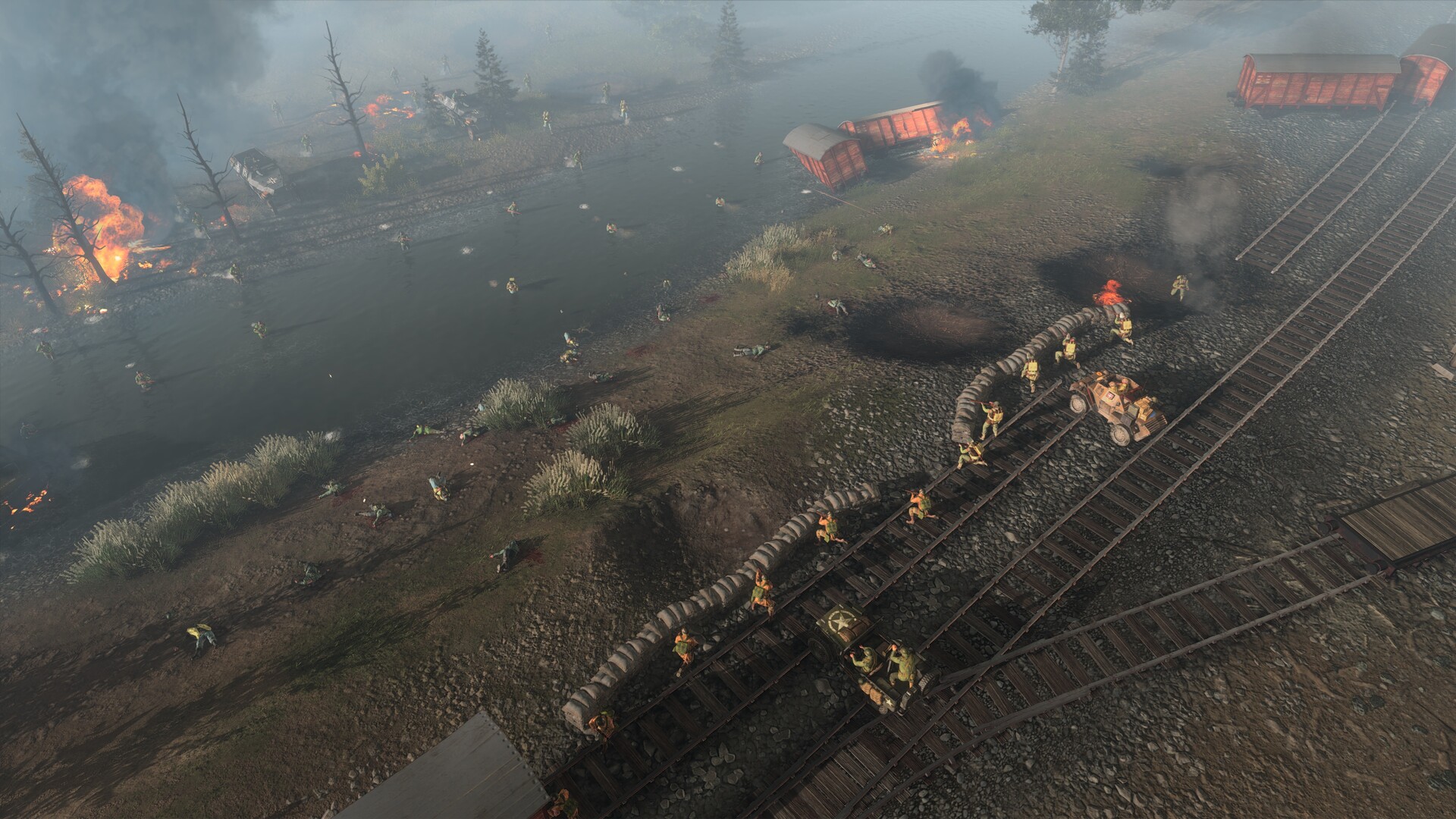
© Relic Entertainment. Official media via Steam.
The pitch
OverviewRelic has spent years defending the sprawling ambition of Company of Heroes 3, a game that asked you to juggle a campaign map, a supply economy, and the moment-to-moment chaos of squads pinned behind a stone wall. Final Stand does something almost heretical for the series: it throws most of that away. There is no base to build, no territory to hold, no production queue quietly ticking in the corner of your screen. What is left is the part of Company of Heroes that always hit hardest, the desperate business of holding a line while the world comes apart around you.
This is a standalone release, which is worth saying plainly. You do not need to own Company of Heroes 3, or any prior game in the series, to play it. It launched on July 29, 2026 at a budget price, positioned less as an expansion and more as a compact, replayable side dish built on the same tactical bones. Owners of the main game get a discount, but the pitch is aimed squarely at anyone who has ever wanted the tension of a Company of Heroes firefight without the hour of macro management that usually surrounds it.
The framing is wave defense crossed with roguelite drafting. You pick a faction, dig in on a small map, and survive twelve escalating rounds of attackers, choosing new units and abilities between waves from a randomized offering. It is a genre mash that a dozen studios have tried, but few of them bring Relic's cover system, its combined-arms weight, and its genuinely excellent sense of a battlefield turning against you. The question Final Stand has to answer is whether that pedigree survives the amputation of everything the series was built around. For the most part, it does.
How it plays
PlayA run is the whole game here, and it is refreshingly legible. You drop onto one of five compact battlegrounds designed specifically for defense, position your starting handful of units, and brace for waves that push in from multiple directions. A full successful run runs somewhere around forty minutes, which lands it in a sweet spot the base game never really occupied: long enough to develop, short enough to attempt on a lunch break. Twelve rounds separate you from the end, and the difficulty ramp is steep enough that reaching the later ones feels like an accomplishment rather than a formality.
The roguelite layer lives in the gaps between waves. Instead of teching up through a fixed tree, you are handed a randomized choice of reinforcements and abilities and asked to commit. One round you might weigh an anti-tank squad against a group of infantry specialists; the next you are offered passive buffs, a strafing run, a naval bombardment, or later on the heavy artillery of fighter support and automatic reinforcements. Over a run these choices stack into a kind of improvised deck, and no two runs assemble the same one. Four factions each bring their own upgrade paths and flavor, so the strategic texture shifts meaningfully depending on who you field.
The honest wrinkle, and the one most reviews land on, is that the drafting matters a little less than you want it to. In practice, where you place your units and how you read the incoming lanes tends to decide a round more than which card you took. That makes Final Stand more a game of positioning under pressure than of build-crafting, which is not a flaw so much as a recalibration of expectations. If you come to it hunting the compulsive one-more-run pull of a Hades or a Slay the Spire, the loop here is looser and less addictive; the choices feel like tactical seasoning rather than the main course.
What carries it is the fundamentals. This is still Company of Heroes underneath, which means suppression, flanking, cover states, and the constant micro of keeping a squad alive matter enormously. Layering defenses, funneling armor into a kill zone, and holding a collapsing flank with your last reserves produces the same white-knuckle moments the series is known for, now distilled and served in rapid succession. Persistent upgrades carry between runs, so failure feeds progress, and eight difficulty levels plus a roster of thirty-six boss units and a stack of dynamic battlefield events give the higher tiers real teeth. Two-player co-op is where a lot of that shines, splitting the map's pressure between two commanders and turning a frantic solo scramble into a shared, shouted defense.
The friction is mostly in the margins. Off-screen support like bombardments can take frustratingly long to arrive, occasionally landing after the threat they were meant to answer has already broken your line. And at lower difficulties the whole thing can settle into a comfortable rhythm that borders on repetitive, since the variety really opens up only when the challenge forces you to use it. This is a game that rewards climbing its difficulty curve, and plays a little flat if you never do.
Art & atmosphere
CraftFinal Stand inherits Company of Heroes 3's presentation wholesale, and that is a strong hand to be dealt. The series has always sold its warfare through tactility: buildings that shed masonry as rounds chew through them, craters that reshape a field, infantry who scramble and dive with a physicality that makes each firefight read as a small catastrophe. Compressed onto a single defensive arena, that destruction becomes a running visual record of your run. A map you started on clean is, by round ten, a churned wreck of burning hulls and shattered cover, and there is a grim satisfaction in reading your own desperate history in the debris.
The audio does a lot of the heavy lifting. The crack and thud of period weaponry, the panicked and clipped voice barks of squads under fire, the low rumble that precedes an armored push all combine to keep you oriented in the chaos without ever looking at a minimap. It is not a game reaching for new artistic statements; it is a game reusing a proven, grounded World War Two aesthetic with confidence and letting the wave-defense structure give it a fresh cadence. The result looks and sounds like Company of Heroes, which is exactly the point, and the fixed-arena framing arguably shows off the engine's destruction and combined-arms spectacle better than the sprawl of the full game ever could.
A sharp, standalone distillation of Company of Heroes combat that nails the tactics but wears a roguelite skin thinner than the genre's best.
Pros & cons
The ledgerIn its favour
- Distills Company of Heroes combat into tight, forty-minute runs with no macro overhead
- Retains the series' excellent cover, suppression, and combined-arms fundamentals
- Four factions with distinct upgrade paths keep run-to-run strategy varied
- Standalone and budget-priced, with no prior ownership required
- Two-player co-op turns the frantic defense into a genuine highlight
- Higher difficulties, boss units, and battlefield events give it real long-term teeth
Against it
- The roguelite drafting matters less than positioning, blunting the one-more-run pull
- Can feel repetitive at lower difficulties, where its variety never has to come out
- Off-screen bombardments often arrive too late to answer the threat they were called on
- Lacks the deep, compulsive progression hooks of the roguelites it borrows from
Screens
Official media© Relic Entertainment. Official media via Steam.
The player verdict
Real reviews · Steam- Recommended
“Pretty fun so far. I haven't played COH since COH2 and always just enjoyed defending for the most part, so it scratches that itch. Only complaint so far is that there is no lobby system. It seems like the only way to play with others would…”
0 found helpfulvia Steam
Verdict
The callCompany of Heroes 3: Final Stand is a smart, self-aware piece of downsizing. By stripping out the base building and the economy, Relic has isolated the most thrilling forty minutes the series has to offer and made them endlessly repeatable. As a way to get a concentrated hit of Company of Heroes tactics without clearing an evening, it works, and its budget price and standalone status make it an easy recommendation for lapsed fans and curious newcomers alike.
What holds it back from greatness is the roguelite side of its identity. The drafting is fun but shallow, the runs blur together at lower difficulties, and the compulsive pull that defines the best of the genre never quite takes hold. This is a good game that is honest about its scope rather than a landmark that reinvents it. Play it for the tactility of a Company of Heroes firefight distilled to its essence, ideally with a friend on the other half of the map, and Final Stand delivers exactly what it promises. Come to it expecting a deep, addictive roguelite and you will feel the edges. On its own modest terms, it is a confident and worthwhile little war.
Sources
Original review by Aymen Sakouhi from the licensed facts above. Score: 7.8/10.