Akatori Is a Lean, Confident Metroidvania That Trusts Its Momentum
Contrast Games' staff-swinging platformer is tight, pretty, and knows exactly what it is, even if backtracking wobbles. Our verdict: 7.6/10.
Aymen Sakouhi·Writer · Games Hobbyist//4 min read
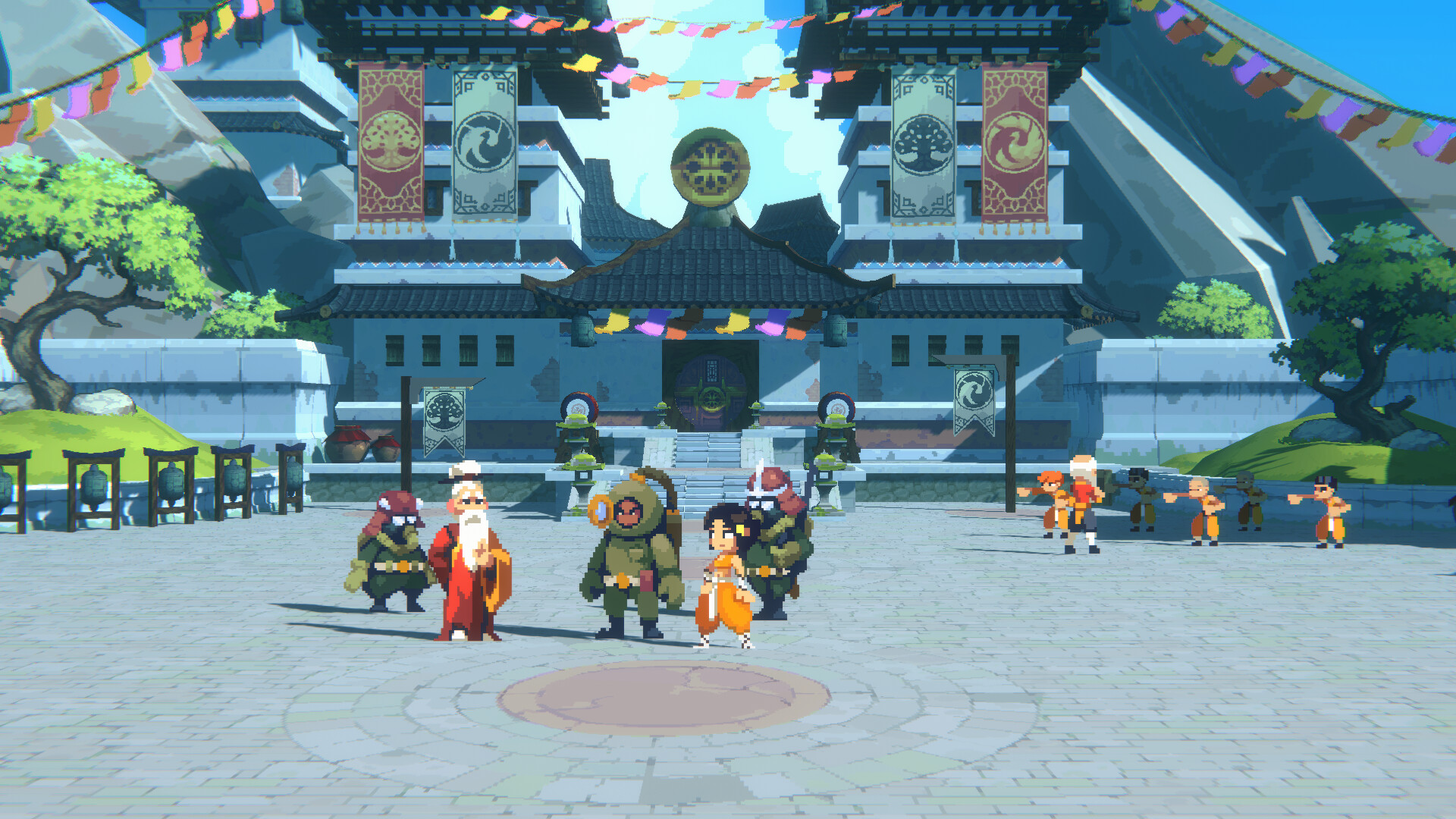
© Games Harbor. Official media via Steam.
The pitch
OverviewAkatori knows what it wants to be, and that clarity is its greatest asset. It is a 2.5D metroidvania about a girl named Mako and a bird named Akatori, teaming up to push back the Amber Storms poisoning their world. Contrast Games and publisher Games Harbor launched it on August 5, 2026 after a long demo campaign that steadily built goodwill, and the finished game keeps the promise that demo made: fast movement, snappy combat, and a world that rewards you for looking.
The pitch is deliberately unfussy. You wield a staff to fight, vault, and explore realms that span different eras, gating your progress behind abilities in the classic Metroidvania tradition. There is nothing here you have not seen the shape of before. What Akatori gets right is the feel, the moment-to-moment rhythm of dashing through a corridor, chaining jumps, and threading between hazards until the whole thing clicks into a groove that is genuinely hard to put down.
This is a smaller, streamlined take on the genre rather than a sprawling epic, and that is a feature, not an apology. In a landscape crowded with 40-hour metroidvanias that overstay their welcome, Akatori's discipline is refreshing. It is confident enough to be exactly as big as it needs to be.
Early critical reception has landed it in solid, well-liked territory, and after time with what it offers, that reads as fair. This is a sharp, characterful game that does the fundamentals well.
How it plays
PlayThe core is pure momentum. Mako moves fast and responds instantly, and the combat is built around a staff that doubles as your primary weapon and a traversal tool. Attacks are snappy, the dodge and jump chain together cleanly, and the best stretches of Akatori feel less like fighting through a level and more like performing it, weaving between enemies and environmental hazards in one continuous flow.
Structurally it is a Metroidvania by the book: an explorable map, ability-gated areas, backtracking, environmental puzzles, and secrets tucked behind clever platforming. Exploration is rewarded with meaningful upgrades rather than filler pickups, so the pull to check the unlit corner of a room usually pays off. The staff mechanic is the connective tissue, and as you gain new abilities, old areas open up in ways that keep the map feeling alive.
There is a real learning curve early on, and some encounters bite. Boss fights lean on pattern recognition and positioning, asking you to read a moveset and answer it rather than simply out-damage it, but death rarely feels cheap. Once the systems settle in, the difficulty reads as fair challenge instead of frustration, and the game offers adjustable difficulty and comfort options for players who want to tune the experience.
Where Akatori wobbles is pacing. The backtracking, even with fast-travel options, can feel padded, and revisiting earlier zones sometimes drags the momentum the combat works so hard to build. It is the most common knock on the genre, and Akatori does not fully escape it. The streamlined scope helps, but a few stretches still ask you to retread ground without quite enough new to justify the trip.
The upside of that lean design is that Akatori never outstays its welcome. It is a focused adventure that respects your time, and it ends while you still want a little more, which is a far better problem than the reverse.
Art & atmosphere
CraftAkatori is a looker. The pixel art is bright and bold, with a 16-bit hint of nostalgia in the character sprites set against backgrounds vivid enough to occasionally pull your eye away from the platforming. The realms span different eras, and the art direction leans into that variety, giving each region its own palette and mood rather than reskinning the same corridors. It is the kind of game where you will stop, just for a second, to take in a vista before the next dash carries you through it.
The presentation carries a light, confident personality. There is humor in the dialogue and the character interactions, kept just this side of forced, and it gives Mako and her feathered companion a warmth that a purely mechanical platformer would lack. The whole package feels authored by people with taste and a clear vision, which is exactly what a smaller metroidvania needs to stand out.
It is a striking, cohesive aesthetic on a modest budget, and it does a lot to make Akatori feel like more than the sum of its familiar parts.
A tight, good-looking metroidvania with fluid movement and real personality, dinged only by padded backtracking and a formula it executes well rather than reinvents.
Pros & cons
The ledgerIn its favour
- Fast, fluid movement that turns traversal into a rhythm
- Snappy staff combat that ties fighting and exploration together
- Bright, characterful pixel art with distinct, era-spanning realms
- Boss fights reward pattern reading, and death rarely feels cheap
- A disciplined, streamlined scope that never overstays its welcome
- Generous comfort and adjustable-difficulty options
Against it
- Backtracking can feel padded despite fast travel
- Pacing wobbles when the game asks you to retread old zones
- A punishing early learning curve before the systems click
- Offers little that reinvents a very well-worn genre
Screens
Official media© Games Harbor. Official media via Steam.
The player verdict
Real reviews · Steam- Recommended
“Akatori is a 2.5D Metroidvania about a girl who works in a monastery and she finds a bird called Akatori and decide to team up on a magnificent journey to battle the source of amber corruption in the world. The game offers a huge…”
8 found helpfulvia Steam - Recommended
“Akatori is more of a exploration + platforming type of Metroid Vania game, what interesting is, the main character skill tree is scatter around the map area. you have to unlock the gateway, finish the challenge to unlock new skill. There…”
3 found helpfulvia Steam
Verdict
The callAkatori is a sharp, confident metroidvania that understands its own strengths and plays to them without overcomplicating anything. The movement is a joy, the staff-driven combat flows, and the world is pretty enough and clever enough in its layout to make exploring it a pleasure. Contrast Games clearly knew the assignment, and the result is a lean adventure with real personality behind its pixels.
It is not without friction. The pacing sags across some of the backtracking, the early hours can be punishing before the systems open up, and nothing here is going to surprise a genre veteran who has already played the classics. This is a game that executes the formula well rather than one that pushes it forward.
For anyone who likes their platformers fast, their combat fluid, and their exploration meaningful, Akatori is an easy recommendation and a satisfying way to spend a focused stretch of hours. It is a smaller game that respects both its own scope and your time, and it leaves you wanting a little more, in the best way.
Sources
Original review by Aymen Sakouhi from the licensed facts above. Score: 7.6/10.