A Licensed Game Can Age Badly and Still Matter: A Five-Part Scorecard for Revisiting Old Games
A 9/10 from twenty years ago cannot tell you whether a game is preserved, accessible, comfortable to control, faithful to its fantasy, or historically important. Those are five different questions.
By Søren Ahrensborg Kamper//8 min read
© Lucasfilm Games / Nightdive Studios. Official media via Steam.
Old licensed games create a strange problem for criticism. A review score is designed to answer a question in the present: how good is this game, on this hardware, at this price, right now? Twenty years later, the same number is carrying far more weight than it was built for. A classic may still be brilliant but awkward to control. A mediocre release may become historically fascinating. A once-famous game may be almost impossible to access legally, while another returns in a careful remaster that makes its original design easier to see than it was on launch hardware.
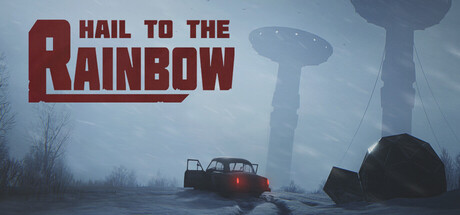
The temptation is to solve all of that with a retrospective score. Do the old review again, add nostalgia, subtract a few points for the camera, and call it finished. But that collapses several different questions into one answer. A recent Hail to the Rainbow review works because it can praise atmosphere and one-person authorship while still saying plainly that the combat is weaker. Revisiting older licensed games needs the same separation of strengths and weaknesses, only across a longer historical distance.
Why one retrospective number is the wrong tool
Licensed games age in two directions at once. They age as games, through controls, interfaces, cameras, performance expectations and platform compatibility. They also age as adaptations, because the fantasy attached to the licence keeps changing around them. A Star Wars game from 1993 is not only being compared with other space sims from 1993. It is being revisited by players who have since seen Rogue Squadron, Battlefront, Squadrons and decades of new film and television material. The licence has moved on, but the old game is still making its original promise.
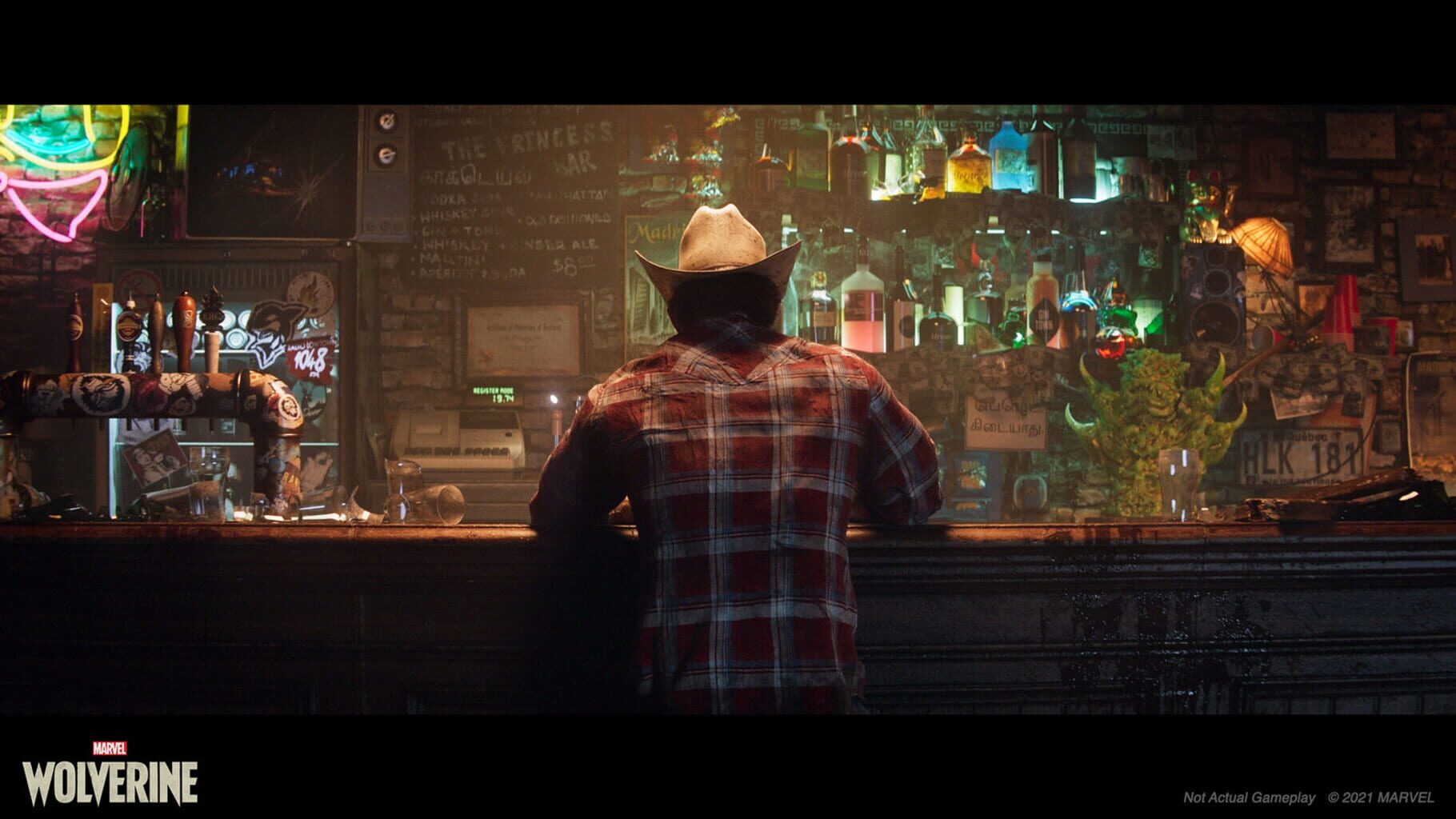
That is why fantasy fulfillment deserves to sit beside technical and historical criteria instead of hiding inside a general 'fun' score. The current Marvel's Wolverine review is a useful modern example: the berserk combat can deliver the character fantasy convincingly even while repetition holds the overall game back. Likewise, 007 First Light can be judged partly by whether its systems make the player behave like Bond rather than simply by how many familiar names and tuxedos appear on screen. Licensed games have always lived or died on that distinction.
The five-part scorecard
The framework below uses five separate 1-to-5 scores and deliberately refuses to add them together. A 5 is not 'perfect'; it means the game is unusually strong in that specific category. The point is not to manufacture a new overall verdict. It is to show where an older game has survived, where it has not, and why those answers can disagree.
Star Wars is a useful stress test
Few licences make the problem as visible as Star Wars. Its game catalogue spans more than four decades, multiple hardware generations and almost every major genre. That gives the scorecard room to produce genuinely contradictory results. The five games below are not a 'best of' list. They were chosen because they fail, survive and matter in different ways.
The rubric
- Preservation quality
- How faithfully does the version available today preserve the original game? Are content, audio, visuals, online features or important modes missing, altered or restored well?
- Control aging
- How readable and usable are the controls, camera, interface and basic interactions for a modern player? Age itself is not a penalty. Friction that obscures the design is.
- Platform access
- How easy is it to play legally and practically now? Current storefronts and hardware score higher than discontinued systems, second-hand copies or community-only routes.
- Fantasy fulfillment
- How strongly do the mechanics let the player inhabit the licence's central fantasy? This is about what the player does, not how many recognisable characters or sound effects appear.
- Historical importance
- How much did the game matter to its licence, genre or medium? Influence, technical ambition, design innovation and long-term impact count. Historical importance does not mean a game has aged well.
The scorecard
No overall total| Game | Preservation | Controls | Access | Fantasy | History |
|---|---|---|---|---|---|
| Star Wars: X-Wing(1993) | 4 | 2 | 4 | 5 | 5 |
| Star Wars: Dark Forces(1995) | 5 | 4 | 5 | 4 | 5 |
| Knights of the Old Republic(2003) | 4 | 3 | 5 | 5 | 5 |
| Star Wars: Republic Commando(2005) | 4 | 4 | 5 | 5 | 4 |
| Star Wars Galaxies(2003) | 2 | 2 | 1 | 5 | 5 |
Scores are category judgments, not a combined verdict. There is intentionally no total.
Star Wars: X-Wing(1993)
the fantasy survives better than the interface

© Lucasfilm / LucasArts. Official media via Steam.
X-Wing is almost the ideal demonstration of why the categories must stay separate. The current Steam release preserves both the 1993 DOS game and the later Windows version, together with the Tour of Duty expansions, which is unusually complete for a PC game of its age. Access is also better than memory suggests: you can buy it today rather than hunting for floppy disks. Yet actually playing it still asks the modern player to meet the game halfway. The cockpit is dense, keyboard commands matter, and the 1998 version still expects a controller or joystick.
None of that weakens the central fantasy. X-Wing does not merely show Rebel starfighters; it gives the player the work of flying one. Shield management, target selection, mission orders and power distribution turn the licence into procedure. That is why fantasy fulfillment and historical importance both score 5 even while control aging lands at 2. A single retrospective 7/10 would hide the interesting part.
Star Wars: Dark Forces(1995)
preservation can improve access without rewriting history
© Lucasfilm Games / Nightdive Studios. Official media via Steam.
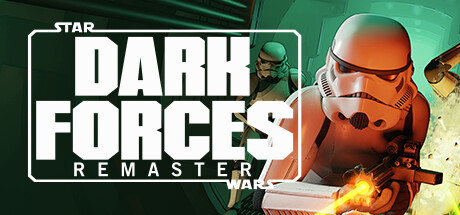
Dark Forces shows the opposite case. Nightdive's remaster runs on modern PC and consoles, supports high resolutions and frame rates, and preserves the original game inside a modern technical shell. That pushes both preservation quality and platform access to 5. It also improves the control argument considerably. The level design can still be labyrinthine and some 1995 habits remain obvious, but the player no longer has to wrestle with old hardware assumptions simply to understand the game.
Historically, Dark Forces matters because it refused to be only 'Doom with stormtroopers.' Vertical spaces, mission objectives, original characters and the Dark Trooper project helped Star Wars games become places where new stories and heroes could originate. Its fantasy score is a 4 rather than a 5 because being Kyle Katarn is a more specific, authored role than inhabiting an instantly legible franchise fantasy like 'Rebel pilot' or 'clone squad leader.' That is not a criticism. It is exactly the kind of distinction the rubric is meant to expose.
Knights of the Old Republic(2003)
reputation survives, friction accumulates
© Lucasfilm / BioWare. Official media via Steam.
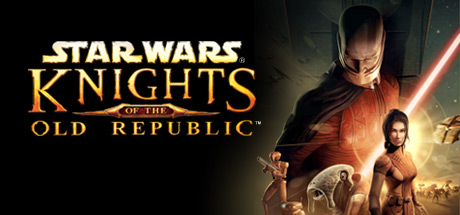
Knights of the Old Republic remains easy to buy on PC and has an official Switch release, so platform access is not the problem. Preservation is also strong enough to keep the core game intact. The friction appears once the player is inside it. Menus, pathfinding, combat presentation and parts of the interface feel unmistakably like a 2003 BioWare RPG. They are understandable, but they are no longer invisible.
The remarkable part is how little that damages the fantasy. KOTOR asks the player to build a Star Wars identity through party choice, alignment, conversation and the gradual discovery of their place in a much older galaxy. Its historical importance is equally difficult to overstate. The game proved that Star Wars could support a character-driven RPG set thousands of years away from the films and still feel culturally central to the franchise. A 3 for controls can comfortably sit beside two 5s without contradiction.
Star Wars: Republic Commando(2005)
a missing mode can matter without erasing the campaign
© Lucasfilm / LucasArts. Official media via Steam.
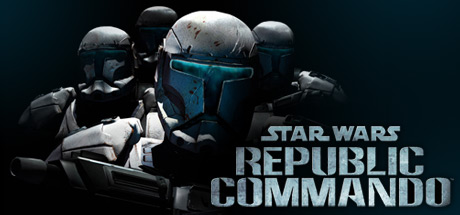
Republic Commando is available on modern PlayStation hardware and Switch through Aspyr, while the original PC version remains commercially available. That makes access easy, but preservation is not quite a 5 because the modern console releases focus on the single-player campaign and do not include the original multiplayer. The campaign is the reason most people remember the game, but preservation should notice missing pieces even when they are not the famous ones.
The control scheme has aged surprisingly well because the game's squad commands are built around context rather than a wall of tactical menus. More importantly, the licence fantasy is mechanical. Boss, Fixer, Scorch and Sev are not memorable merely because they have good dialogue. The player orders them to breach, snipe, heal and hold positions, and the squad becomes useful in exactly the way the fiction says it should. That is a 5 in fantasy fulfillment, even if the game's broader historical footprint is smaller than KOTOR or Dark Forces.
Star Wars Galaxies(2003)
the most important score may be the one that hurts
Star Wars Galaxies is the edge case that justifies the whole framework. Sony Online Entertainment and LucasArts shut the official service down in December 2011. Community projects have since rebuilt and maintained different eras of the game, an extraordinary preservation effort, but there is no official commercial version that lets a new player simply buy the original MMO and enter the world that existed in 2003. Platform access therefore scores 1, while preservation quality gets a 2 because significant parts of the experience survive through reconstruction rather than through an official preserved service.
And yet Galaxies earns 5s for fantasy fulfillment and historical importance. Its strongest Star Wars fantasy was not becoming Luke Skywalker. It was becoming somebody who lived in the same galaxy: a crafter, entertainer, merchant, doctor, bounty hunter, architect or citizen of a player-built town. The social world was part of the game's content. Once the official servers disappeared, no executable file could preserve the exact communities, economies and routines that made that fantasy work. A conventional score struggles with that. The scorecard does not.
What the scorecard is actually for
The framework is not meant to produce more numbers for their own sake. It is meant to make retrospective criticism more honest about what has changed. If X-Wing still delivers its fantasy but asks too much from modern controls, say both. If Dark Forces has been preserved exceptionally well, let preservation receive credit without pretending its level design was invented yesterday. If Star Wars Galaxies is historically vital but officially inaccessible, do not average those facts until neither is visible.
That distinction also makes the model portable beyond Star Wars. Batman, Alien, Spider-Man, Transformers, The Lord of the Rings and James Bond all have games whose original review scores answer a different question from the one a player asks today. The same five categories can tell us whether a game still works, whether we can still reach it, whether the licence shaped the play, and whether history made it more interesting.
The most useful retrospective verdict may therefore be the refusal to give one. Old licensed games are often preserved unevenly, played awkwardly and remembered for reasons that have little to do with how they would score in a launch-week review. Keeping the categories separate does not make criticism less decisive. It makes the decision visible.
Søren Ahrensborg Kamper covers the Star Wars games catalogue in depth at Star Wars: Gaming.