Project P.I.T.T., the Rubber-Duck Factory Game That Got 10 Million Views Before Launch, Is a Hit
One French developer, a bottomless corporate pit, and a premise strange enough to conquer YouTube before the game was even out.
Aymen Sakouhi//4 min read
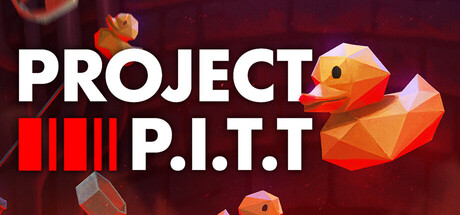
© Pretty Soon. Official media via Steam.
Project P.I.T.T. launched on Steam on August 19, 2026, and it arrived already famous. Before release, the game had racked up more than ten million YouTube views and approaching seventy-five thousand wishlists, fueled by gameplay from creators like GrayStillPlays, ImCade, and DangerouslyFunny. Now that it is out, priced at a modest 9.99 dollars, it has converted that momentum into a Very Positive Steam reception. The viral hype was not empty.
What makes the story notable is who built it: a single French developer working under the name Froke, for whom this is a first commercial game. The publisher, Poland-based Pretty Soon, helped it reach the finish line, but the vision is one person's.
So what is it, exactly?
Project P.I.T.T. is an incremental physics automation sandbox with a brutalist, PSX-inspired aesthetic. Your corporate assignment is gloriously absurd: manufacture rubber ducks, generate money, and feed the products into a mysterious bottomless pit known as the Maw, which only ever wants more. You build production lines, hit escalating targets, chain increasingly ridiculous combos, and unlock stranger tools to keep up with demand that never stops climbing.
The pitch reads like a joke, and it is meant to, but the execution is where it earns its reception. The physics-driven automation gives it a loose, tactile chaos that cleaner factory games avoid, and the oppressive corporate framing turns the mechanical loop into something closer to satire than a simple builder.
Why a premise beat a marketing budget
Project P.I.T.T. is a case study in how a strong idea can outrun a marketing budget entirely. The concept, automating your own absurd exploitation to feed a hungry corporate void, is instantly legible in a thirty-second clip, which is exactly what creator-driven virality rewards. Ten million views is not something you buy at this scale; it is something a premise earns.
It also lands at a moment when the automation and incremental genres are having a real cultural moment, and when players are hungry for the kind of distinctive, low-priced, one-person projects that big publishers do not make. That combination, a viral hook, a hot genre, and a nine-dollar price, is a potent one.
Why it matters
Every so often a game reminds the industry that a single person with a genuinely strange idea can cut through a market dominated by hundred-million-dollar productions. Project P.I.T.T. is one of those, and its success will not go unnoticed by other solo developers weighing whether their weirdest concept is too weird to ship.
We reviewed Project P.I.T.T. at launch and scored it 7.8: a confident, distinctive debut that turns its joke premise into a genuinely compulsive loop, held back mainly by the contained scope you would expect from a first commercial game. It is funny, it is strange, and it is more satisfying to optimize than it has any right to be. Froke is a developer worth watching.
Sources
- Games Press: Project P.I.T.T. release announcement
- GamingOnLinux: Project P.I.T.T.
- Steam: Project P.I.T.T.
Written by Aymen Sakouhi. Every claim links to a real source above; we do not publish rumors as fact.
Related reviews
Original verdicts on new and upcoming games, no spam, unsubscribe anytime.
🎁 Subscribers could be first in line for future giveaways.